Department of Pediatrics, King Abdullah bin Abdulaziz University Hospital, Princess Norah Bint Abdulrahman University, Riyadh, Saudi Arabia.
Department of Pediatrics, McMaster University, Hamilton, Ontario, Canada.
Neonatology. 2024;121(3):359-369. doi: 10.1159/000536464. Epub 2024 Feb 27.
The aim of this study was to systematically review the benefits and harms of using a high-flow nasal cannula (HFNC) for weaning continuous positive airway pressure (CPAP) support in preterm infants.
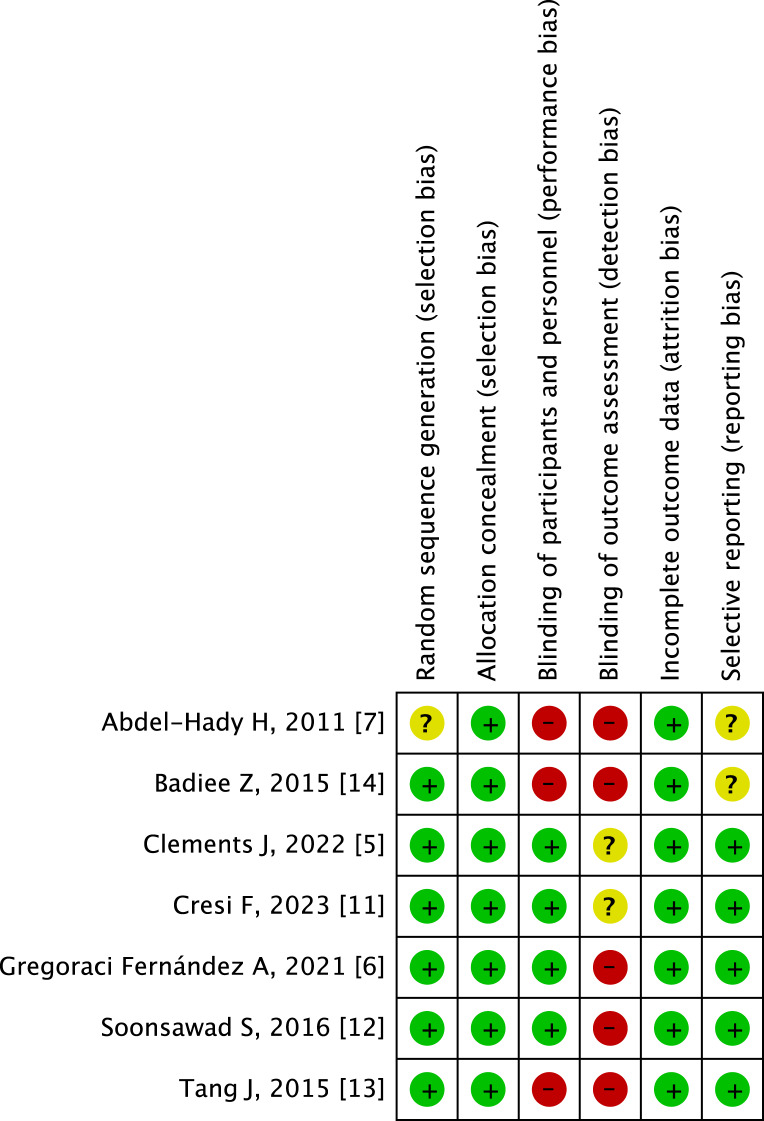
Cochrane Central, EMBASE, Medline, and Web of Science were searched from inception to July 15, 2023. Randomised clinical trials (RCTs) comparing weaning CPAP using HFNC versus weaning CPAP alone and evaluating predefined outcomes were included. Two authors independently performed data extraction and methodological quality assessment. Meta-analysis was conducted using a random-effects model, and the certainty of evidence was assessed using Cochrane GRADE.
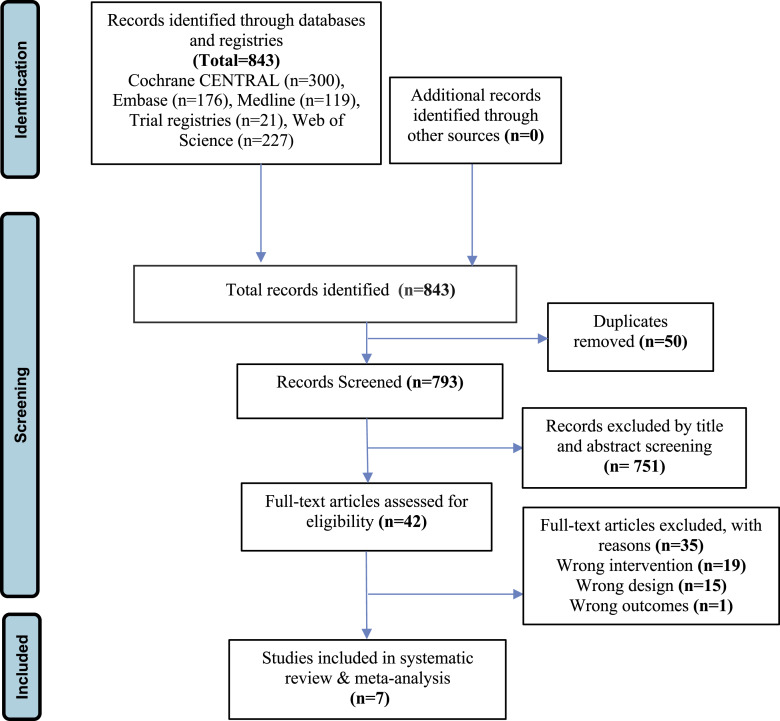
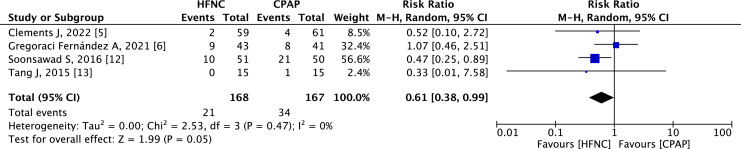
Among 843 identified records, seven RCTs involving 781 preterm infants were eligible for analysis. The meta-analysis found no statistically significant difference in duration of respiratory support when using HFNC for weaning compared to weaning CPAP alone (mean difference (95% confidence interval) 3.52 (-0.02, 7.05); 5 RCTs; participants = 488; I2 = 29%). The evidence certainty was downgraded to low due to study limitations and imprecision. There were no significant differences in secondary outcomes, except for a lower occurrence of nasal trauma with HFNC for weaning CPAP compared to weaning CPAP alone (relative risk (95% confidence interval) 0.61 (0.38, 0.99); 4 RCTs; participants = 335; I2 = 0%). The evidence certainty for the secondary outcomes was low to very low.
Low certainty of evidence suggests using HFNC for weaning CPAP in preterm infants may not impact the duration of respiratory support. Caution is advised when considering HFNC for weaning CPAP, especially in extremely preterm infants, until additional supportive evidence on its safety becomes available.
本研究旨在系统综述高流量鼻导管(HFNC)在早产儿撤离持续气道正压通气(CPAP)支持中的益处和危害。
检索 Cochrane 中央、EMBASE、Medline 和 Web of Science,检索时间从建库至 2023 年 7 月 15 日。纳入比较 HFNC 用于 CPAP 撤离与单独 CPAP 撤离,并评估预设结局的随机临床试验(RCT)。两位作者独立进行数据提取和方法学质量评估。采用随机效应模型进行荟萃分析,使用 Cochrane GRADE 评估证据确定性。
在 843 篇确定的记录中,有 7 项 RCT 涉及 781 名早产儿符合纳入分析标准。荟萃分析发现,与单独 CPAP 撤离相比,使用 HFNC 用于 CPAP 撤离时呼吸支持的持续时间无统计学显著差异(平均差异(95%置信区间)3.52(-0.02,7.05);5 项 RCT;参与者=488;I2=29%)。由于研究局限性和不精确性,证据确定性被降级为低。除了使用 HFNC 用于 CPAP 撤离时鼻腔创伤的发生率低于单独 CPAP 撤离外,其他次要结局无显著差异(相对风险(95%置信区间)0.61(0.38,0.99);4 项 RCT;参与者=335;I2=0%)。次要结局的证据确定性为低至极低。
低确定性的证据表明,在早产儿中使用 HFNC 用于 CPAP 撤离可能不会影响呼吸支持的持续时间。在考虑 HFNC 用于 CPAP 撤离时应谨慎,特别是在极早产儿中,直到获得其安全性的更多支持性证据。