Department of Biomedical Sciences, University of Windsor, Windsor, ON, N9B 3P4, Canada.
Department of Medical Microbiology and Immunology, University of Alberta, Edmonton, AB, T6G 2E1, Canada.
Nat Commun. 2024 Feb 27;15(1):1788. doi: 10.1038/s41467-024-45942-4.
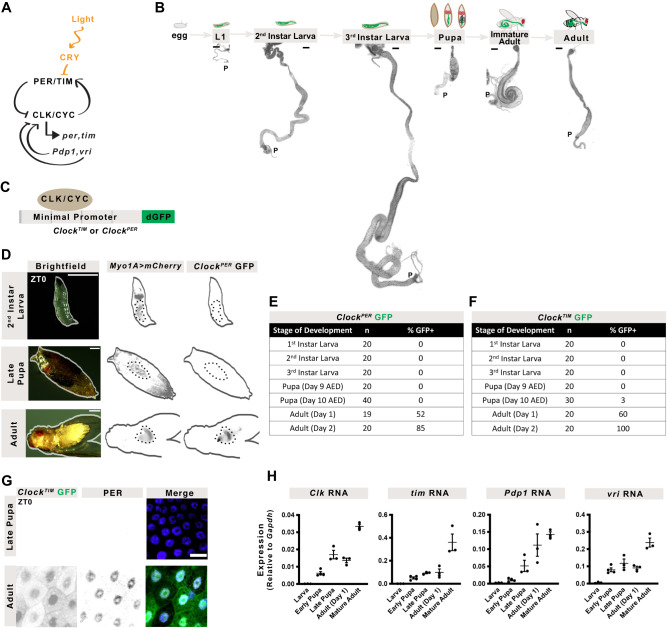
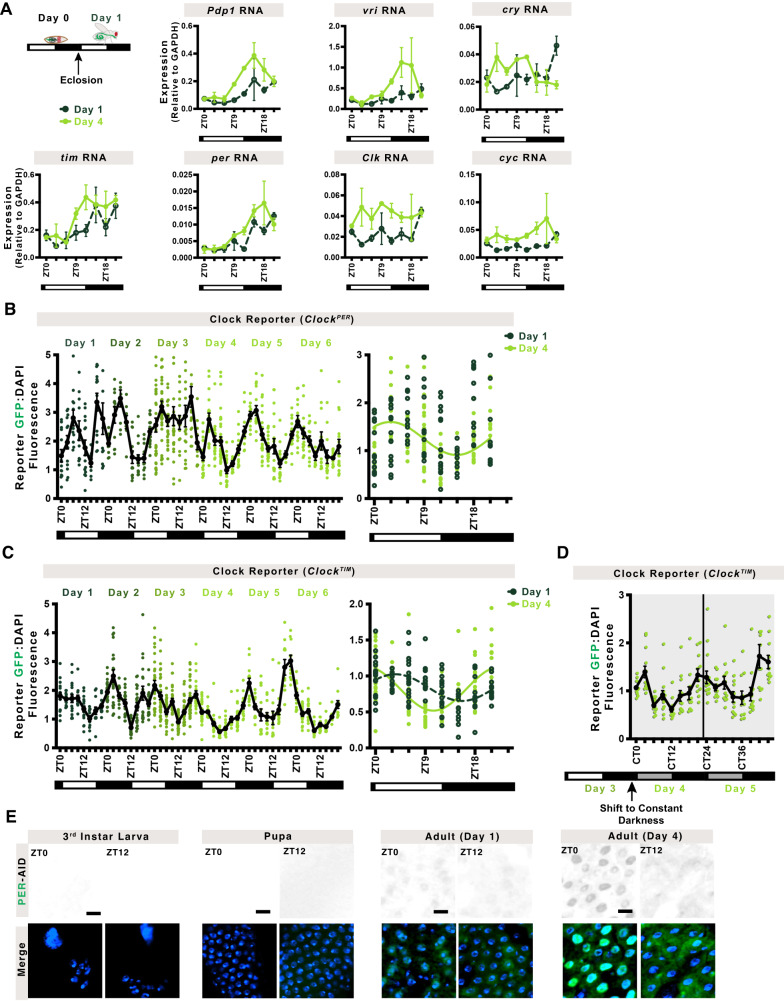
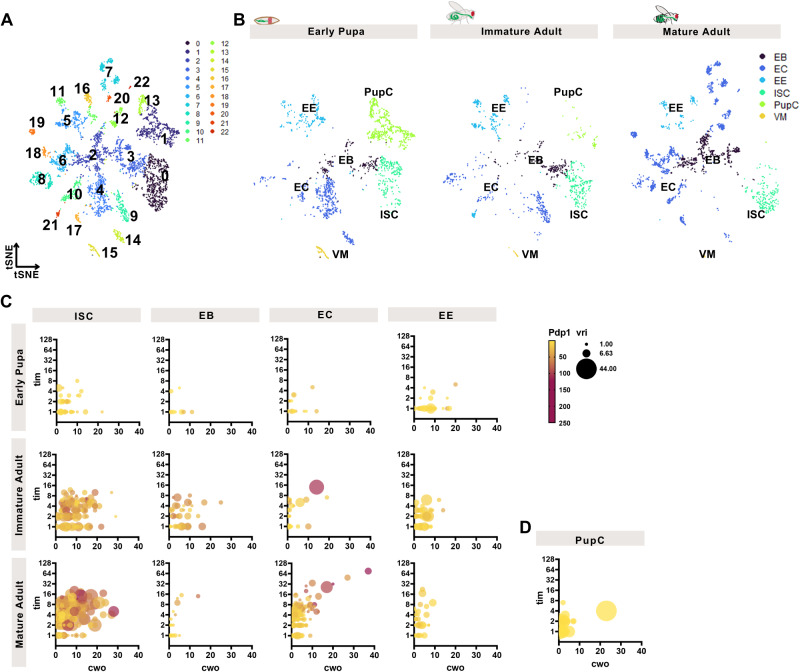
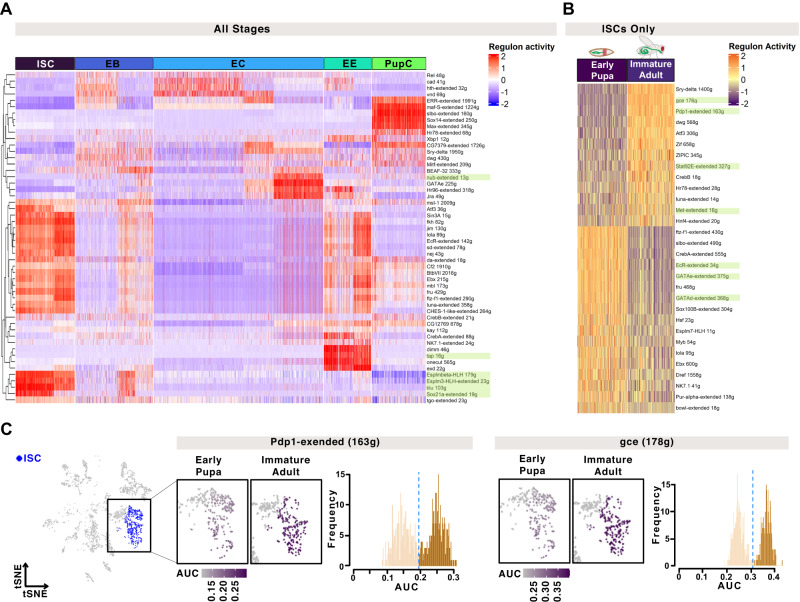
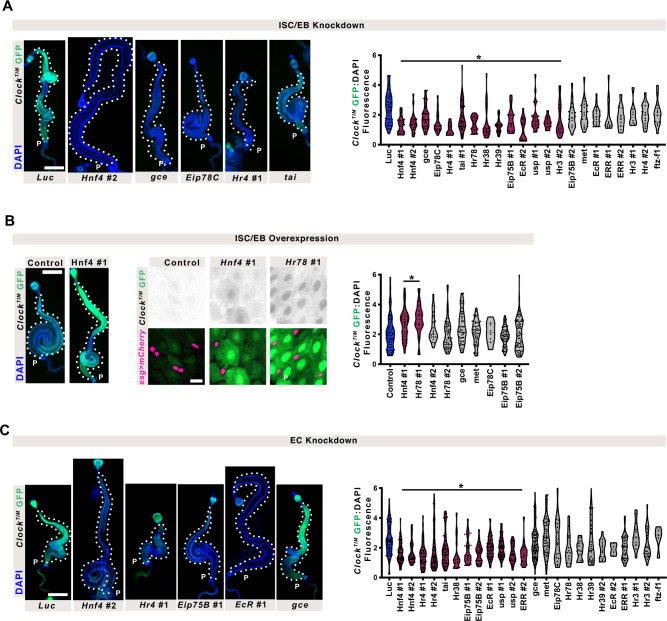
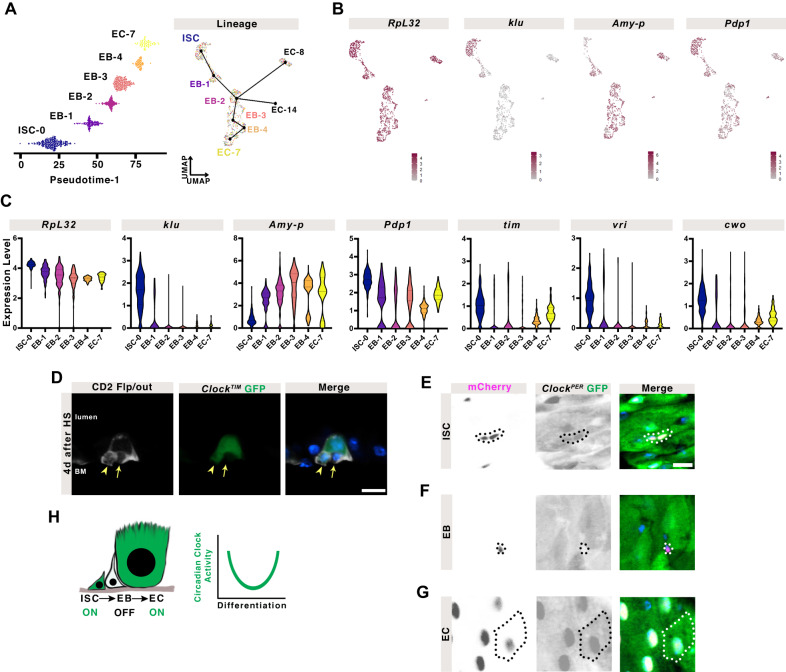
The circadian clock is a molecular timekeeper, present from cyanobacteria to mammals, that coordinates internal physiology with the external environment. The clock has a 24-h period however development proceeds with its own timing, raising the question of how these interact. Using the intestine of Drosophila melanogaster as a model for organ development, we track how and when the circadian clock emerges in specific cell types. We find that the circadian clock begins abruptly in the adult intestine and gradually synchronizes to the environment after intestinal development is complete. This delayed start occurs because individual cells at earlier stages lack the complete circadian clock gene network. As the intestine develops, the circadian clock is first consolidated in intestinal stem cells with changes in Ecdysone and Hnf4 signalling influencing the transcriptional activity of Clk/cyc to drive the expression of tim, Pdp1, and vri. In the mature intestine, stem cell lineage commitment transiently disrupts clock activity in differentiating progeny, mirroring early developmental clock-less transitions. Our data show that clock function and differentiation are incompatible and provide a paradigm for studying circadian clocks in development and stem cell lineages.
生物钟是一种分子计时器,存在于从蓝藻到哺乳动物的生物中,它将内部生理与外部环境协调一致。尽管生物钟具有 24 小时的周期,但它的发育却有自己的时间安排,这就提出了一个问题,即这两者如何相互作用。我们使用果蝇的肠道作为器官发育的模型,追踪生物钟在特定细胞类型中是如何以及何时出现的。我们发现,生物钟在成年肠道中突然出现,并在肠道发育完成后逐渐与环境同步。这种延迟的开始是因为早期阶段的单个细胞缺乏完整的生物钟基因网络。随着肠道的发育,生物钟首先在肠道干细胞中得到巩固,Ecdysone 和 Hnf4 信号的变化影响 Clk/cyc 的转录活性,从而驱动 tim、Pdp1 和 vri 的表达。在成熟的肠道中,干细胞谱系的特化会短暂地破坏分化后代中的时钟活动,反映了早期发育中无时钟的转变。我们的数据表明,时钟功能和分化是不相容的,并为研究发育和干细胞谱系中的生物钟提供了一个范例。