State Key Laboratory of Oral Diseases, National Center for Stomatology, National Clinical Research Center for Oral Diseases, West China Hospital of Stomatology, Sichuan University, Chengdu, China.
Sichuan Provincial Engineering Research Center of Oral Biomaterials, Chengdu, Sichuan, China.
Cell Prolif. 2024 Jul;57(7):e13624. doi: 10.1111/cpr.13624. Epub 2024 Feb 27.
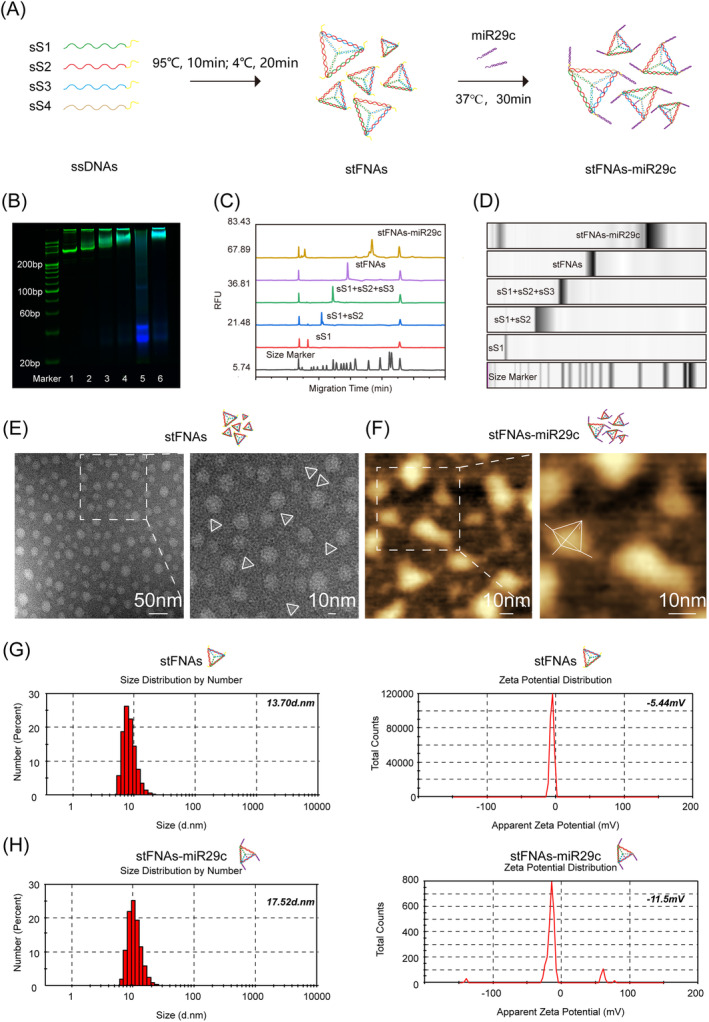
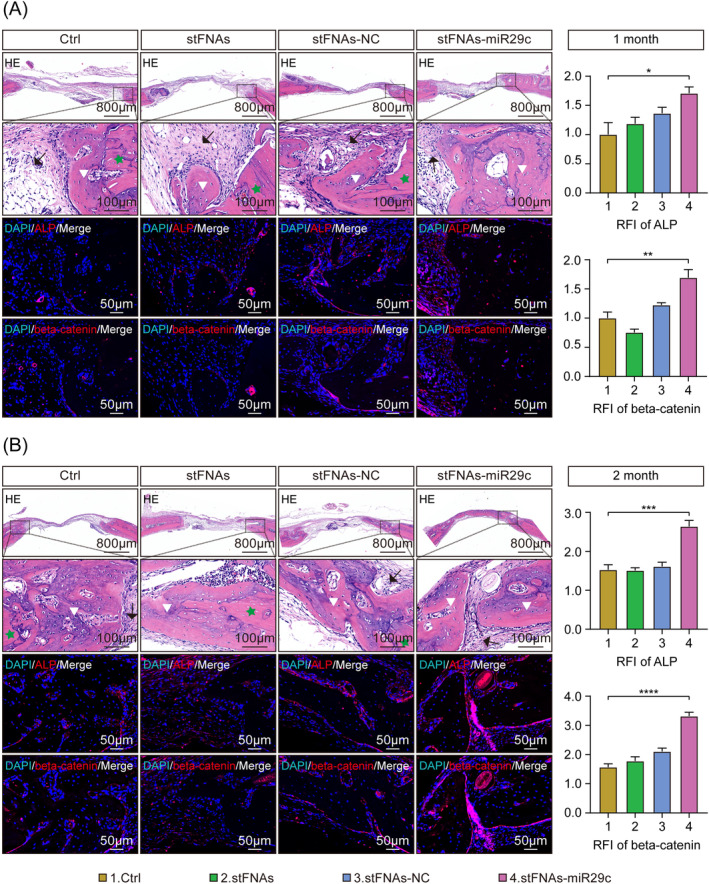
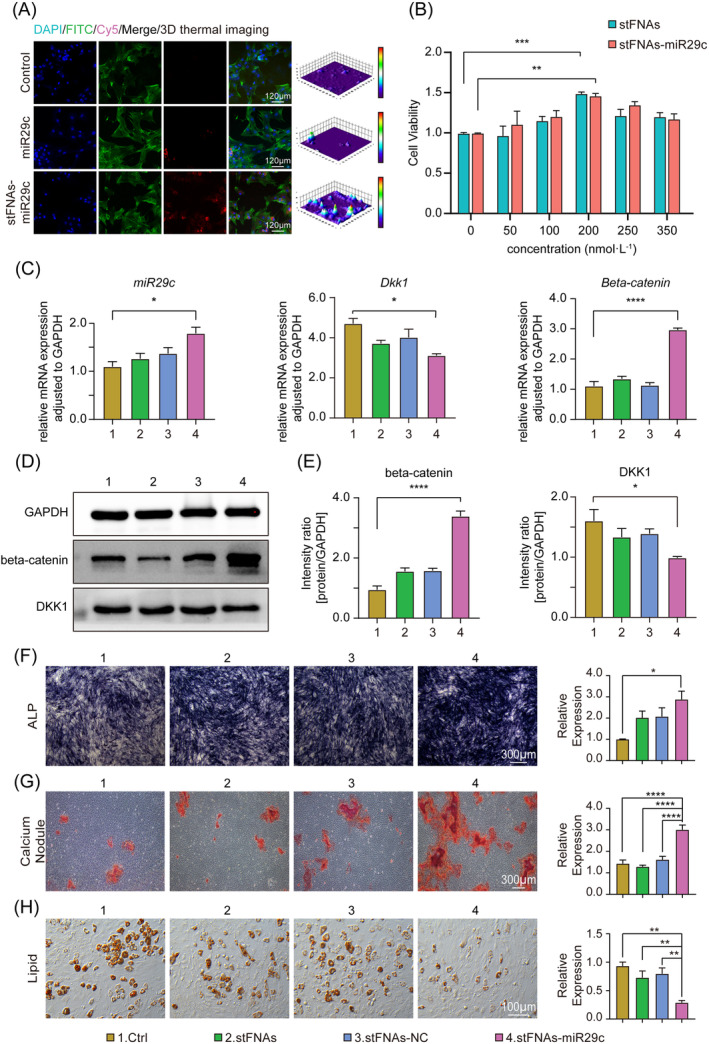
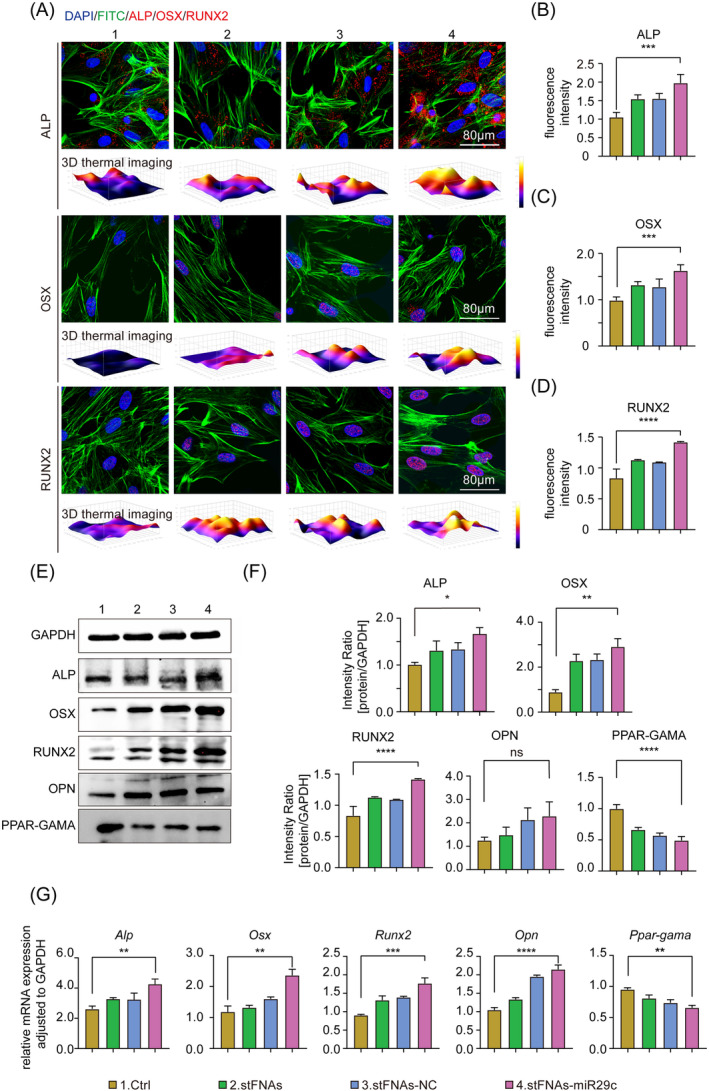
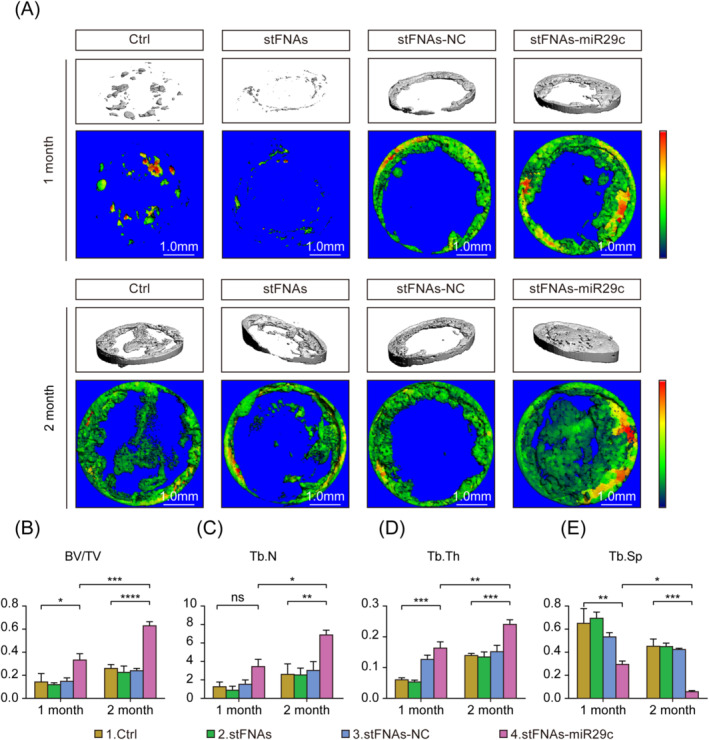
Certain miRNAs, notably miR29c, demonstrate a remarkable capacity to regulate cellular osteogenic differentiation. However, their application in tissue regeneration is hampered by their inherent instability and susceptibility to degradation. In this study, we developed a novel miR29c delivery system utilising tetrahedral framework nucleic acids (tFNAs), aiming to enhance its stability and endocytosis capability, augment the efficacy of miR29c, foster osteogenesis in bone marrow mesenchymal stem cells (BMSCs), and significantly improve the repair of critical-sized bone defects (CSBDs). We confirmed the successful synthesis and biocompatibility of sticky ends-modified tFNAs (stFNAs) and miR29c-modified stFNAs (stFNAs-miR29c) through polyacrylamide gel electrophoresis, microscopy scanning, a cell counting kit-8 assay and so on. The mechanism and osteogenesis effects of stFNAs-miR29c were explored using immunofluorescence staining, western blotting, and reserve transcription quantitative real-time polymerase chain reaction. Additionally, the impact of stFNAs-miR29c on CSBD repair was assessed via micro-CT and histological staining. The nano-carrier, stFNAs-miR29c was successfully synthesised and exhibited exemplary biocompatibility. This nano-nucleic acid material significantly upregulated osteogenic differentiation-related markers in BMSCs. After 2 months, stFNAs-miR29c demonstrated significant bone regeneration and reconstruction in CSBDs. Mechanistically, stFNAs-miR29c enhanced osteogenesis of BMSCs by upregulating the Wnt signalling pathway, contributing to improved bone tissue regeneration. The development of this novel nucleic acid nano-carrier, stFNAs-miR29c, presents a potential new avenue for guided bone regeneration and bone tissue engineering research.
某些 miRNA,特别是 miR29c,表现出显著调节细胞成骨分化的能力。然而,它们在组织再生中的应用受到固有不稳定性和易降解性的限制。在这项研究中,我们开发了一种利用四面体框架核酸(tFNAs)的新型 miR29c 递药系统,旨在增强其稳定性和内吞能力,增强 miR29c 的功效,促进骨髓间充质干细胞(BMSCs)成骨,并显著改善临界尺寸骨缺损(CSBDs)的修复。我们通过聚丙烯酰胺凝胶电泳、显微镜扫描、细胞计数试剂盒-8 测定等证实了粘性末端修饰的 tFNAs(stFNAs)和 miR29c 修饰的 stFNAs(stFNAs-miR29c)的成功合成和生物相容性。通过免疫荧光染色、western blot 和实时定量聚合酶链反应等方法探讨了 stFNAs-miR29c 的作用机制和成骨作用。此外,通过 micro-CT 和组织学染色评估了 stFNAs-miR29c 对 CSBD 修复的影响。成功合成了纳米载体 stFNAs-miR29c,表现出良好的生物相容性。这种纳米核酸材料显著上调了 BMSCs 中成骨分化相关标志物的表达。2 个月后,stFNAs-miR29c 在 CSBD 中表现出明显的骨再生和重建。机制上,stFNAs-miR29c 通过上调 Wnt 信号通路增强了 BMSCs 的成骨作用,有助于改善骨组织再生。这种新型核酸纳米载体 stFNAs-miR29c 的开发为引导骨再生和骨组织工程研究提供了新的途径。