Department of Thoracic Surgery, Tongji Hospital, Tongji Medical College, Huazhong University of Science and Technology, Wuhan, Hubei Province, People's Republic of China.
Department of Geriatrics, Tongji Hospital, Tongji Medical College, Huazhong University of Science and Technology, Wuhan, Hubei Province, People's Republic of China.
Int J Nanomedicine. 2024 Feb 23;19:1827-1842. doi: 10.2147/IJN.S444470. eCollection 2024.
Idiopathic pulmonary fibrosis (IPF) is a severe interstitial lung disease characterized by chronic lung injury leading to macrophage infiltration and fibroblast activation. However, there is no effective therapeutic strategy targeting the crucial crosstalk between macrophages and fibroblasts to halt IPF progression.
Studies were conducted in IPF patients and fibrotic mice models to elucidate the role of Bcar3 in the pathogenesis of pulmonary fibrosis. The effect of Bcar3 on macrophage polarization, fibroblast activation, and related signaling pathways were next investigated to unravel the underlying mechanisms.
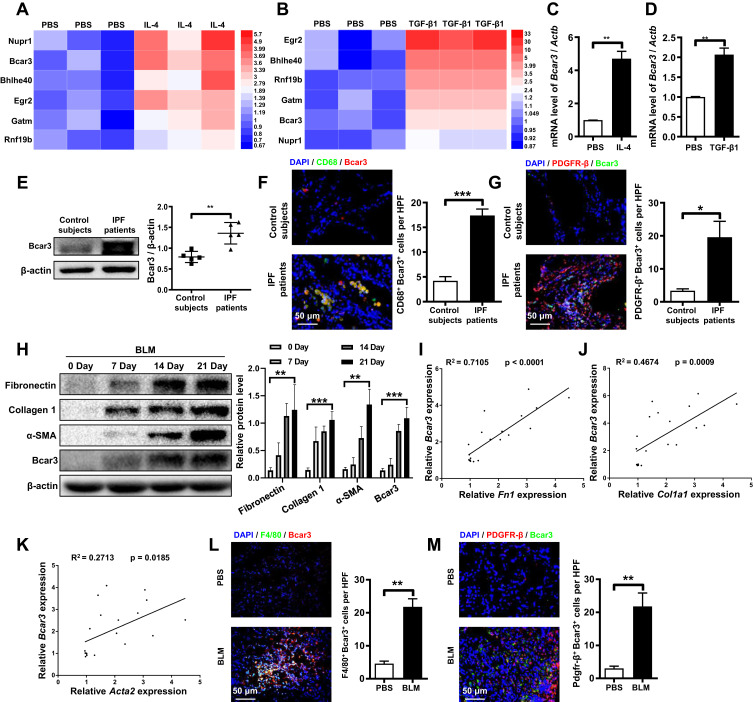
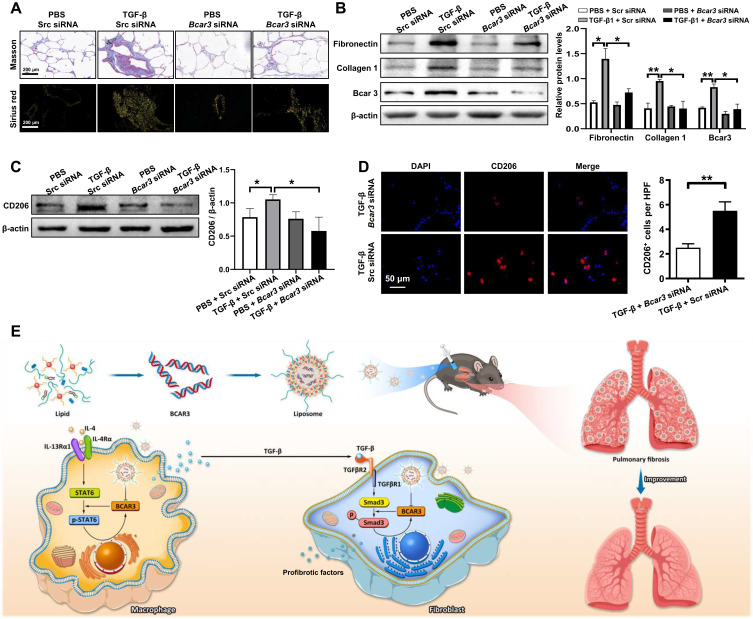
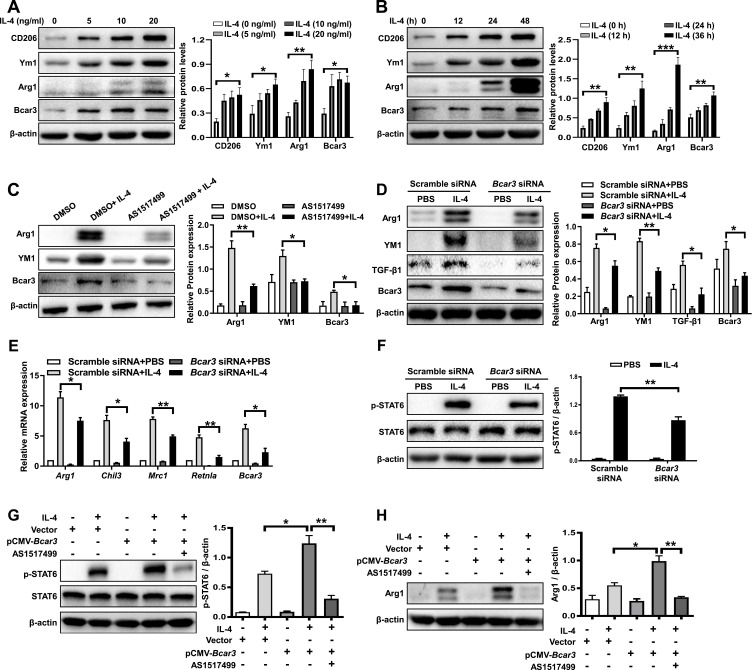
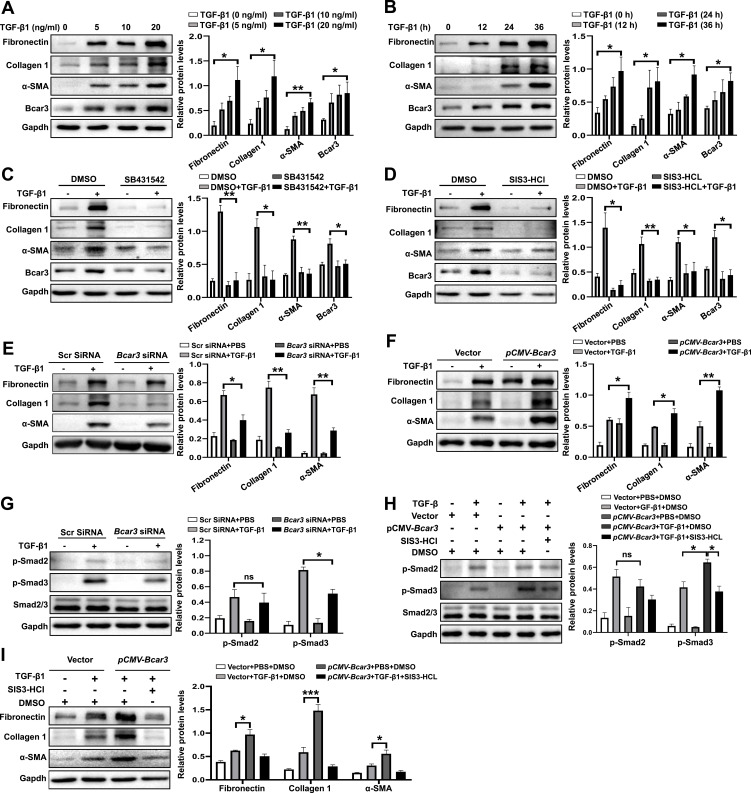
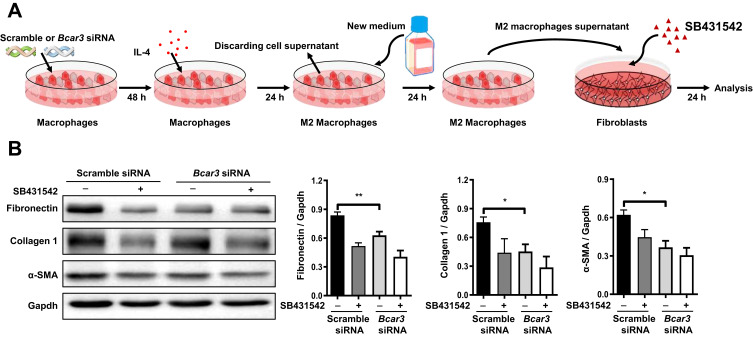
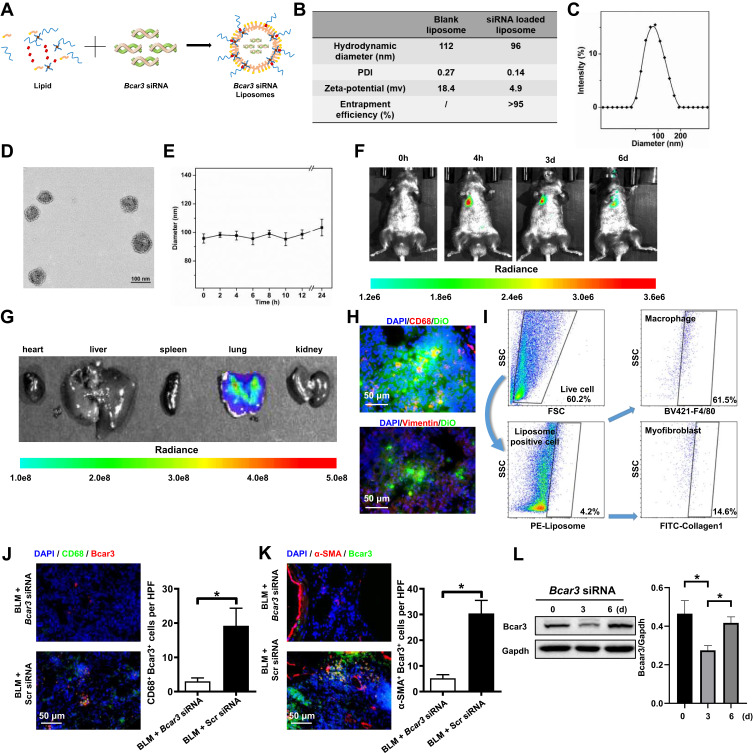
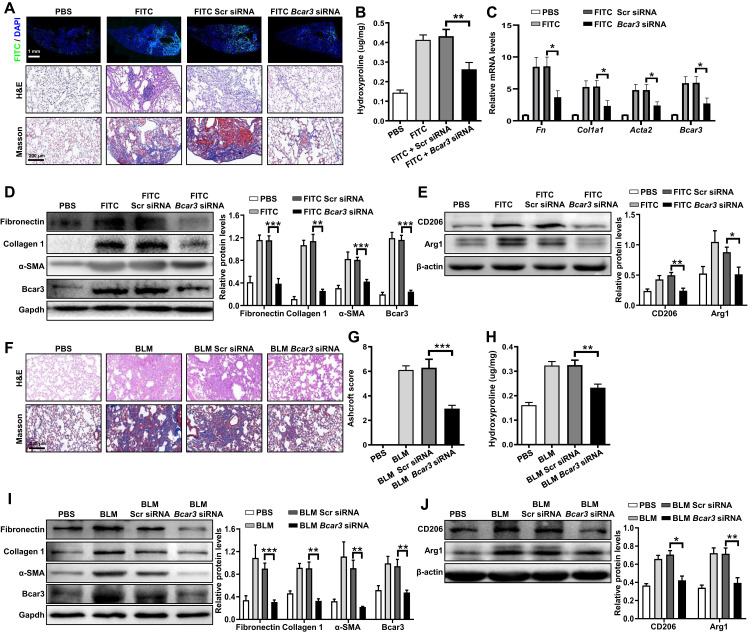
Our study elucidates a marked increase in Bcar3 expression in lung tissues from IPF patients and fibrotic mice, recording 1.7 and 7.8-fold increases compared to control subjects, respectively. Additionally, Bcar3 was found to significantly enhance macrophage activation and fibroblast differentiation, observable in both in vivo and in vitro settings. Mechanistically, the upregulation of Bcar3 in macrophages was reliant on Stat6, while in fibroblasts, it depended on TGFβR1/Smad3. Furthermore, Bcar3 augmented IL-4/Stat6 pathway in macrophages and TGF-β/Smad3 pathway in fibroblasts, supporting a synergistic activation loop that expedited lung fibrogenesis. Notably, intratracheal injection of liposomes containing Bcar3 siRNA precisely delivered gene therapeutics to lung macrophages and fibroblasts, effectively reducing Bcar3 expression to 59% of baseline levels. Importantly, this intervention protected mice from lung fibrosis induced by either FITC or bleomycin, as well as human precision-cut lung slices against TGF-β1 stimulation.
Our study underscores the pivotal role of Bcar3 in orchestrating the macrophage-fibroblast crosstalk during pulmonary fibrosis progression. Targeting Bcar3 emerges as a novel therapeutic avenue to halt IPF progression and enhance patient prognosis.
特发性肺纤维化(IPF)是一种严重的间质性肺病,其特征为慢性肺损伤导致巨噬细胞浸润和成纤维细胞激活。然而,目前尚无针对巨噬细胞和成纤维细胞之间关键相互作用的有效治疗策略来阻止 IPF 的进展。
本研究在 IPF 患者和纤维化小鼠模型中进行,以阐明 Bcar3 在肺纤维化发病机制中的作用。接下来研究了 Bcar3 对巨噬细胞极化、成纤维细胞激活和相关信号通路的影响,以揭示其潜在机制。
我们的研究阐明了 Bcar3 在 IPF 患者和纤维化小鼠的肺组织中的表达明显增加,与对照组相比,分别增加了 1.7 倍和 7.8 倍。此外,Bcar3 被发现可显著增强巨噬细胞的激活和成纤维细胞的分化,无论是在体内还是体外都能观察到。从机制上讲,巨噬细胞中 Bcar3 的上调依赖于 Stat6,而在成纤维细胞中,它依赖于 TGFβR1/Smad3。此外,Bcar3 在巨噬细胞中增强了 IL-4/Stat6 通路,在成纤维细胞中增强了 TGF-β/Smad3 通路,支持了促进肺纤维化发生的协同激活环路。值得注意的是,含有 Bcar3 siRNA 的脂质体经气管内注射可将基因治疗精确递送至肺巨噬细胞和成纤维细胞,将 Bcar3 的表达有效降低至基线水平的 59%。重要的是,这种干预措施可保护小鼠免受 FITC 或博来霉素诱导的肺纤维化,以及人类精密切割肺切片免受 TGF-β1 刺激的影响。
本研究强调了 Bcar3 在肺纤维化进展过程中协调巨噬细胞和成纤维细胞相互作用的关键作用。靶向 Bcar3 可能成为阻止 IPF 进展和改善患者预后的新治疗途径。