
提高黄花蒿中青蒿素产量的先进代谢工程策略
Advanced metabolic engineering strategies for increasing artemisinin yield in L.
作者信息
Li Yongpeng, Yang Yinkai, Li Ling, Tang Kexuan, Hao Xiaolong, Kai Guoyin
机构信息
Zhejiang Provincial TCM Key Laboratory of Chinese Medicine Resource Innovation and Transformation, Zhejiang International Science and Technology Cooperation Base for Active Ingredients of Medicinal and Edible Plants and Health, Jinhua Academy, School of Pharmaceutical Sciences, Academy of Chinese Medical Sciences, Zhejiang Chinese Medical University, Hangzhou 310053, China.
Frontiers Science Center for Transformative Molecules, Joint International Research Laboratory of Metabolic and Developmental Sciences, Plant Biotechnology Research Center, Fudan-SJTU-Nottingham Plant Biotechnology R&D Center, School of Agriculture and Biology, Shanghai Jiao Tong University, Shanghai 200240, China.
出版信息
Hortic Res. 2024 Jan 2;11(2):uhad292. doi: 10.1093/hr/uhad292. eCollection 2024 Feb.
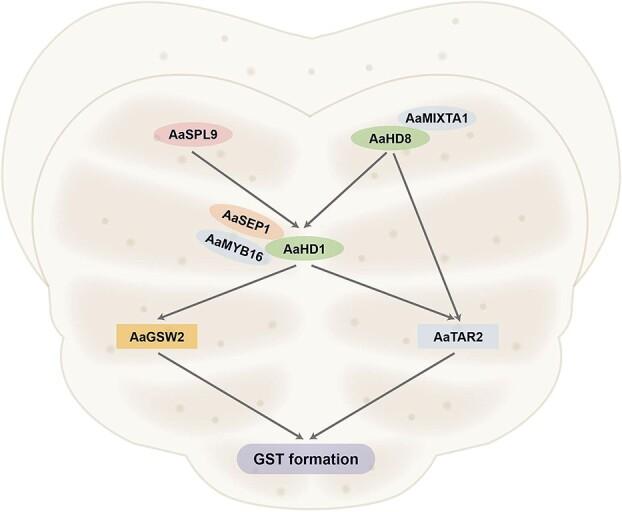
Artemisinin, also known as 'Qinghaosu', is a chemically sesquiterpene lactone containing an endoperoxide bridge. Due to the high activity to kill , artemisinin and its derivatives have continuously served as the foundation for antimalarial therapies. Natural artemisinin is unique to the traditional Chinese medicinal plant L., and its content in this plant is low. This has motivated the synthesis of this bioactive compound using yeast, tobacco, and systems. However, the artemisinin production in these heterologous hosts is low and cannot fulfil its increasing clinical demand. Therefore, plants remain the major source of this bioactive component. Recently, the transcriptional regulatory networks related to artemisinin biosynthesis and glandular trichome formation have been extensively studied in . Various strategies including (i) enhancing the metabolic flux in artemisinin biosynthetic pathway; (ii) blocking competition branch pathways; (iii) using transcription factors (TFs); (iv) increasing peltate glandular secretory trichome (GST) density; (v) applying exogenous factors; and (vi) phytohormones have been used to improve artemisinin yields. Here we summarize recent scientific advances and achievements in artemisinin metabolic engineering, and discuss prospects in the development of high-artemisinin yielding varieties. This review provides new insights into revealing the transcriptional regulatory networks of other high-value plant-derived natural compounds (e.g., taxol, vinblastine, and camptothecin), as well as glandular trichome formation. It is also helpful for the researchers who intend to promote natural compounds production in other plants species.
青蒿素,又称“青蒿琥酯”,是一种含有内过氧化物桥的化学倍半萜内酯。由于其强大的杀虫活性,青蒿素及其衍生物一直是抗疟治疗的基础。天然青蒿素是传统中药植物黄花蒿所特有的,其在该植物中的含量较低。这促使人们利用酵母、烟草和其他系统合成这种生物活性化合物。然而,这些异源宿主中青蒿素的产量较低,无法满足日益增长的临床需求。因此,黄花蒿植物仍然是这种生物活性成分的主要来源。最近,青蒿素生物合成和腺毛形成相关的转录调控网络在黄花蒿中得到了广泛研究。包括(i)增强青蒿素生物合成途径中的代谢通量;(ii)阻断竞争分支途径;(iii)使用转录因子(TFs);(iv)增加盾状腺毛分泌毛(GST)密度;(v)应用外源因子;以及(vi)植物激素等各种策略已被用于提高青蒿素产量。在此,我们总结了青蒿素代谢工程的最新科学进展和成就,并讨论了高产青蒿素黄花蒿品种开发的前景。这篇综述为揭示其他高价值植物源天然化合物(如紫杉醇、长春碱和喜树碱)的转录调控网络以及腺毛形成提供了新的见解。它也有助于那些打算在其他植物物种中促进天然化合物生产的研究人员。


 Zotero 插件