Division of Immunology and Infectious Diseases, John Curtin School of Medical Research, The Australian National University, Acton, Australia.
Centre for Personalised Immunology, John Curtin School of Medical Research, The Australian National University, Acton, Australia.
J Exp Med. 2024 Apr 1;221(4). doi: 10.1084/jem.20221080. Epub 2024 Feb 28.
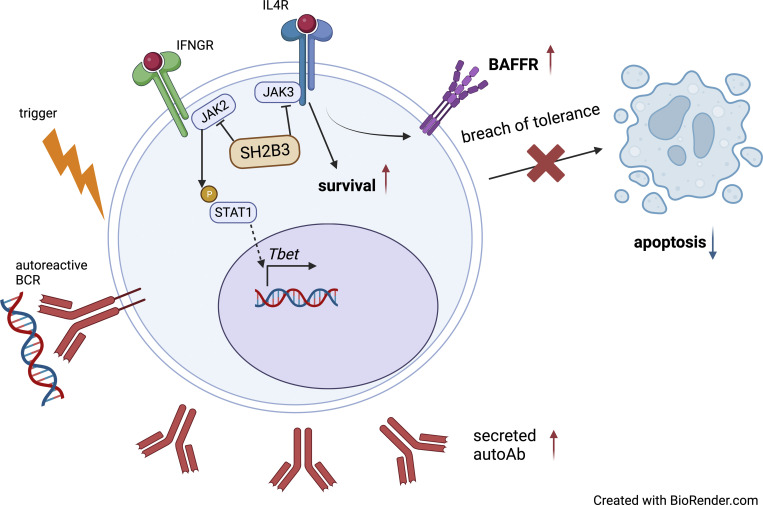
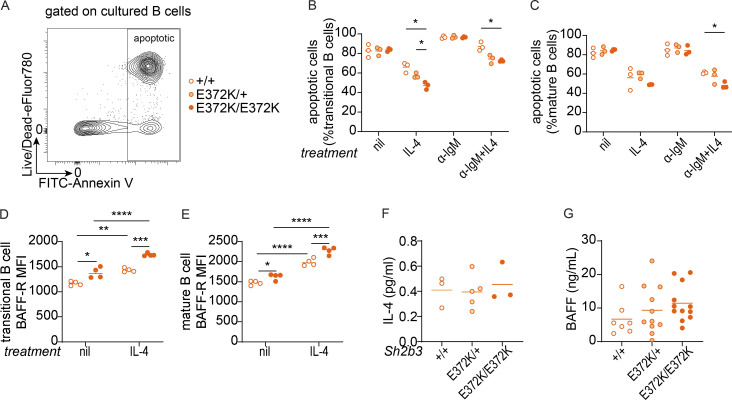
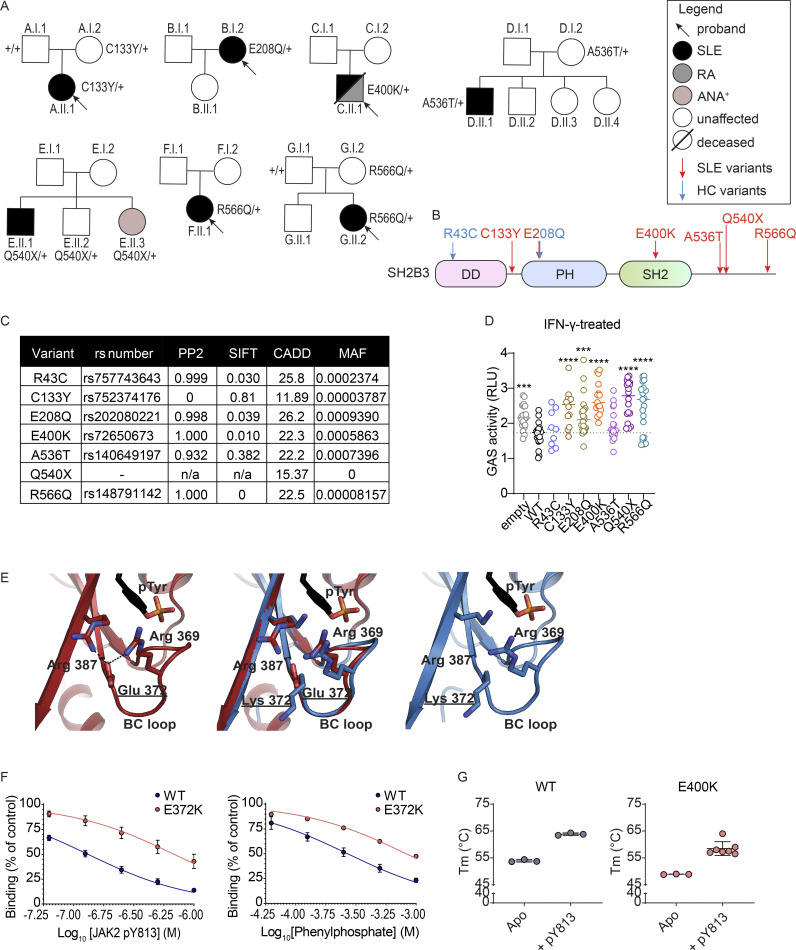
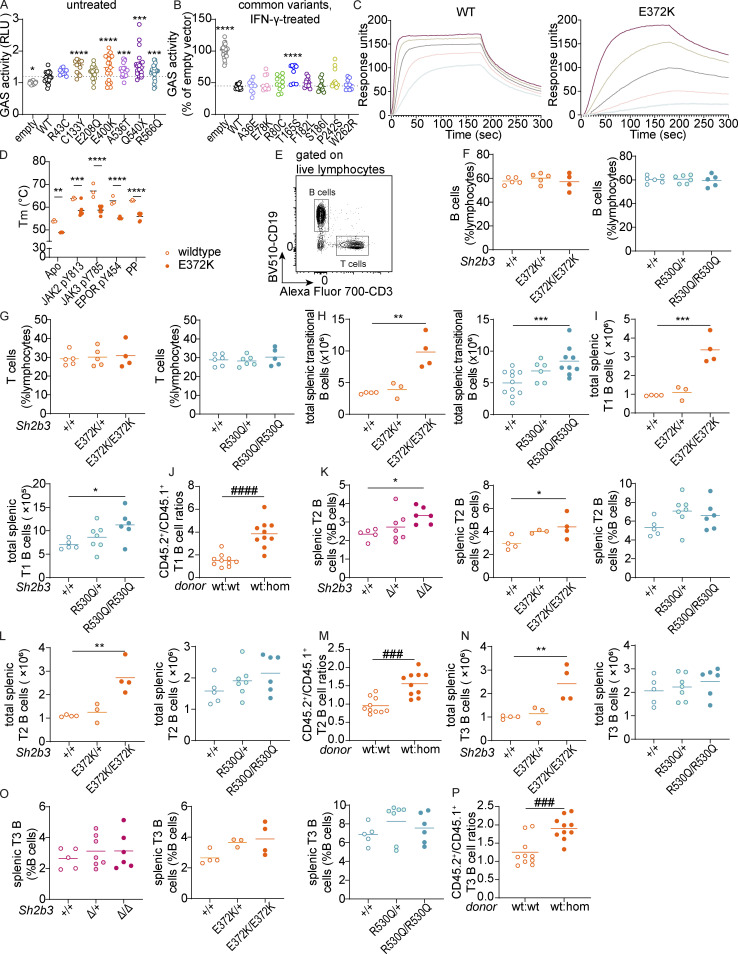
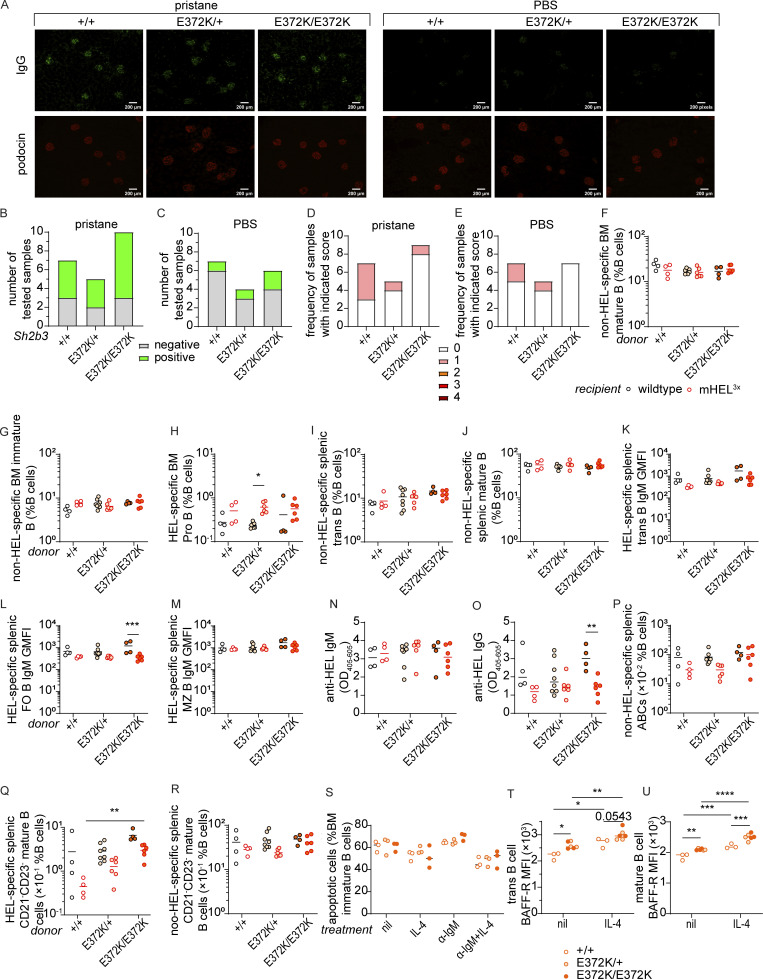
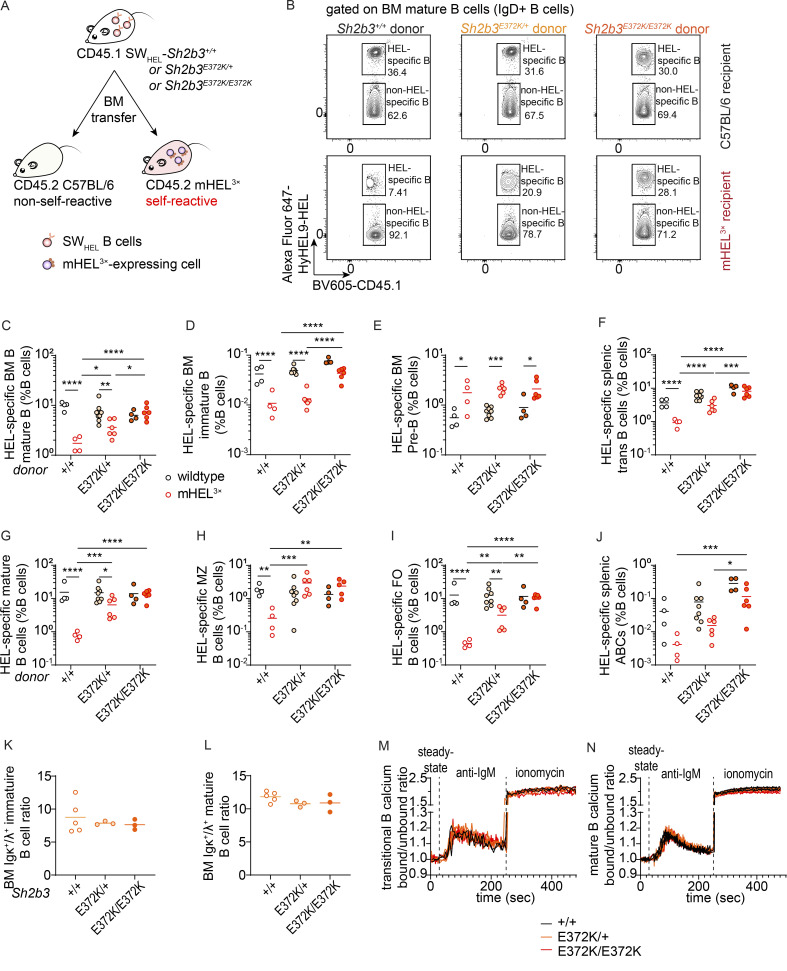
Systemic lupus erythematosus (SLE) is a heterogeneous autoimmune disease with a clear genetic component. While most SLE patients carry rare gene variants in lupus risk genes, little is known about their contribution to disease pathogenesis. Amongst them, SH2B3-a negative regulator of cytokine and growth factor receptor signaling-harbors rare coding variants in over 5% of SLE patients. Here, we show that unlike the variant found exclusively in healthy controls, SH2B3 rare variants found in lupus patients are predominantly hypomorphic alleles, failing to suppress IFNGR signaling via JAK2-STAT1. The generation of two mouse lines carrying patients' variants revealed that SH2B3 is important in limiting the number of immature and transitional B cells. Furthermore, hypomorphic SH2B3 was shown to impair the negative selection of immature/transitional self-reactive B cells and accelerate autoimmunity in sensitized mice, at least in part due to increased IL-4R signaling and BAFF-R expression. This work identifies a previously unappreciated role for SH2B3 in human B cell tolerance and lupus risk.
系统性红斑狼疮 (SLE) 是一种具有明显遗传成分的异质性自身免疫性疾病。虽然大多数 SLE 患者携带狼疮风险基因中的罕见基因变异,但人们对它们在疾病发病机制中的贡献知之甚少。其中,SH2B3 是细胞因子和生长因子受体信号的负调节剂,超过 5%的 SLE 患者携带其罕见的编码变异。在这里,我们表明,与仅在健康对照组中发现的变异不同,在狼疮患者中发现的 SH2B3 罕见变异主要是功能降低的等位基因,无法通过 JAK2-STAT1 抑制 IFNGR 信号。携带患者变异的两种小鼠系的产生表明,SH2B3 对于限制未成熟和过渡 B 细胞的数量很重要。此外,功能降低的 SH2B3 被证明会损害未成熟/过渡自身反应性 B 细胞的阴性选择,并在致敏小鼠中加速自身免疫,至少部分原因是由于 IL-4R 信号和 BAFF-R 表达增加。这项工作确定了 SH2B3 在人类 B 细胞耐受和狼疮风险中的先前未被认识到的作用。