Harvard T.H. Chan School of Public Health, United States of America; Tsaotun Psychiatric Center, Ministry of Health and Welfare, Taiwan.
Department of Psychiatry, Massachusetts General Hospital, United States of America.
J Affect Disord. 2024 Aug 1;358:302-308. doi: 10.1016/j.jad.2024.02.086. Epub 2024 Feb 27.
Little is known about trajectories of NSSI. We aimed to identify NSSI trajectories in adolescent psychiatric inpatients and emotional processes that differentiate between trajectories.
Participants were 180 adolescents (71.7 % female; mean age of 14.89 years, SD = 1.35) from a psychiatric inpatient facility. NSSI was assessed at their index hospitalization, as well as 6, and 12 months after discharge. Emotion recognition, emotion reactivity, and emotion dysregulation were assessed at baseline. Latent class mixture modeling was used to identify different NSSI trajectories and ANOVAs were used to evaluate predictors of the trajectories.
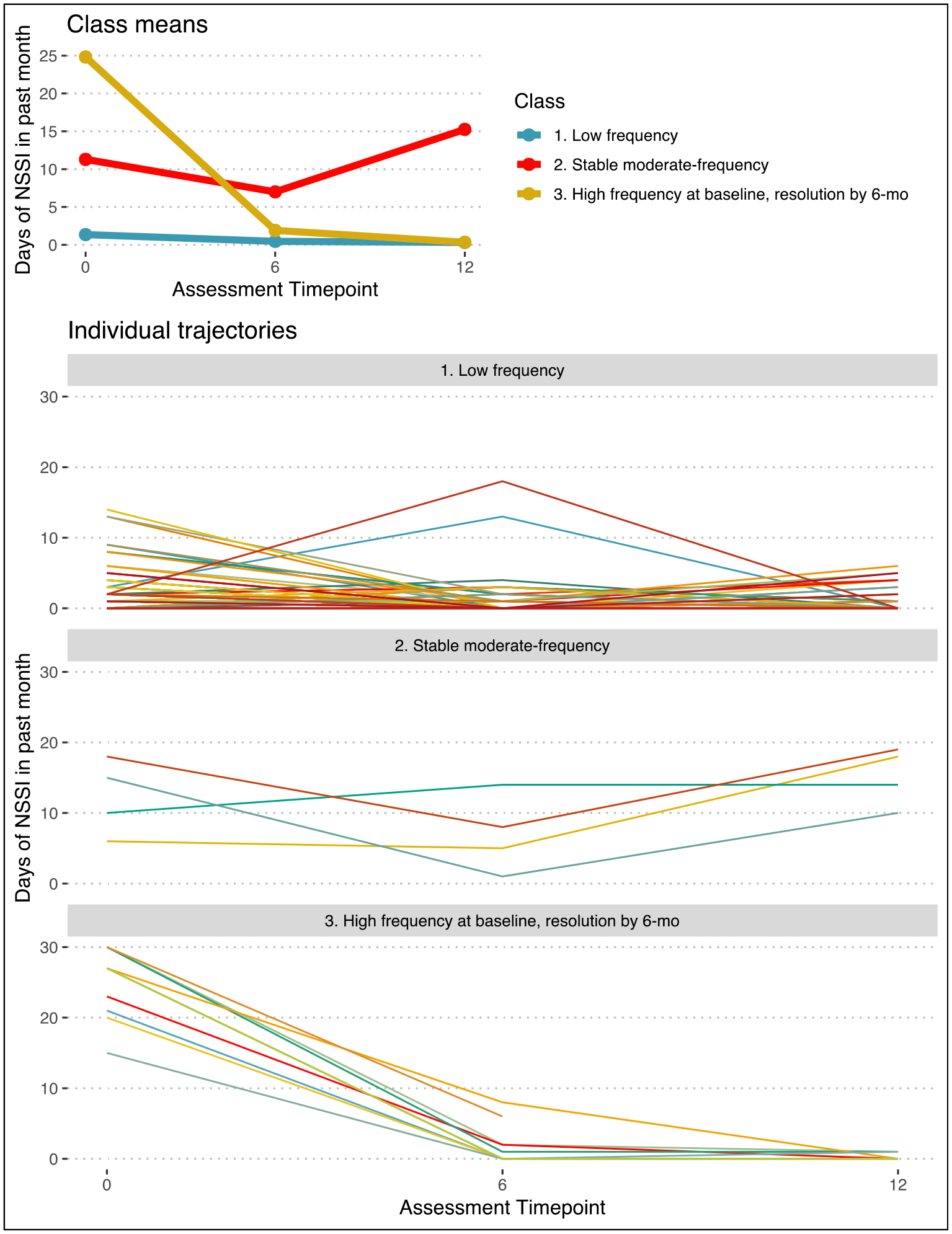
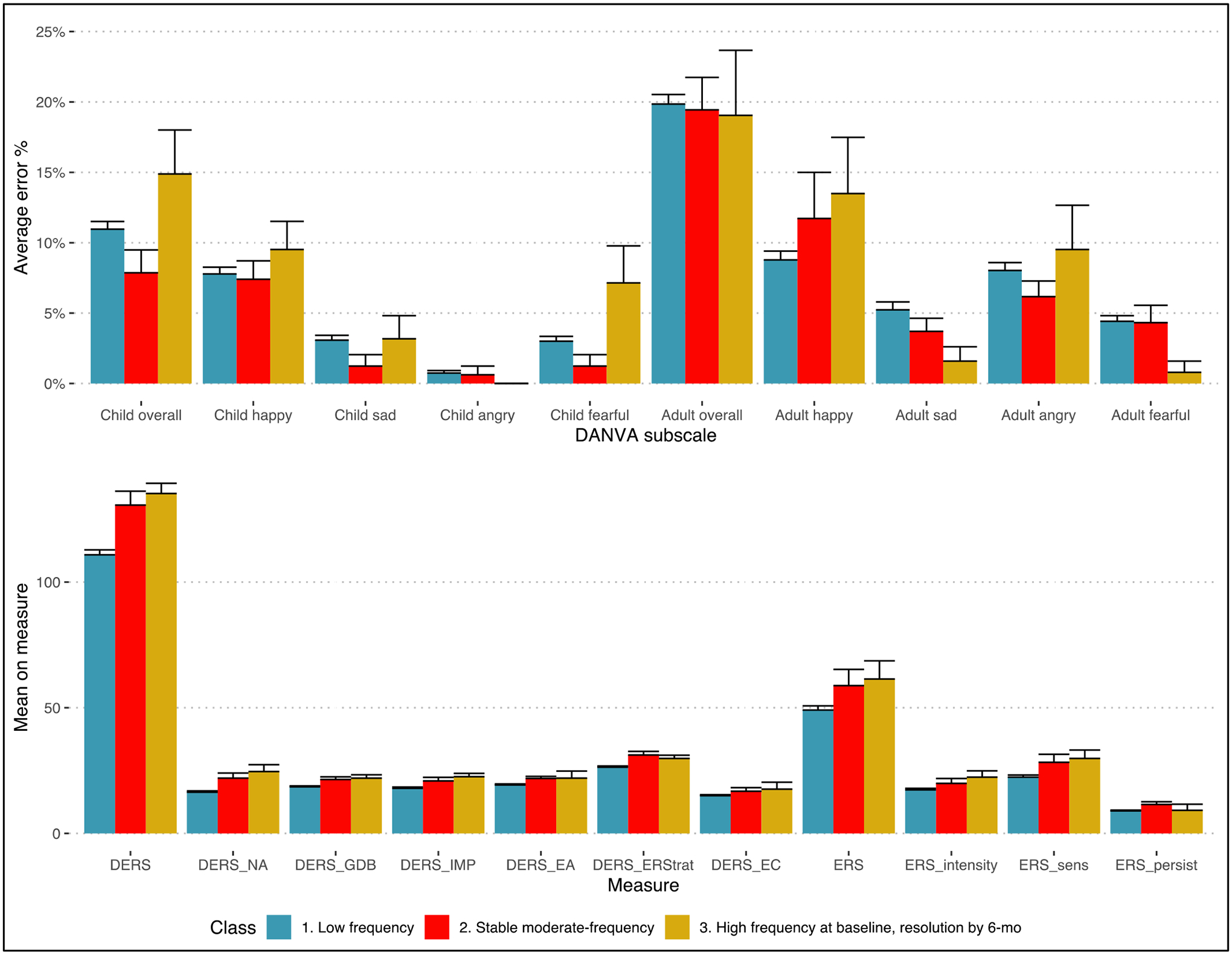
Analyses yielded three NSSI trajectories. These included a stable low-frequency class (90.53 % of sample), a stable moderate-frequency class, and a class characterized by high-frequency NSSI at baseline but that largely resolves by 6-month follow-up. After adjustments for multiple comparisons were made, only emotion regulation at baseline differentiated between the trajectories, with greater overall emotion dysregulation and greater emotional non-acceptance (a facet of emotion dysregulation) characterizing the initially high-frequency class and the stable moderate-frequency class more than the stable low-frequency class (ps < .05). Difficulties engaging in goal-directed behavior when distressed characterized the stable moderate-frequency NSSI class more than the stable low-frequency class (p < .05). Limitations The study sample consists predominantly of female and White adolescents and thus may not generalize to other demographic groups.
The current findings suggest that interventions involving emotion regulation with adolescents who engage in NSSI would particularly benefit from a focus on increasing acceptance of emotional experiences.
人们对非自杀性自伤(NSSI)的轨迹知之甚少。我们旨在确定青少年精神科住院患者中的 NSSI 轨迹,以及区分轨迹的情绪过程。
参与者是来自精神科住院设施的 180 名青少年(71.7%为女性;平均年龄为 14.89 岁,标准差=1.35)。在他们的指数住院期间,以及出院后 6 个月和 12 个月评估 NSSI。在基线时评估情绪识别、情绪反应和情绪调节。使用潜在类别混合模型识别不同的 NSSI 轨迹,并使用方差分析评估轨迹的预测因素。
分析得出了三种 NSSI 轨迹。这些轨迹包括稳定的低频类(样本的 90.53%)、稳定的中频类和以基线时高频 NSSI 为特征但在 6 个月随访时基本解决的类。在进行了多次比较的调整后,只有基线时的情绪调节可以区分轨迹,初始高频类和稳定中频类的整体情绪失调程度更高,情绪接受度(情绪失调的一个方面)更高,而稳定低频类则不然(p<.05)。当感到痛苦时难以进行有目标的行为的特点是稳定的中频 NSSI 类,而不是稳定的低频类(p<.05)。局限性 该研究样本主要由女性和白人青少年组成,因此可能不适用于其他人群。
目前的研究结果表明,对于参与 NSSI 的青少年,涉及情绪调节的干预措施特别需要关注增加对情绪体验的接受度。