WHO Viet Nam, World Health Organization, Geneva, Switzerland.
Department of Infectious Diseases, Hanoi Medical University, Hanoi, Viet Nam
BMJ Open. 2024 Feb 29;14(2):e075976. doi: 10.1136/bmjopen-2023-075976.
Pre-exposure prophylaxis (PrEP) was introduced in Viet Nam in 2017, but data on oral PrEP preference and effective use beyond 3 months are limited. We aimed to evaluate PrEP preferences for PrEP, factors influencing uptake, choice and effective use, as well as barriers to PrEP.
This is a prospective cohort study in Can Tho, Viet Nam. Participants who were eligible for PrEP and provided informed consent were interviewed at baseline on demographic information, willingness to pay, reasons for choosing their PrEP regimen and the anticipated difficulties in taking PrEP and followed up at 3 months, 6 months and 12 months after PrEP initiation.
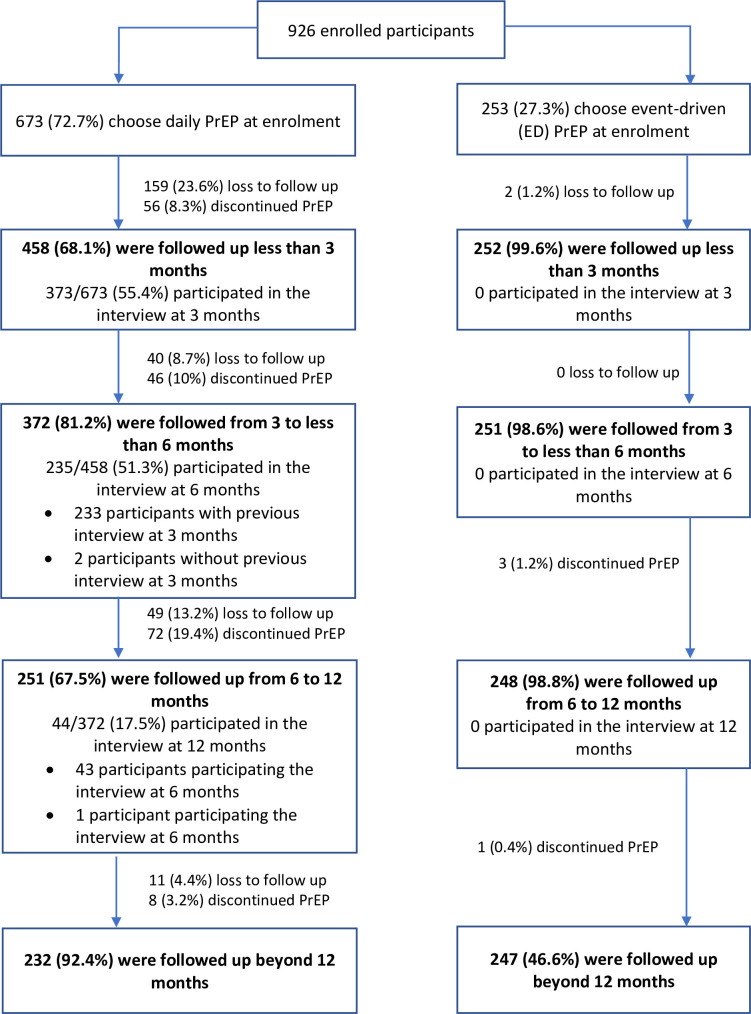
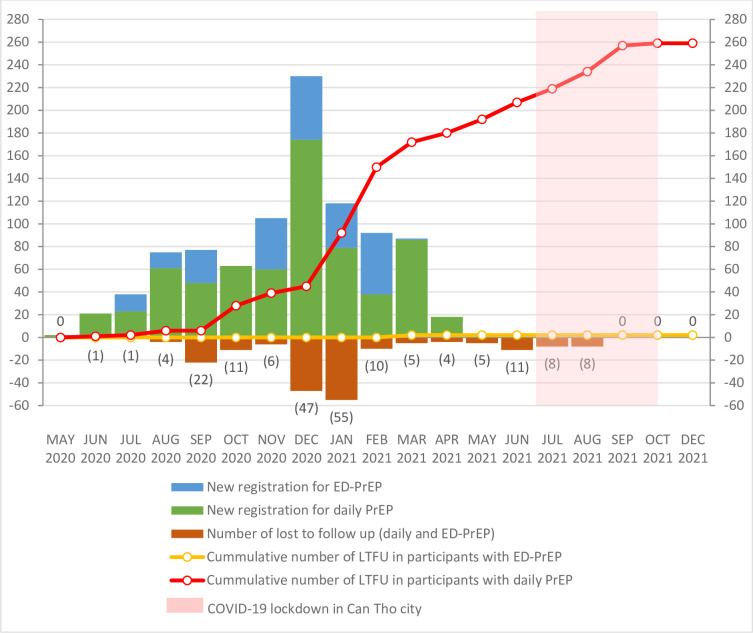
Between May 2020 and April 2021, 926 individuals at substantial risk for HIV initiated PrEP. Of whom 673 (72.7%) choose daily PrEP and 253 (27.3%) choose event-driven (ED)-PrEP. The majority of participants were men (92.7%) and only 6.8% were women and 0.5% were transgender women. Median participant age was 24 years (IQR 20-28) and 84.7% reported as exclusively same-sex relationship. The three most common reasons for choosing daily PrEP were effectiveness (24.3%) and unplanning for sex (22.9%). Those opting for ED-PrEP also cited effectiveness (22.7%), as well as convenience (18.0%) and easier effective use (12.0%). Only 7.8% of PrEP users indicated they were unwilling to pay for PrEP and 76.4% would be willing to pay if PrEP were less than US$15 per month. The proportion of user effectively using PrEP at 12 months was 43.1% and 99.2% in daily PrEP and ED-PrEP users, respectively.
ED-PrEP was preferred by more than a quarter of 23.5% of the participants and there was little concern about potential adverse events. High rates of effective use were reported by ED-PrEP users. Future research to inform implementation of PrEP in Viet Nam is needed to develop ways of measuring adherence to ED-PrEP more accurately and to understand and address difficulties in taking daily PrEP use.
暴露前预防(PrEP)于 2017 年在越南推出,但关于口服 PrEP 偏好以及超过 3 个月的有效使用的数据有限。我们旨在评估 PrEP 对 PrEP 的偏好、影响采用的因素、选择和有效使用,以及 PrEP 的障碍。
这是越南芹苴的一项前瞻性队列研究。有资格接受 PrEP 并提供知情同意的参与者在基线时接受了关于人口统计学信息、支付意愿、选择 PrEP 方案的原因以及服用 PrEP 预期困难的访谈,并在 PrEP 开始后 3 个月、6 个月和 12 个月进行随访。
2020 年 5 月至 2021 年 4 月,926 名处于 HIV 高风险的个体开始使用 PrEP。其中 673 人(72.7%)选择每日 PrEP,253 人(27.3%)选择事件驱动(ED)-PrEP。大多数参与者为男性(92.7%),仅有 6.8%为女性,0.5%为跨性别女性。参与者的中位年龄为 24 岁(IQR 20-28),84.7%报告为同性伴侣关系。选择每日 PrEP 的三个最常见原因是有效性(24.3%)和无计划性行为(22.9%)。选择 ED-PrEP 的人也提到了有效性(22.7%)、便利性(18.0%)和更容易有效使用(12.0%)。只有 7.8%的 PrEP 用户表示不愿意支付 PrEP,而如果 PrEP 每月少于 15 美元,76.4%的人愿意支付。在 12 个月时,有效使用 PrEP 的用户比例分别为每日 PrEP 用户的 43.1%和 ED-PrEP 用户的 99.2%。
ED-PrEP 受到 23.5%的参与者中的四分之一以上的青睐,对潜在不良事件的担忧很少。ED-PrEP 用户报告了较高的有效使用率。未来需要研究,以制定更准确地衡量 ED-PrEP 依从性的方法,并了解和解决每日 PrEP 使用的困难,为越南实施 PrEP 提供信息。