Liang Yaojie, Luo Xufeng, Schefczyk Stefan, Muungani Lorraine T, Deng Hui, Wang Baoju, Baba Hideo A, Lu Mengji, Wedemeyer Heiner, Schmidt Hartmut H, Broering Ruth
Department of Gastroenterology, Hepatology and Transplant Medicine, Medical Faculty, University of Duisburg-Essen, Essen, Germany.
Institute for Lymphoma Research, Henan Cancer Hospital, The Affiliated Cancer Hospital of Zhengzhou University, Zhengzhou University, Zhengzhou, China.
JHEP Rep. 2024 Jan 28;6(4):101012. doi: 10.1016/j.jhepr.2024.101012. eCollection 2024 Apr.
BACKGROUND & AIMS: Hepatitis B surface antigen (HBsAg) drives hepatocarcinogenesis. Factors and mechanisms involved in this progression remain poorly defined, hindering the development of effective therapeutic strategies. Therefore, the mechanisms involved in the HBsAg-induced transformation of normal liver into hepatocellular carcinoma (HCC) were investigated.
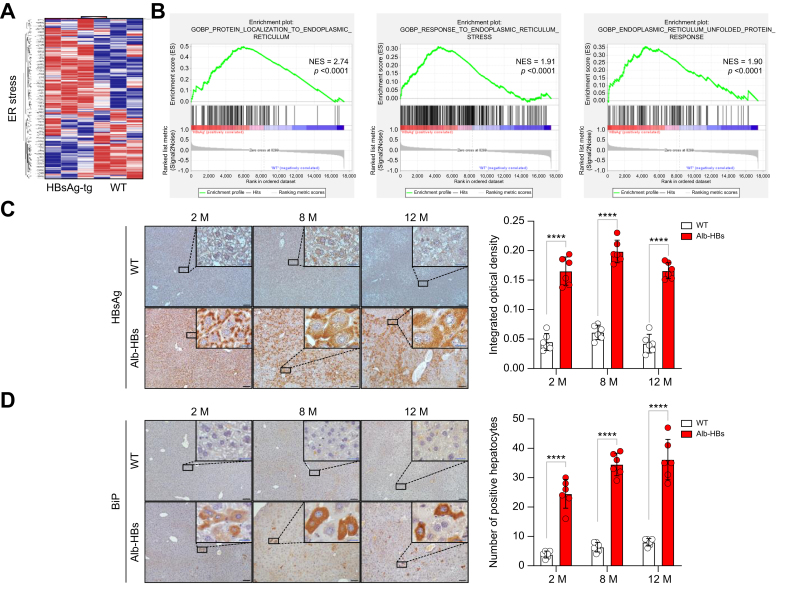
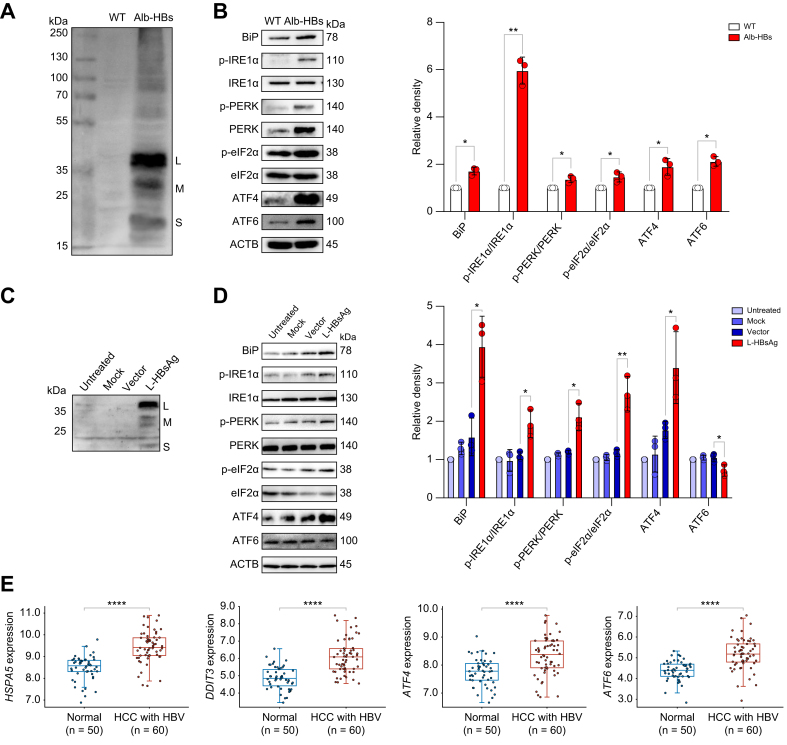
Hemizygous Tg(Alb1HBV)44Bri/J mice were examined for HBsAg-induced carcinogenic events. Gene set-enrichment analysis identified significant signatures in HBsAg-transgenic mice that correlated with endoplasmic reticulum (ER) stress, unfolded protein response, autophagy and proliferation. These events were investigated by western blotting, immunohistochemical and immunocytochemical staining in 2-, 8- and 12-month-old HBsAg-transgenic mice. The results were verified in HBsAg-overexpressing Hepa1-6 cells and validated in human HBV-related HCC samples.
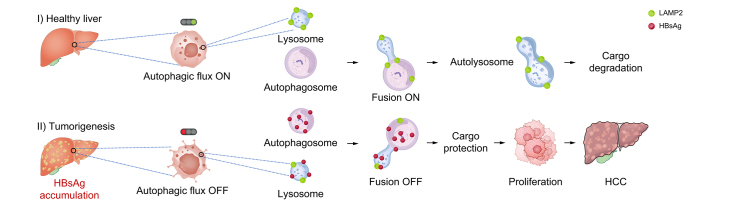
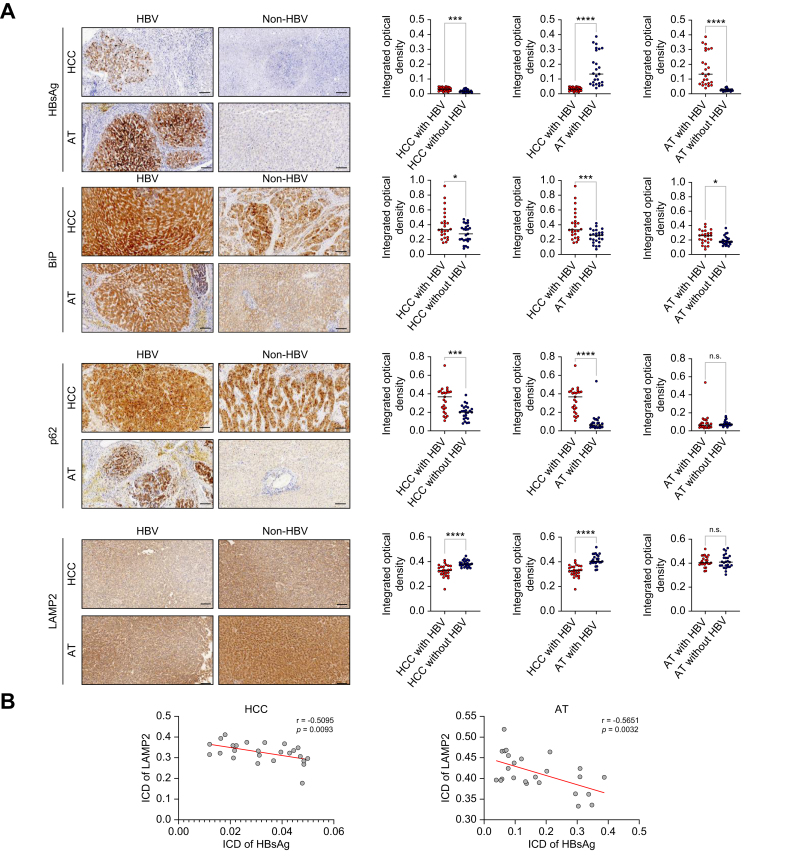
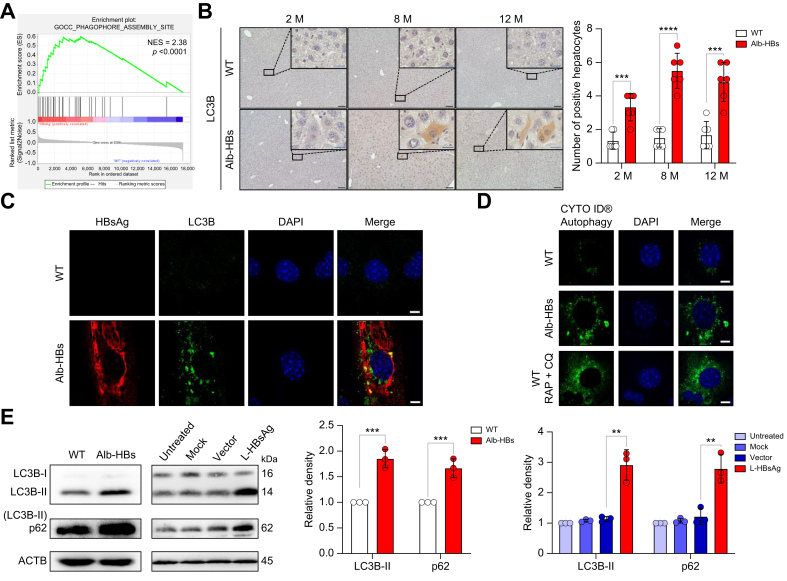
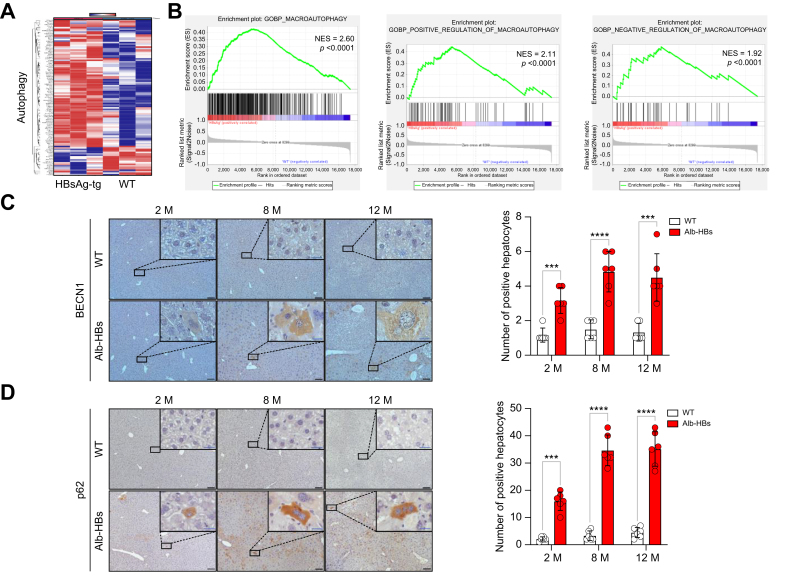
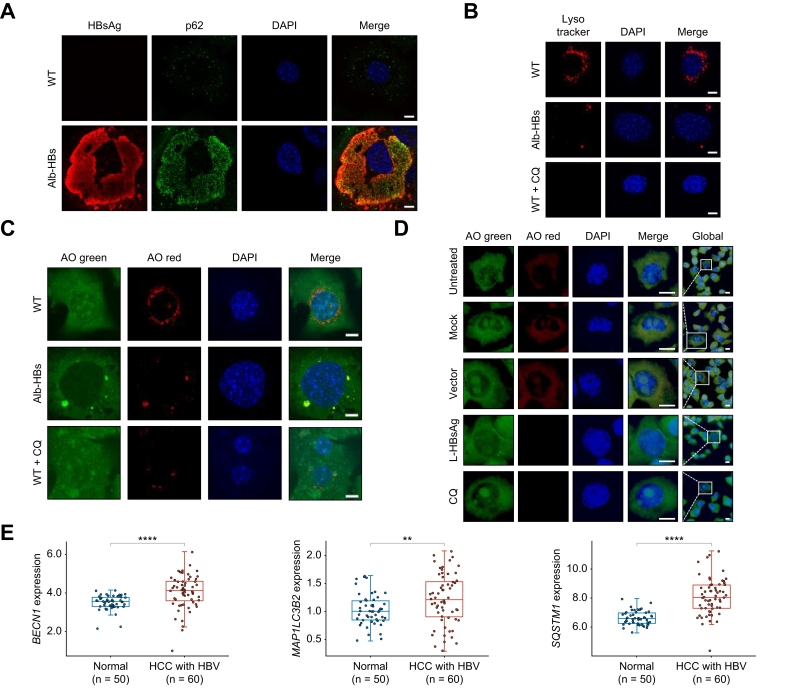
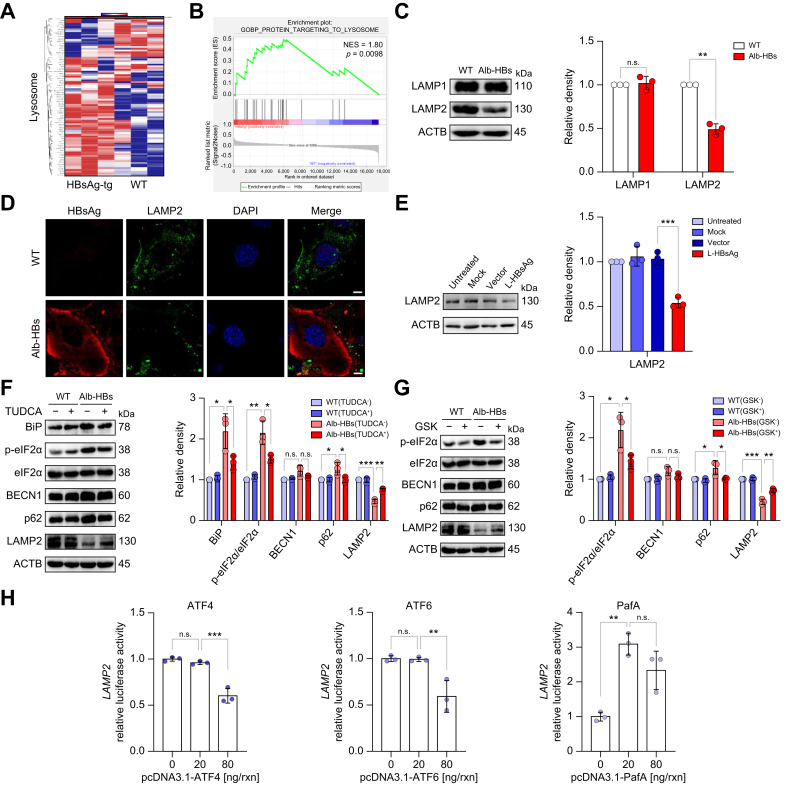
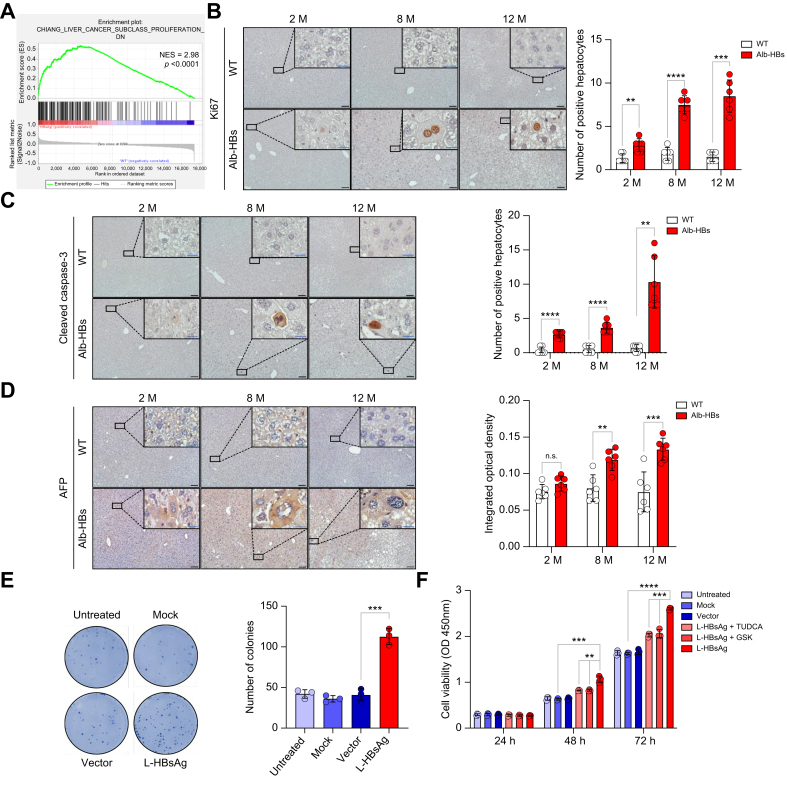
Increased BiP expression in HBsAg-transgenic mice indicated induction of the unfolded protein response. In addition, early-phase autophagy was enhanced (increased BECN1 and LC3B) and late-phase autophagy blocked (increased p62) in HBsAg-transgenic mice. Finally, HBsAg altered lysosomal acidification via ATF4- and ATF6-mediated downregulation of lysosome-associated membrane protein 2 (LAMP2) expression. In patients, HBV-related HCC and adjacent tissues showed increased BiP, p62 and downregulated LAMP2 compared to uninfected controls. the use of ER stress inhibitors reversed the HBsAg-related suppression of LAMP2. Furthermore, HBsAg promoted hepatocellular proliferation as indicated by Ki67, cleaved caspase-3 and AFP staining in paraffin-embedded liver sections from HBsAg-transgenic mice. These results were further verified by colony formation assays in HBsAg-expressing Hepa1-6 cells. Interestingly, inhibition of ER stress in HBsAg-overexpressing Hepa1-6 cells suppressed HBsAg-mediated cell proliferation.
These data showed that HBsAg directly induces ER stress, impairs autophagy and promotes proliferation, thereby driving hepatocarcinogenesis. In addition, this study expanded the understanding of HBsAg-mediated intracellular events in carcinogenesis.
Factors and mechanisms involved in hepatocarcinogenesis driven by hepatitis B surface antigen (HBsAg) are poorly defined, hindering the development of effective therapeutic strategies. This study showed that HBsAg-induced endoplasmic reticulum stress suppressed LAMP2, thereby mediating autophagic injury. The present data suggest that restoring LAMP2 function in chronic HBV infection may have both antiviral and anti-cancer effects. This study has provided insights into the role of HBsAg-mediated intracellular events in carcinogenesis and thereby has relevance for future drug development.
乙型肝炎表面抗原(HBsAg)驱动肝癌发生。这一进程中涉及的因素和机制仍不清楚,阻碍了有效治疗策略的开发。因此,我们研究了HBsAg诱导正常肝脏转变为肝细胞癌(HCC)的机制。
对半合子Tg(Alb1HBV)44Bri/J小鼠进行检查,以研究HBsAg诱导的致癌事件。基因集富集分析确定了HBsAg转基因小鼠中与内质网(ER)应激、未折叠蛋白反应、自噬和增殖相关的显著特征。通过蛋白质免疫印迹法、免疫组织化学和免疫细胞化学染色对2个月、8个月和12个月大的HBsAg转基因小鼠进行研究这些事件。结果在过表达HBsAg的Hepa1-6细胞中得到验证,并在人类HBV相关HCC样本中得到证实。
HBsAg转基因小鼠中BiP表达增加表明未折叠蛋白反应被诱导。此外,HBsAg转基因小鼠早期自噬增强(BECN1和LC3B增加),晚期自噬受阻(p62增加)。最后,HBsAg通过ATF4和ATF6介导的溶酶体相关膜蛋白2(LAMP2)表达下调改变溶酶体酸化。在患者中,与未感染对照相比,HBV相关HCC及相邻组织中BiP、p62增加,LAMP2下调。使用ER应激抑制剂可逆转HBsAg相关的LAMP2抑制。此外,如在HBsAg转基因小鼠石蜡包埋肝切片中通过Ki67、裂解的半胱天冬酶-3和甲胎蛋白染色所示,HBsAg促进肝细胞增殖。这些结果在过表达HBsAg的Hepa1-6细胞的集落形成试验中得到进一步验证。有趣的是,在过表达HBsAg的Hepa1-6细胞中抑制ER应激可抑制HBsAg介导的细胞增殖。
这些数据表明,HBsAg直接诱导ER应激、损害自噬并促进增殖,从而驱动肝癌发生。此外,本研究扩展了对HBsAg介导的致癌过程中细胞内事件的理解。
乙型肝炎表面抗原(HBsAg)驱动的肝癌发生所涉及的因素和机制尚不明确,阻碍了有效治疗策略的开发。本研究表明,HBsAg诱导的内质网应激抑制LAMP2,从而介导自噬损伤。目前的数据表明,在慢性HBV感染中恢复LAMP2功能可能具有抗病毒和抗癌作用。本研究为HBsAg介导的细胞内事件在致癌过程中的作用提供了见解,从而与未来的药物开发相关。