Fank Felipe, Artismo Regiana Santos, de Santana Marcos Gonçalves, Esteves Andrea Maculano, Matte Darlan Laurício, Mazo Giovana Zarpellon
Laboratory of Gerontology, Health and Sports Sciences Center, Santa Catarina State University, Florianopolis, Brazil.
Teaching, Research and Extension Center in Physiotherapy in the Pre- and Post-Operation of Major Surgeries, Health and Sports Sciences Center, Santa Catarina State University, Florianopolis, Brazil.
Front Psychol. 2024 Feb 15;15:1322545. doi: 10.3389/fpsyg.2024.1322545. eCollection 2024.
Obstructive sleep apnea (OSA) is a common disorder that affects approximately 1 billion people worldwide. Advanced age is a significant risk factor. Various treatment options have been explored to reduce the severity of OSA symptoms and physical exercise has emerged as a potential alternative therapy. Therefore, this study aims to investigate the effects of a combined exercise program with sleep education on sleep quality and on the severity of OSA in older adults.
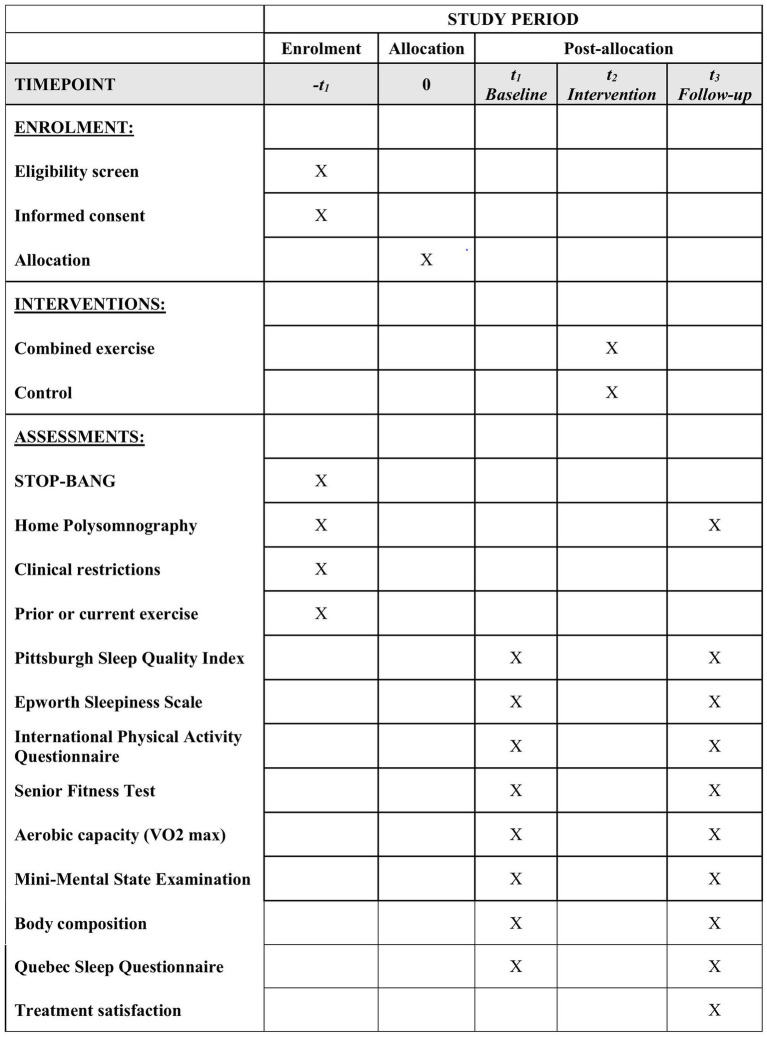
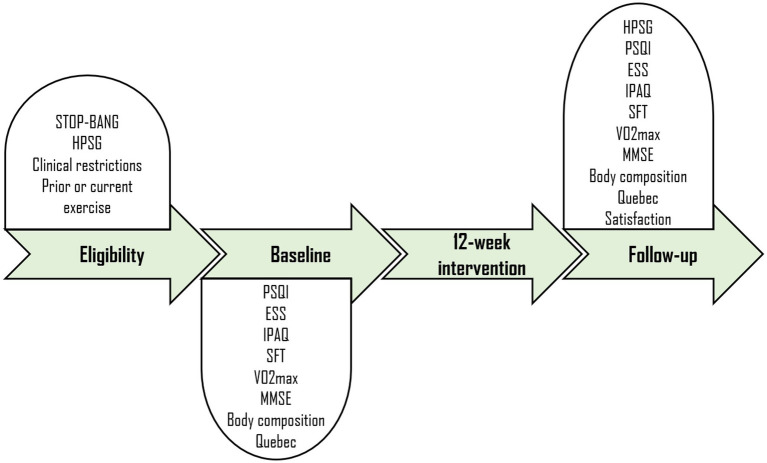
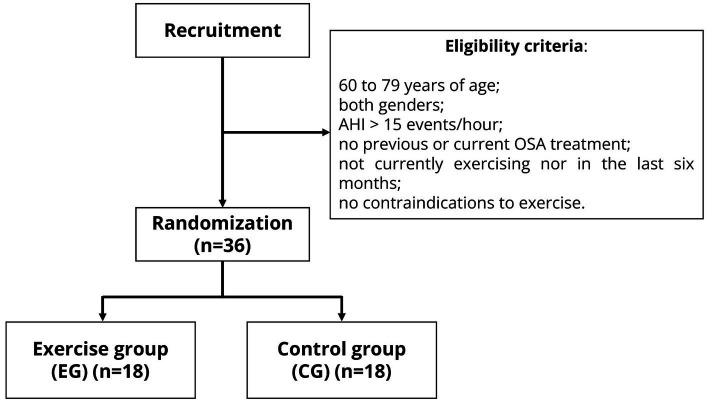
This is a randomized clinical trial with two parallel groups that will involve individuals of both genders aged between 60 and 79 years who have an apnea-hypopnea index (AHI) of more than 15 events per hour and who have not received or are currently undergoing treatment for OSA. Older adults who have engaged in regular exercise in the last six months and individuals with contraindications to exercise will be excluded. The study will assess outcomes related to OSA, including AHI, oxygen desaturation index, minimum and mean oxyhemoglobin saturation, sleep efficiency, sleep latency, and the type of respiratory events. Additionally, sleep quality-related outcomes, daytime sleepiness, physical activity, physical fitness, aerobic capacity, cognitive status, anthropometric measures, and health-related quality of life will be analyzed. Participants will be randomized to two groups: a combined exercise group (involving both resistance and aerobic training) with sleep education, and a control group that will receive only educational recommendations for managing OSA. The intervention will last 12 weeks and will consist of three sessions per week, totaling 36 exercise sessions. Sample size calculation indicates a minimum number of 36 participants.
If the hypothesis is confirmed, this clinical trial will indicate an effective non-pharmacological intervention for treating OSA in older adults. This intervention could be used as an adjunct to existing approaches designed to improve OSA management.
Brazil Clinical Trials Registry (ReBEC), identifier RBR-9hk6pgz.
阻塞性睡眠呼吸暂停(OSA)是一种常见疾病,全球约有10亿人受其影响。高龄是一个重要的风险因素。人们已经探索了各种治疗方案以减轻OSA症状的严重程度,体育锻炼已成为一种潜在的替代疗法。因此,本研究旨在调查一项结合运动计划与睡眠教育对老年人睡眠质量和OSA严重程度的影响。
这是一项随机临床试验,有两个平行组,将纳入年龄在60至79岁之间、呼吸暂停低通气指数(AHI)每小时超过15次且未接受过或目前未正在接受OSA治疗的男女个体。过去六个月内进行过规律锻炼的老年人以及有运动禁忌症的个体将被排除。该研究将评估与OSA相关的结果,包括AHI、氧饱和度下降指数、最低和平均氧合血红蛋白饱和度、睡眠效率、睡眠潜伏期以及呼吸事件类型。此外,还将分析与睡眠质量相关的结果、日间嗜睡、身体活动、身体素质、有氧运动能力、认知状态、人体测量指标以及与健康相关的生活质量。参与者将被随机分为两组:一组是接受睡眠教育的联合运动组(包括抗阻训练和有氧运动),另一组是仅接受OSA管理教育建议的对照组。干预将持续12周,每周进行三次训练,总共36次锻炼课程。样本量计算表明最少需要36名参与者。
如果该假设得到证实,这项临床试验将表明一种治疗老年人OSA的有效非药物干预措施。这种干预措施可作为现有改善OSA管理方法的辅助手段。
巴西临床试验注册中心(ReBEC),标识符RBR - 9hk6pgz。