Sil Archan, Basu Suprit, Joshi Vibhu, Pilania Rakesh Kumar, Siniah Sangeetha, Suri Deepti, Rawat Amit, Singh Surjit
Pediatric Allergy Immunology Unit, Department of Pediatrics, Postgraduate Institute of Medical Education and Research, Chandigarh, India.
Front Pediatr. 2024 Feb 15;12:1368755. doi: 10.3389/fped.2024.1368755. eCollection 2024.
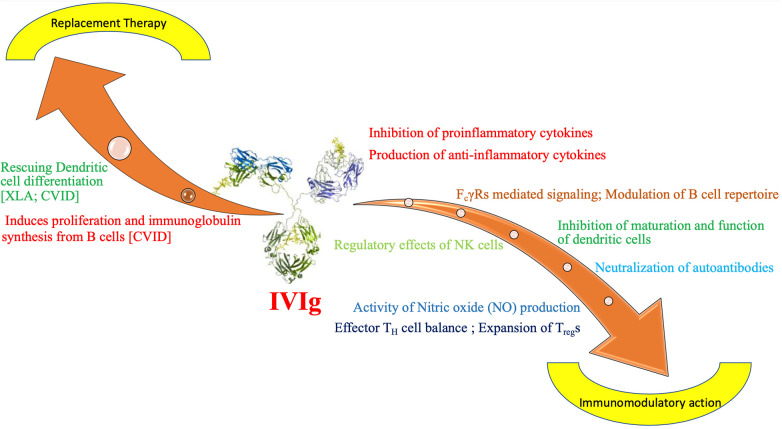
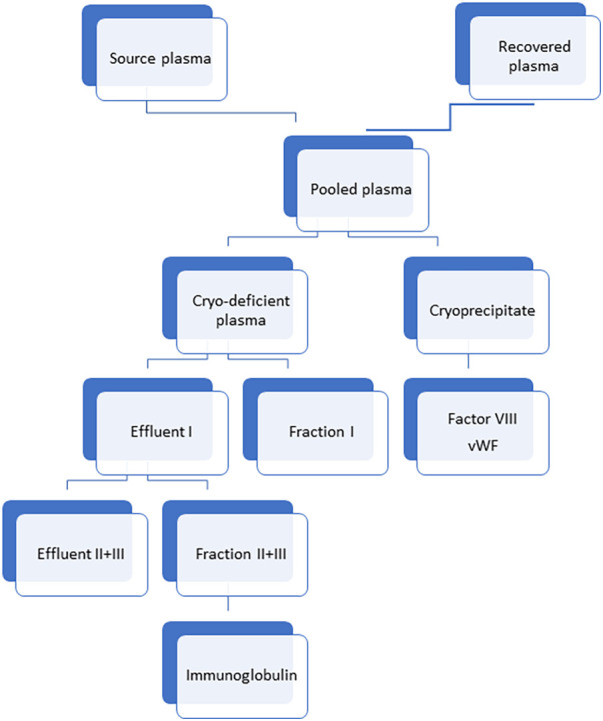
Immunoglobulins (Ig) were used as a therapeutic modality for the first time in a patient with X-linked agammaglobulinemia in 1952 by Colonel Ogden Bruton, decades before the molecular mechanisms causing the disease were unraveled. In many autoimmune and inflammatory illnesses, human immunoglobulin has been employed as a significant immunomodulatory and immunosuppressive drug. In patients with inborn errors of immunity (IEI), immunoglobulin remains a cornerstone of management. IEIs are notable causes of recurrent infections and autoimmunity due to inheritable single-gene defects in genes encoding for different components of the immune system. As there is decreased immunoglobulin production in IEIs with antibody defects, immunoglobulin replacement is the mainstay of therapy in these disorders. Although serum immunoglobulin levels may not be low in combined immune defects, immunoglobulin replacement is still necessary in these disorders due to a deficiency of functional antibodies and qualitative defects of immunoglobulins. Commercial immunoglobulin preparations are generated from plasma donated by thousands of donors. Immunoglobulin preparations are usually available in two forms: intravenous and subcutaneous immunoglobulins. In the developed world, both intravenous immunoglobulin (IVIg) and subcutaneous immunoglobulin (SCIg) are available, and SCIg is preferred over IVIg for replacement therapy in patients with IEIs. In developing countries, IVIg remains the mainstay of replacement therapy. The rate of adverse events has significantly reduced over the last few years due to advancements in the production process. In this review article, we discuss different aspects of the use of Ig (indications, dosing, mechanism of action, route, adverse effects) in patients with IEIs.
1952年,奥格登·布鲁顿上校首次将免疫球蛋白(Ig)用作治疗手段,治疗一名患有X连锁无丙种球蛋白血症的患者,而导致该疾病的分子机制在几十年后才被揭示。在许多自身免疫性和炎性疾病中,人免疫球蛋白已被用作一种重要的免疫调节和免疫抑制药物。在患有先天性免疫缺陷(IEI)的患者中,免疫球蛋白仍然是治疗的基石。IEI是由于免疫系统不同组成部分的基因存在可遗传的单基因缺陷而导致反复感染和自身免疫的显著原因。由于抗体缺陷的IEI中免疫球蛋白产生减少,免疫球蛋白替代是这些疾病治疗的主要方法。尽管在联合免疫缺陷中血清免疫球蛋白水平可能不低,但由于功能性抗体缺乏和免疫球蛋白的质量缺陷,这些疾病中免疫球蛋白替代仍然是必要的。商业免疫球蛋白制剂由数千名捐赠者捐献的血浆制成。免疫球蛋白制剂通常有两种形式:静脉注射和皮下注射免疫球蛋白。在发达国家,静脉注射免疫球蛋白(IVIg)和皮下注射免疫球蛋白(SCIg)均有供应,在IEI患者的替代治疗中,SCIg比IVIg更受青睐。在发展中国家,IVIg仍然是替代治疗的主要方法。由于生产工艺的进步,过去几年不良事件的发生率显著降低。在这篇综述文章中,我们讨论了IEI患者使用Ig的不同方面(适应症、剂量、作用机制、途径、不良反应)。