Nuffield Department of Surgical Sciences, University of Oxford, Oxford, UK; Nuffield Department of Medicine, University of Oxford, Oxford, UK; Big Data Institute, University of Oxford, Oxford, UK.
Nuffield Department of Medicine, University of Oxford, Oxford, UK; Big Data Institute, University of Oxford, Oxford, UK.
Cell Genom. 2024 Mar 13;4(3):100511. doi: 10.1016/j.xgen.2024.100511. Epub 2024 Feb 29.
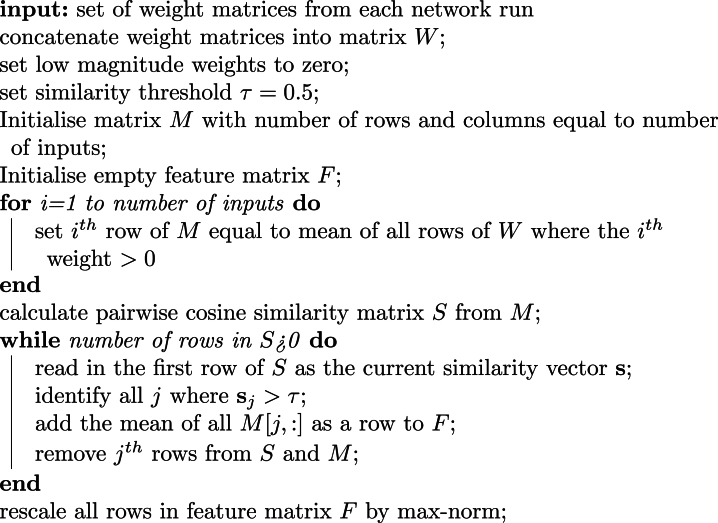
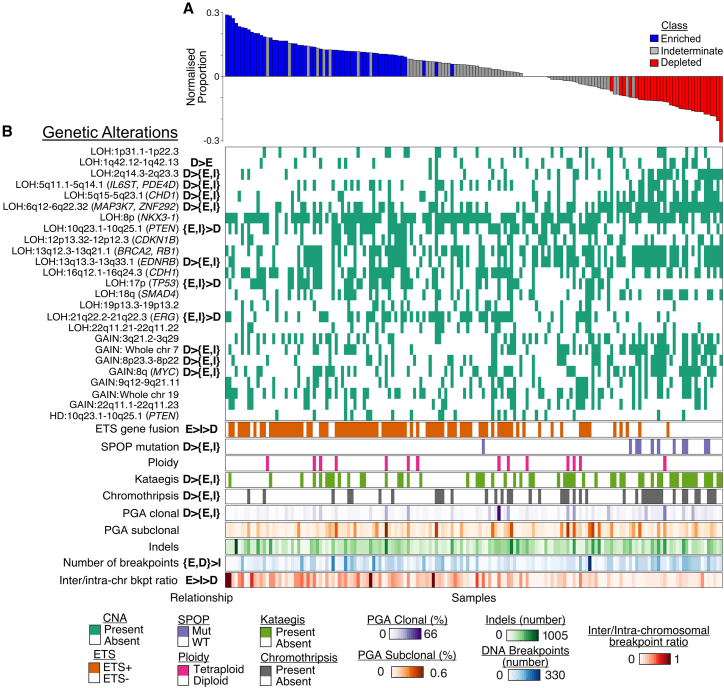
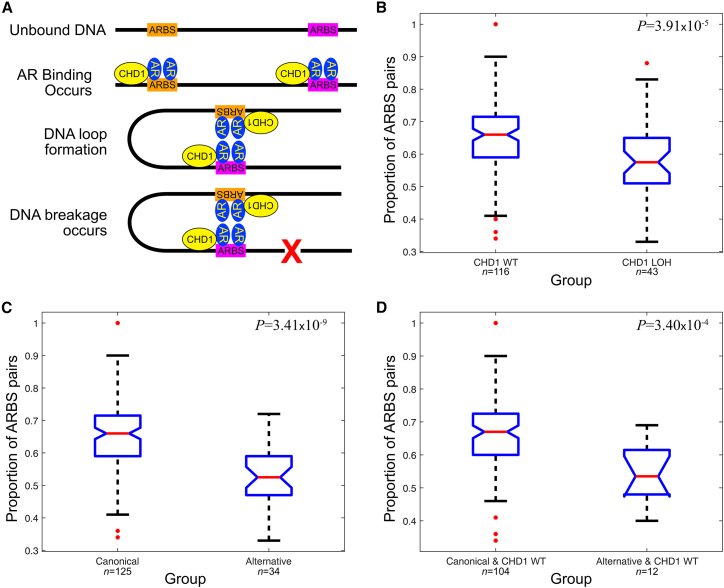
The development of cancer is an evolutionary process involving the sequential acquisition of genetic alterations that disrupt normal biological processes, enabling tumor cells to rapidly proliferate and eventually invade and metastasize to other tissues. We investigated the genomic evolution of prostate cancer through the application of three separate classification methods, each designed to investigate a different aspect of tumor evolution. Integrating the results revealed the existence of two distinct types of prostate cancer that arise from divergent evolutionary trajectories, designated as the Canonical and Alternative evolutionary disease types. We therefore propose the evotype model for prostate cancer evolution wherein Alternative-evotype tumors diverge from those of the Canonical-evotype through the stochastic accumulation of genetic alterations associated with disruptions to androgen receptor DNA binding. Our model unifies many previous molecular observations, providing a powerful new framework to investigate prostate cancer disease progression.
癌症的发展是一个涉及遗传改变的序贯获得的进化过程,这些改变破坏了正常的生物学过程,使肿瘤细胞能够快速增殖,并最终侵袭和转移到其他组织。我们通过应用三种不同的分类方法研究了前列腺癌的基因组进化,每种方法都旨在研究肿瘤进化的不同方面。整合结果揭示了两种不同类型的前列腺癌的存在,它们来自不同的进化轨迹,分别命名为经典和替代进化疾病类型。因此,我们提出了前列腺癌进化的 evotype 模型,其中替代-evotype 肿瘤通过与雄激素受体 DNA 结合破坏相关的遗传改变的随机积累而与经典-evotype 肿瘤分化。我们的模型统一了许多以前的分子观察结果,为研究前列腺癌疾病进展提供了一个强大的新框架。