Ou Jianjun, Dong Huixi, Dai Si, Hou Yanting, Wang Ying, Lu Xiaozi, Xun Guanglei, Xia Kun, Zhao Jingping, Shen Yidong
Department of Psychiatry, and National Clinical Research Center for Mental Disorders, The Second Xiangya Hospital of Central South University, Changsha, Hunan, China.
Mental Health Center of Xiangya Hospital, Central South University, Changsha, Hunan, China.
Front Psychiatry. 2024 Feb 16;15:1291356. doi: 10.3389/fpsyt.2024.1291356. eCollection 2024.
The use of pre- and perinatal risk factors as predictive factors may lower the age limit for reliable autism prediction. The objective of this study was to develop a clinical model based on these risk factors to predict autism.
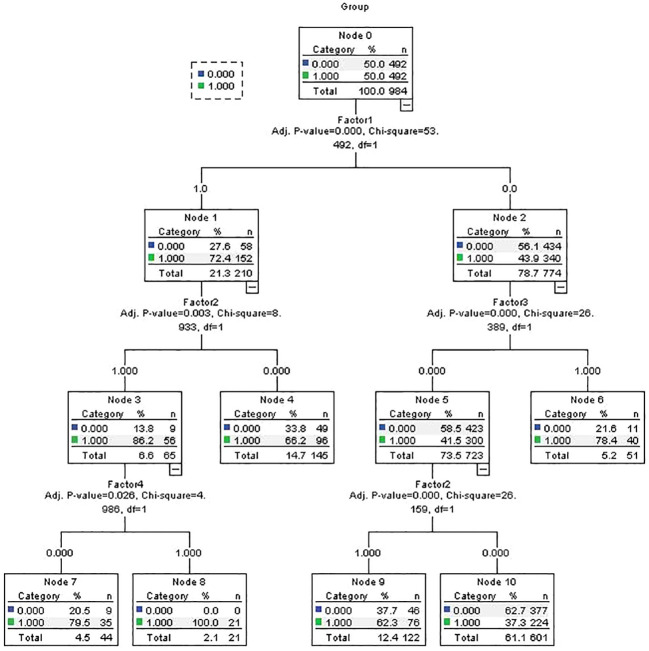
A stepwise logistic regression analysis was conducted to explore the relationships between 28 candidate risk factors and autism risk among 615 Han Chinese children with autism and 615 unrelated typically developing children. The significant factors were subsequently used to create a clinical risk score model. A chi-square automatic interaction detector (CHAID) decision tree was used to validate the selected predictors included in the model. The predictive performance of the model was evaluated by an independent cohort.
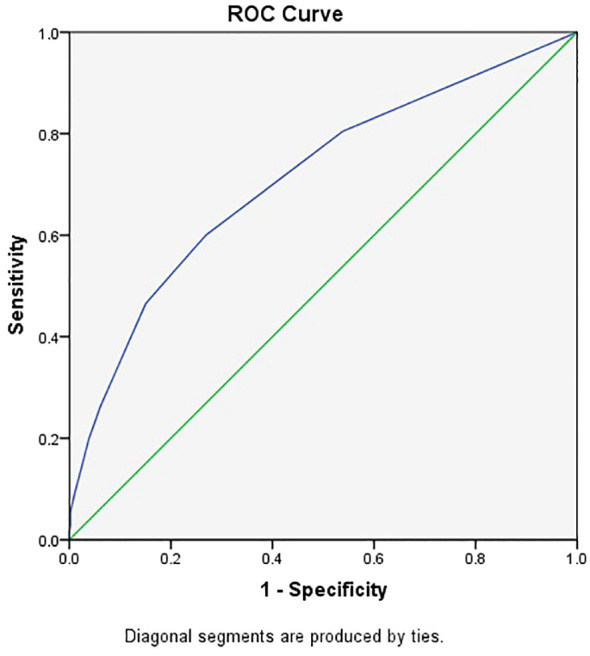
Five factors (pregnancy influenza-like illness, pregnancy stressors, maternal allergic/autoimmune disease, cesarean section, and hypoxia) were found to be significantly associated with autism risk. A receiver operating characteristic (ROC) curve indicated that the risk score model had good discrimination ability for autism, with an area under the curve (AUC) of 0.711 (95% CI=0.679-0.744); in the external validation cohort, the model showed slightly worse but overall similar predictive performance. Further subgroup analysis indicated that a higher risk score was associated with more behavioral problems. The risk score also exhibited robustness in a subgroup analysis of patients with mild autism.
This risk score model could lower the age limit for autism prediction with good discrimination performance, and it has unique advantages in clinical application.
将围产期及产前风险因素用作预测因素可能会降低可靠预测自闭症的年龄界限。本研究的目的是基于这些风险因素开发一种临床模型以预测自闭症。
对615名汉族自闭症儿童和615名无亲缘关系的正常发育儿童进行逐步逻辑回归分析,以探究28个候选风险因素与自闭症风险之间的关系。随后使用这些显著因素创建一个临床风险评分模型。使用卡方自动交互检测(CHAID)决策树来验证模型中纳入的选定预测因素。通过一个独立队列评估该模型的预测性能。
发现五个因素(孕期流感样疾病、孕期应激源、母亲过敏性/自身免疫性疾病、剖宫产和缺氧)与自闭症风险显著相关。受试者工作特征(ROC)曲线表明,风险评分模型对自闭症具有良好的辨别能力,曲线下面积(AUC)为0.711(95%CI = 0.679 - 0.744);在外部验证队列中,该模型的预测性能略差,但总体相似。进一步的亚组分析表明,较高的风险评分与更多行为问题相关。在轻度自闭症患者的亚组分析中,风险评分也表现出稳健性。
该风险评分模型可以降低自闭症预测的年龄界限,具有良好的辨别性能,并且在临床应用中具有独特优势。