Animal and Bioscience Research Department, Teagasc, Animal & Grassland Research and Innovation Centre, Grange, Dunsany, Co. Meath, Ireland.
Queensland Bioscience Precinct, CSIRO Agriculture & Food, 306 Carmody Rd., St. Lucia, 4067, Brisbane, QLD, Australia.
BMC Genomics. 2024 Mar 4;25(1):234. doi: 10.1186/s12864-024-10151-2.
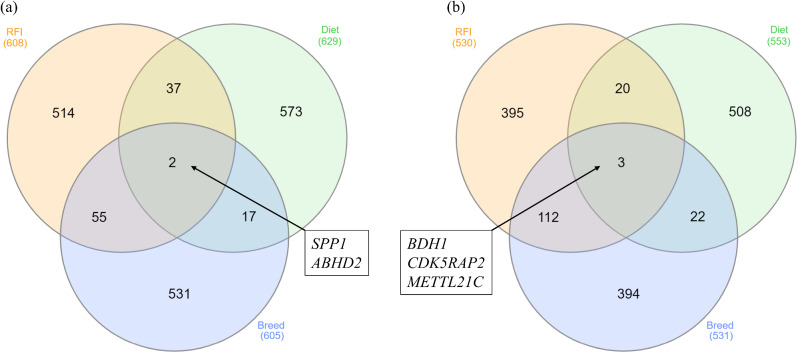
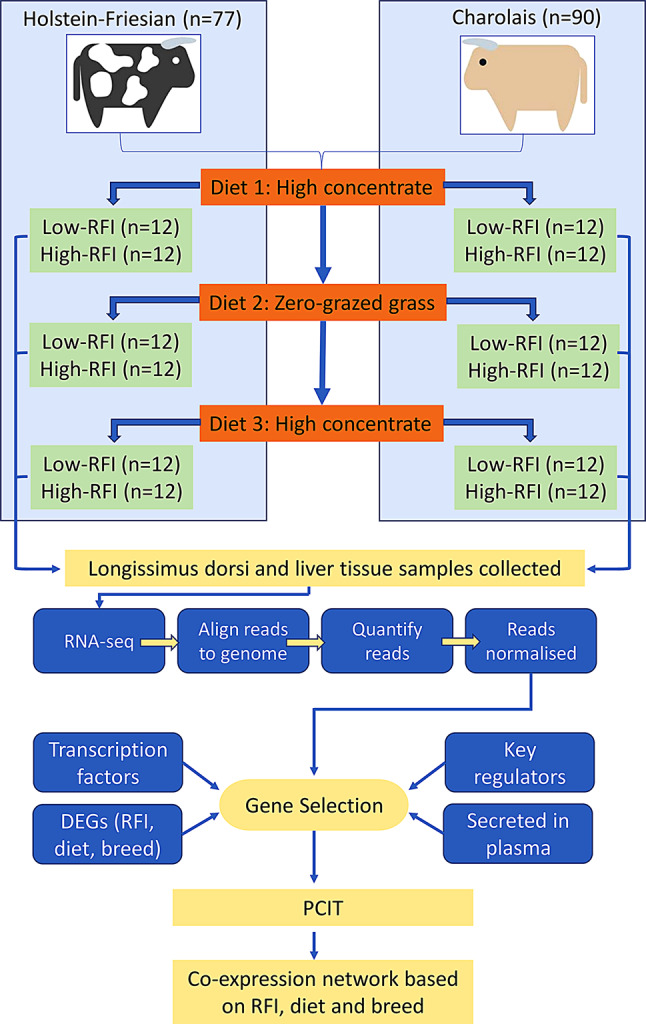
Provision of feed is a major determinant of overall profitability in beef production systems, accounting for up to 75% of the variable costs. Thus, improving cattle feed efficiency, by way of determining the underlying genomic control and subsequently selecting for feed efficient cattle, provides a method through which feed input costs may be reduced. The objective of this study was to undertake gene co-expression network analysis using RNA-Sequence data generated from Longissimus dorsi and liver tissue samples collected from steers of two contrasting breeds (Charolais and Holstein-Friesian) divergent for residual feed intake (RFI), across two consecutive distinct dietary phases (zero-grazed grass and high-concentrate). Categories including differentially expressed genes (DEGs) based on the contrasts of RFI phenotype, breed and dietary source, as well as key transcription factors and proteins secreted in plasma were utilised as nodes of the gene co-expression network.
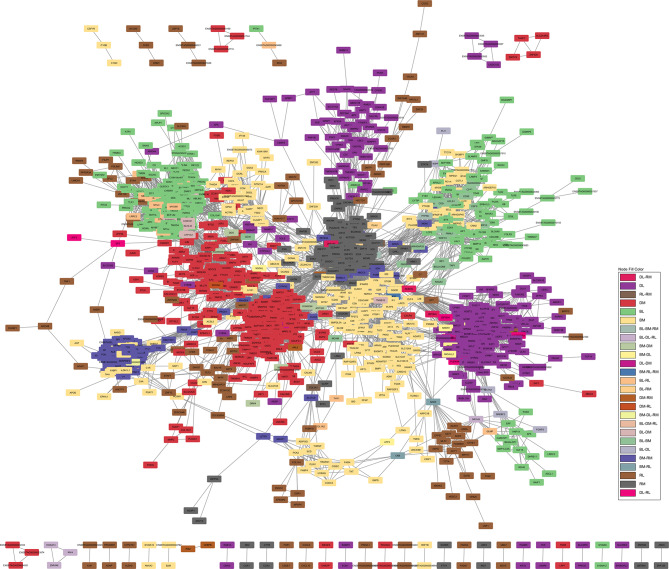
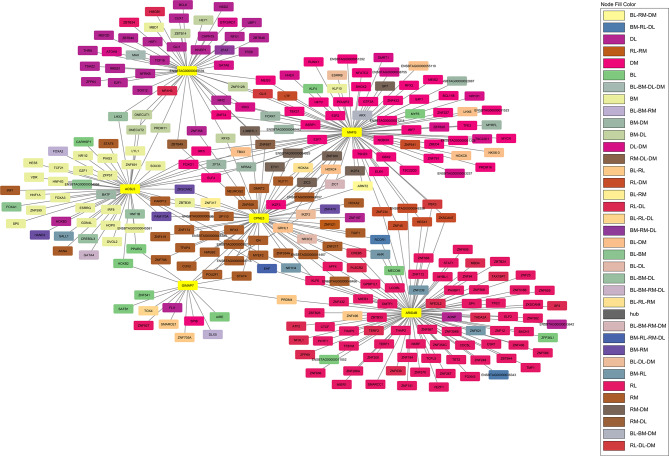
Of the 2,929 DEGs within the network analysis, 1,604 were reported to have statistically significant correlations (≥ 0.80), resulting in a total of 43,876 significant connections between genes. Pathway analysis of clusters of co-expressed genes revealed enrichment of processes related to lipid metabolism (fatty acid biosynthesis, fatty acid β-oxidation, cholesterol biosynthesis), immune function, (complement cascade, coagulation system, acute phase response signalling), and energy production (oxidative phosphorylation, mitochondrial L-carnitine shuttle pathway) based on genes related to RFI, breed and dietary source contrasts.
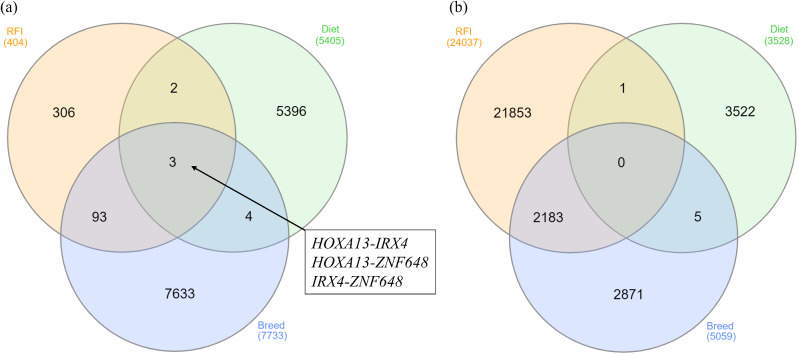
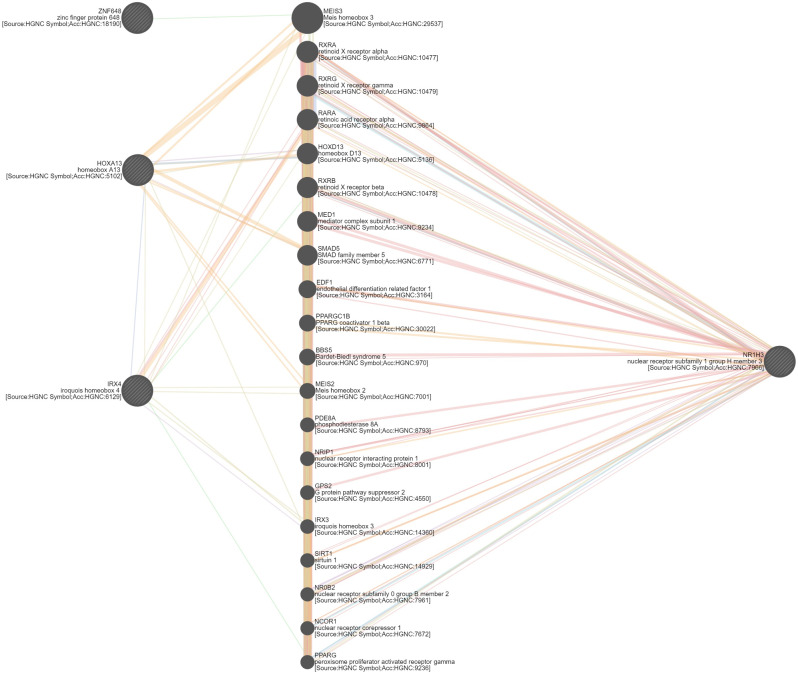
Although similar biological processes were evident across the three factors examined, no one gene node was evident across RFI, breed and diet contrasts in both liver and muscle tissues. However within the liver tissue, the IRX4, NR1H3, HOXA13 and ZNF648 gene nodes, which all encode transcription factors displayed significant connections across the RFI, diet and breed comparisons, indicating a role for these transcription factors towards the RFI phenotype irrespective of diet and breed. Moreover, the NR1H3 gene encodes a protein secreted into plasma from the hepatocytes of the liver, highlighting the potential for this gene to be explored as a robust biomarker for the RFI trait in beef cattle.
在牛肉生产系统中,提供饲料是整体盈利能力的主要决定因素,占可变成本的 75%。因此,通过确定潜在的基因组控制,并随后选择饲料效率高的牛,提高牛的饲料效率,提供了一种降低饲料投入成本的方法。本研究的目的是利用从具有不同残余采食量 (RFI) 表型的两个品种(夏洛莱和荷斯坦-弗里森)的阉牛的背最长肌和肝脏组织样本中生成的 RNA-Seq 数据,进行基因共表达网络分析,这两个品种分别经历了两个不同的饮食阶段(零放牧草和高浓缩饲料)。作为基因共表达网络的节点,使用基于 RFI 表型、品种和饮食来源的差异表达基因 (DEG) 类别,以及在血浆中分泌的关键转录因子和蛋白质。
在网络分析的 2929 个 DEG 中,有 1604 个被报道具有统计学上显著的相关性(≥0.80),导致基因之间存在总计 43876 个显著连接。共表达基因簇的途径分析表明,与 RFI、品种和饮食来源对比相关的基因富集了与脂质代谢(脂肪酸生物合成、脂肪酸β-氧化、胆固醇生物合成)、免疫功能(补体级联、凝血系统、急性期反应信号)和能量产生(氧化磷酸化、线粒体 L-肉碱穿梭途径)相关的过程。
尽管在三个因素的研究中都出现了类似的生物学过程,但在肝脏和肌肉组织中,没有一个基因节点在 RFI、品种和饮食的对比中都存在。然而,在肝脏组织中,IRX4、NR1H3、HOXA13 和 ZNF648 基因节点,都编码转录因子,在 RFI、饮食和品种比较中都有显著的连接,表明这些转录因子在 RFI 表型中发挥作用,而不受饮食和品种的影响。此外,NR1H3 基因编码一种从肝脏的肝细胞分泌到血浆中的蛋白质,这突出了该基因作为肉牛 RFI 性状的一个稳健的生物标志物的潜力。