Department of Ophthalmology, King Abdulaziz Medical City, National Guard Health Affairs, Riyadh, Saudi Arabia.
King Abdullah International Medical Research Center, Riyadh, Saudi Arabia.
Hum Resour Health. 2024 Mar 4;22(1):19. doi: 10.1186/s12960-024-00902-3.
The ophthalmology workforce is an integral component of any health care system. However, the demand for eye care has imposed a heavy burden on this system. Hence, this study aimed to estimate the trends, demographic characteristics, distribution, and variation between Saudi and non-Saudi ophthalmologists and the future challenges of the ophthalmology workforce in the Kingdom of Saudi Arabia (KSA).
This study was conducted in the KSA and included ophthalmologists practicing from 2010 to 2023. From the Saudi Commission for Health Specialties, we obtained the number, gender, nationality, and rank of ophthalmologists. The geographic distribution of ophthalmologists in the KSA was obtained from the Ministry of Health Statistical Yearbook 2021.
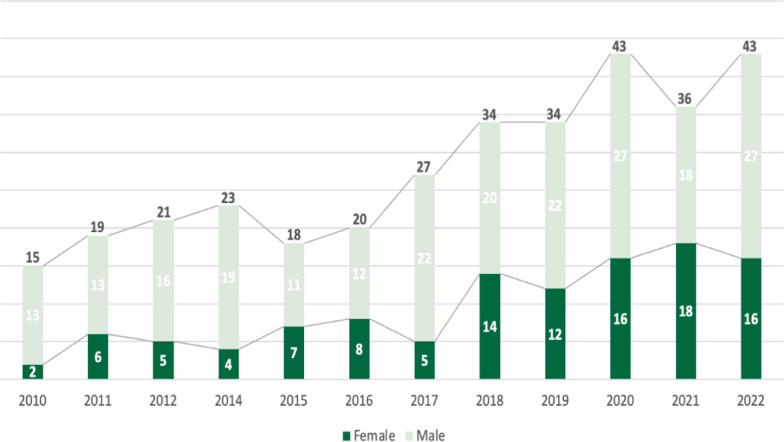
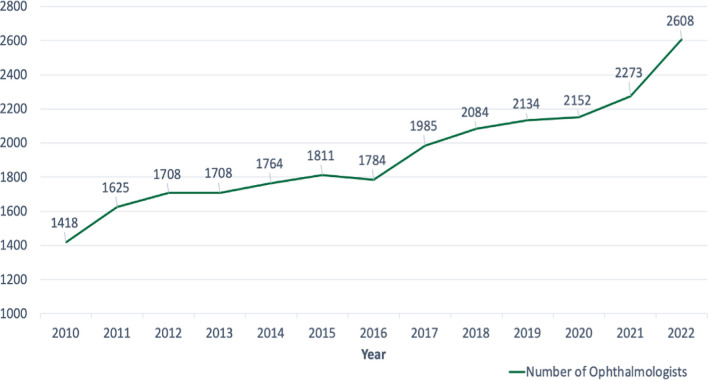
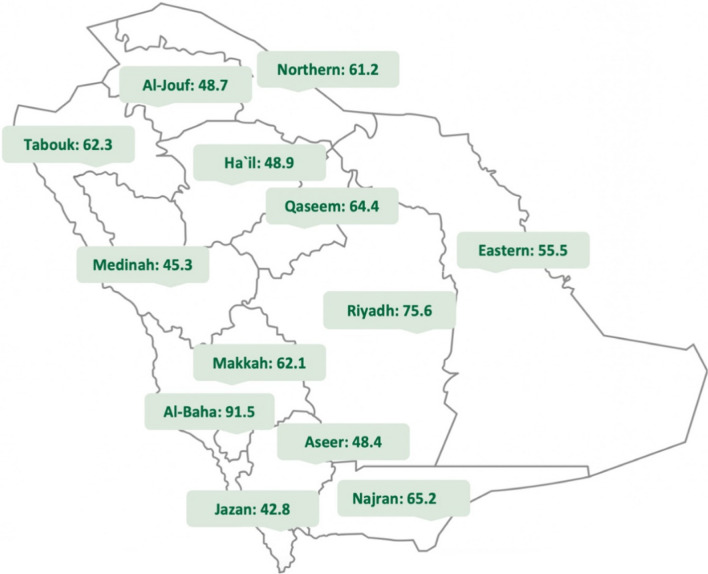
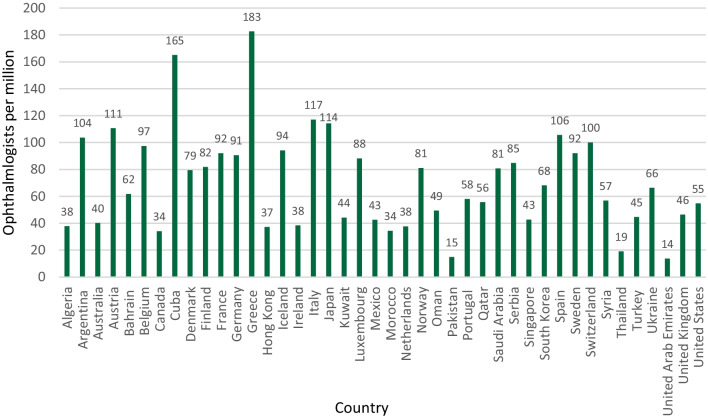
As of January 2023, the KSA had a total of 2608 registered ophthalmologists, with approximately 81.06 ophthalmologists per 1,000,000 people. Only 38% of all ophthalmologists in the country were Saudis. The percentage of Saudi female graduates increased from 13.3% to 37.2% over 12 years [Sen's estimator of slope for median increase per year = 1.33 (95% CI 1.22-1.57) graduates; trend test P < 0.001). Additionally, we found that the geographic distribution of ophthalmologists varied (test for homogeneity of rates, P < 0.0001), with the larger regions having a higher concentration of ophthalmologists than the smaller regions (75.6 in Riyadh versus 42.8 in Jazan per 1,000,000 people). However, the World Health Organization's target for the ophthalmologist-to-population ratio has been achieved in all 13 health regions of KSA.
The recommended ophthalmologist-to-population ratio has been achieved in the KSA, and the number of Saudi ophthalmologists has almost doubled over the past 8 years. However, the majority of ophthalmologists are still non-Saudi, as Saudi ophthalmologists constitute approximately one-third of the ophthalmology workforce in the KSA. The geographical distribution of ophthalmologists varies, which might affect access to care in peripheral regions. In response to the growing demand for eye care in the KSA, several more effective measures might need to be considered.
眼科医务人员是任何医疗保健系统的重要组成部分。然而,对眼保健的需求给这个系统带来了沉重的负担。因此,本研究旨在评估沙特阿拉伯王国(沙特)眼科医务人员的趋势、人口统计学特征、分布和变化,以及眼科医务人员未来的挑战。
本研究在沙特进行,纳入了 2010 年至 2023 年期间执业的眼科医生。我们从沙特卫生专业人员委员会获得了眼科医生的数量、性别、国籍和级别。沙特的眼科医生地理分布从 2021 年卫生部统计年鉴中获得。
截至 2023 年 1 月,沙特共有 2608 名注册眼科医生,每 100 万人中有 81.06 名眼科医生。沙特全国所有眼科医生中只有 38%是沙特人。沙特女毕业生的比例在 12 年内从 13.3%增加到 37.2%[中位数每年递增率的 Sen 估计值为 1.33(95%置信区间 1.22-1.57)毕业生;趋势检验 P<0.001]。此外,我们发现眼科医生的地理分布存在差异(速率同质性检验,P<0.0001),较大地区的眼科医生密度高于较小地区(每 100 万人中,利雅得有 75.6 名,而吉赞有 42.8 名)。然而,沙特阿拉伯的所有 13 个卫生区都达到了世界卫生组织规定的眼科医生与人口的比例目标。
沙特阿拉伯已达到建议的眼科医生与人口的比例,过去 8 年来,沙特眼科医生的数量几乎翻了一番。然而,大多数眼科医生仍然是非沙特人,因为沙特眼科医生约占沙特眼科医务人员的三分之一。眼科医生的地理分布存在差异,这可能会影响到偏远地区的医疗服务可及性。为了应对沙特阿拉伯眼保健需求的增长,可能需要考虑采取更多有效措施。