Department of Critical Care Medicine of the Third Affiliated Hospital (The First People's Hospital of Zunyi), Zunyi Medical University, Zunyi, China.
Physiol Rep. 2024 Mar;12(5):e15964. doi: 10.14814/phy2.15964.
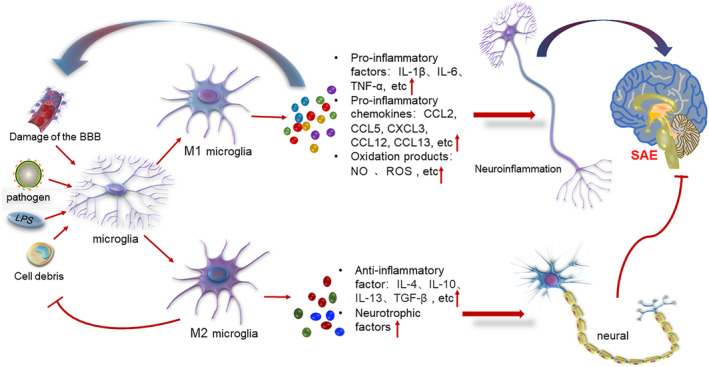
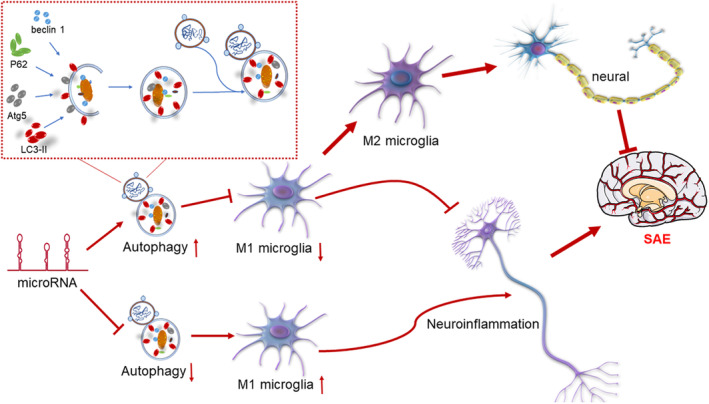
Sepsis-associated encephalopathy (SAE) describes diffuse or multifocal cerebral dysfunction caused by the systemic inflammatory response to sepsis. SAE is a common neurological complication in patients in the middle and late stages of sepsis in the intensive care unit. Microglia, resident macrophages of the central nervous system, phagocytose small numbers of neuronal cells and apoptotic cells, among other cells, to maintain the dynamic balance of the brain's internal environment. The neuroinflammatory response induced by activated microglia plays a central role in the pathogenesis of various central nervous system diseases. In this paper, we systematically describe the functions and phenotypes of microglia, summarize how microglia mediate neuroinflammation and contribute to the occurrence and development of SAE, and discuss recent progress in autophagy- and microRNA-mediated regulation of microglial activation to provide a theoretical basis for the prevention and treatment of SAE and identify related therapeutic targets.
脓毒症相关性脑病(SAE)描述了全身性炎症反应综合征(systemic inflammatory response syndrome,SIRS)导致的弥漫性或多灶性脑功能障碍。SAE 是重症监护病房中脓毒症中晚期患者常见的神经系统并发症。小胶质细胞是中枢神经系统的固有巨噬细胞,可吞噬少量神经元细胞和凋亡细胞等细胞,以维持大脑内环境的动态平衡。活化的小胶质细胞引发的神经炎症反应在各种中枢神经系统疾病的发病机制中起着核心作用。在本文中,我们系统地描述了小胶质细胞的功能和表型,总结了小胶质细胞如何介导神经炎症,并促进 SAE 的发生和发展,同时讨论了自噬和 microRNA 介导的小胶质细胞激活调控的最新进展,为 SAE 的预防和治疗提供理论依据,并确定相关的治疗靶点。