Stastna Miroslava
Institute of Analytical Chemistry of the Czech Academy of Sciences, Brno, Czech Republic.
FEBS J. 2025 Jan;292(1):28-46. doi: 10.1111/febs.17108. Epub 2024 Mar 5.
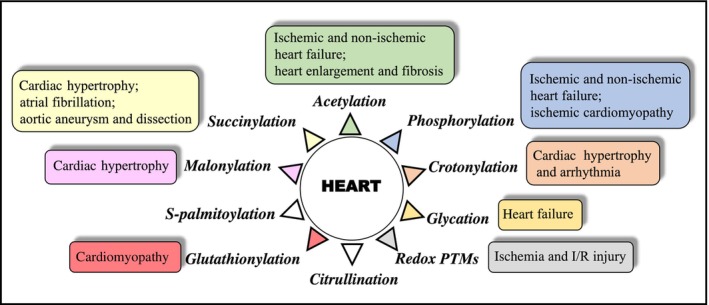
Over 400 different types of post-translational modifications (PTMs) have been reported and over 200 various types of PTMs have been discovered using mass spectrometry (MS)-based proteomics. MS-based proteomics has proven to be a powerful method capable of global PTM mapping with the identification of modified proteins/peptides, the localization of PTM sites and PTM quantitation. PTMs play regulatory roles in protein functions, activities and interactions in various heart related diseases, such as ischemia/reperfusion injury, cardiomyopathy and heart failure. The recognition of PTMs that are specific to cardiovascular pathology and the clarification of the mechanisms underlying these PTMs at molecular levels are crucial for discovery of novel biomarkers and application in a clinical setting. With sensitive MS instrumentation and novel biostatistical methods for precise processing of the data, low-abundance PTMs can be successfully detected and the beneficial or unfavorable effects of specific PTMs on cardiac function can be determined. Moreover, computational proteomic strategies that can predict PTM sites based on MS data have gained an increasing interest and can contribute to characterization of PTM profiles in cardiovascular disorders. More recently, machine learning- and deep learning-based methods have been employed to predict the locations of PTMs and explore PTM crosstalk. In this review article, the types of PTMs are briefly overviewed, approaches for PTM identification/quantitation in MS-based proteomics are discussed and recently published proteomic studies on PTMs associated with cardiovascular diseases are included.
据报道,有超过400种不同类型的翻译后修饰(PTM),并且使用基于质谱(MS)的蛋白质组学已经发现了200多种不同类型的PTM。基于MS的蛋白质组学已被证明是一种强大的方法,能够通过鉴定修饰的蛋白质/肽、PTM位点的定位和PTM定量来进行全局PTM图谱分析。PTM在各种与心脏相关的疾病(如缺血/再灌注损伤、心肌病和心力衰竭)中的蛋白质功能、活性和相互作用中发挥调节作用。识别心血管病理学特有的PTM并在分子水平上阐明这些PTM的潜在机制对于发现新型生物标志物并应用于临床至关重要。借助灵敏的MS仪器和用于精确处理数据的新型生物统计学方法,可以成功检测到低丰度PTM,并确定特定PTM对心脏功能的有益或不利影响。此外,基于MS数据预测PTM位点的计算蛋白质组学策略越来越受到关注,并有助于表征心血管疾病中的PTM谱。最近,基于机器学习和深度学习的方法已被用于预测PTM的位置并探索PTM串扰。在这篇综述文章中,简要概述了PTM的类型,讨论了基于MS的蛋白质组学中PTM鉴定/定量的方法,并纳入了最近发表的关于与心血管疾病相关的PTM的蛋白质组学研究。