Department of Medical Microbiology, Faculty of Medicine, University of Debrecen, Debrecen, Hungary.
Doctoral School of Pharmaceutical Sciences, University of Debrecen, Debrecen, Hungary.
Microbiol Spectr. 2024 Apr 2;12(4):e0227823. doi: 10.1128/spectrum.02278-23. Epub 2024 Mar 5.
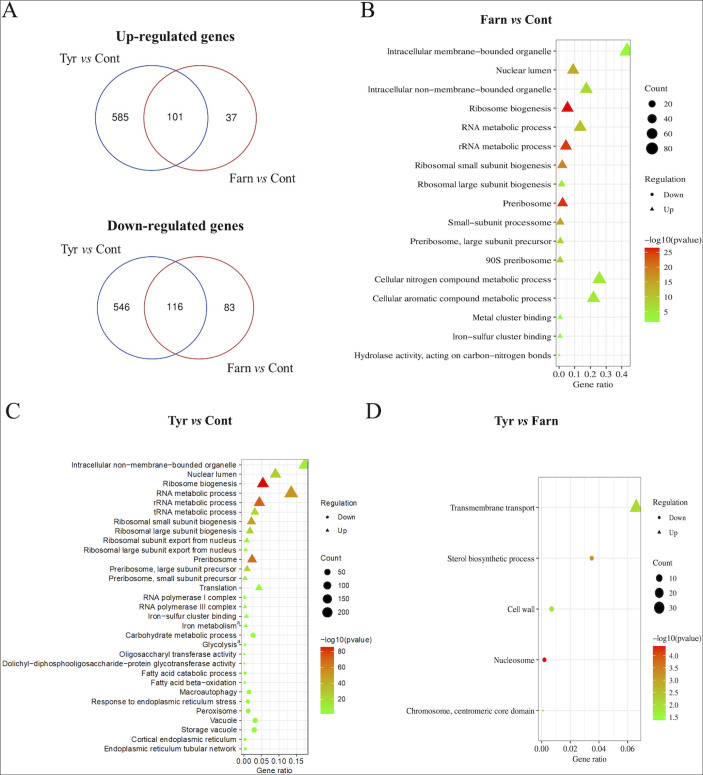
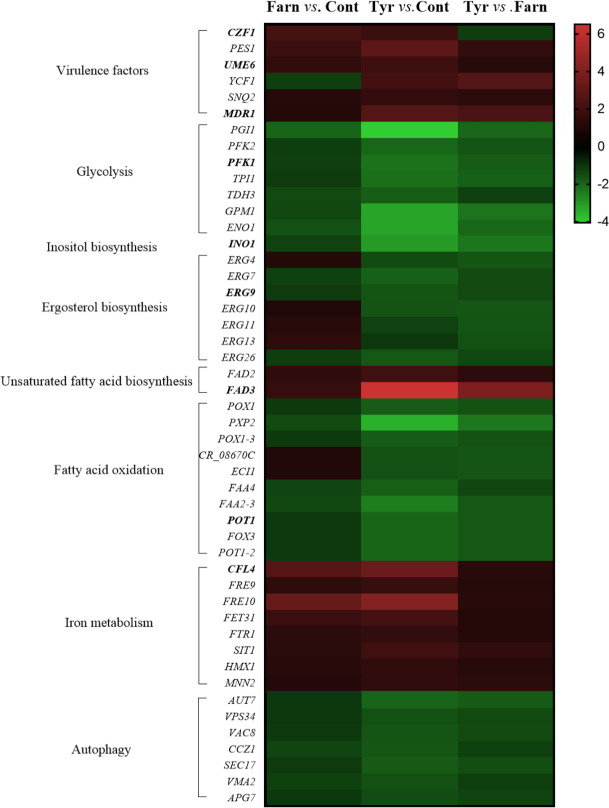
is frequently associated with biofilm-related invasive infections. The resistant profile of these biofilms necessitates innovative therapeutic options, where quorum sensing may be a potential target. Farnesol and tyrosol are two fungal quorum-sensing molecules with antifungal effects at supraphysiological concentrations. Here, we performed genome-wide transcript profiling with biofilms following farnesol or tyrosol exposure using transcriptome sequencing (RNA-Seq). Since transition metals play a central role in fungal virulence and biofilm formation, levels of intracellular calcium, magnesium, and iron were determined following farnesol or tyrosol treatment using inductively coupled plasma optical emission spectrometry. Farnesol caused an 89.9% and 73.8% significant reduction in the calcium and magnesium content, respectively, whereas tyrosol resulted in 82.6%, 76.6%, and 81.2% decrease in the calcium, magnesium, and iron content, respectively, compared to the control. Genes involved in biofilm events, glycolysis, ergosterol biosynthesis, fatty acid oxidation, iron metabolism, and autophagy were primarily affected in treated cells. To prove ergosterol quorum-sensing molecule interactions, microdilution-based susceptibility testing was performed, where the complexation of farnesol, but not tyrosol, with ergosterol was impeded in the presence of exogenous ergosterol, resulting in a minimum inhibitory concentration increase in the quorum-sensing molecules. This study revealed several farnesol- and tyrosol-specific responses, which will contribute to the development of alternative therapies against biofilms.
is a multidrug-resistant fungal pathogen, which is frequently associated with biofilm-related infections. -derived quorum-sensing molecules (farnesol and tyrosol) play a pivotal role in the regulation of fungal morphogenesis and biofilm development. Furthermore, they may have remarkable anti-biofilm effects, especially at supraphysiological concentrations. Innovative therapeutic approaches interfering with quorum sensing may be a promising future strategy against biofilms; however, limited data are currently available concerning farnesol-induced and tyrosol-related molecular effects in . Here, we detected several genes involved in biofilm events, glycolysis, ergosterol biosynthesis, fatty acid oxidation, iron metabolism, and autophagy, which were primarily influenced following farnesol or tyrosol exposure. Moreover, calcium, magnesium, and iron homeostasis were also significantly affected. These results reveal those molecular and physiological events, which may support the development of novel therapeutic approaches against biofilms.
常与生物膜相关的侵袭性感染有关。这些生物膜的耐药谱需要创新的治疗选择,其中群体感应可能是一个潜在的目标。法呢醇和酪醇是两种真菌群体感应分子,在生理超浓度下具有抗真菌作用。在这里,我们使用转录组测序(RNA-Seq)对法呢醇或酪醇暴露后的生物膜进行了全基因组转录谱分析。由于过渡金属在真菌毒力和生物膜形成中起着核心作用,因此在用法呢醇或酪醇处理后,使用电感耦合等离子体发射光谱法测定了细胞内钙、镁和铁的水平。法呢醇导致钙和镁的含量分别显著减少 89.9%和 73.8%,而酪醇导致钙、镁和铁的含量分别减少 82.6%、76.6%和 81.2%,与对照组相比。参与生物膜事件、糖酵解、麦角固醇生物合成、脂肪酸氧化、铁代谢和自噬的基因在处理过的细胞中主要受到影响。为了证明麦角固醇群体感应分子的相互作用,进行了基于微量稀释的药敏试验,结果表明,在外源麦角固醇存在的情况下,法呢醇而不是酪醇与麦角固醇的络合受到阻碍,导致群体感应分子的最小抑菌浓度增加。这项研究揭示了几种法呢醇和酪醇特有的反应,这将有助于开发针对生物膜的替代疗法。
是一种多药耐药真菌病原体,常与生物膜相关感染有关。-衍生的群体感应分子(法呢醇和酪醇)在真菌形态发生和生物膜发育的调节中起着关键作用。此外,它们可能具有显著的抗生物膜作用,尤其是在生理超浓度下。干扰群体感应的创新治疗方法可能是对抗生物膜的一种有前途的未来策略;然而,目前关于法呢醇诱导和酪醇相关分子在中的作用的数据有限。在这里,我们检测了几个参与生物膜事件、糖酵解、麦角固醇生物合成、脂肪酸氧化、铁代谢和自噬的基因,这些基因在暴露于法呢醇或酪醇后主要受到影响。此外,钙、镁和铁的体内平衡也受到显著影响。这些结果揭示了那些可能支持开发针对生物膜的新型治疗方法的分子和生理事件。