Center of Excellence in Bioactive Resources for Innovative Clinical Applications, Department of Pharmacy Practice, Faculty of Pharmaceutical Sciences, Chulalongkorn University, 254 Phayathai Road, Pathumwan, Bangkok, 10330, Thailand.
Department of Biochemistry, Faculty of Medicine Siriraj Hospital, Mahidol University, 2, Wanglang Road, Bangkoknoi, Bangkok, 10700, Thailand.
Sci Rep. 2024 Mar 5;14(1):5455. doi: 10.1038/s41598-024-56179-y.
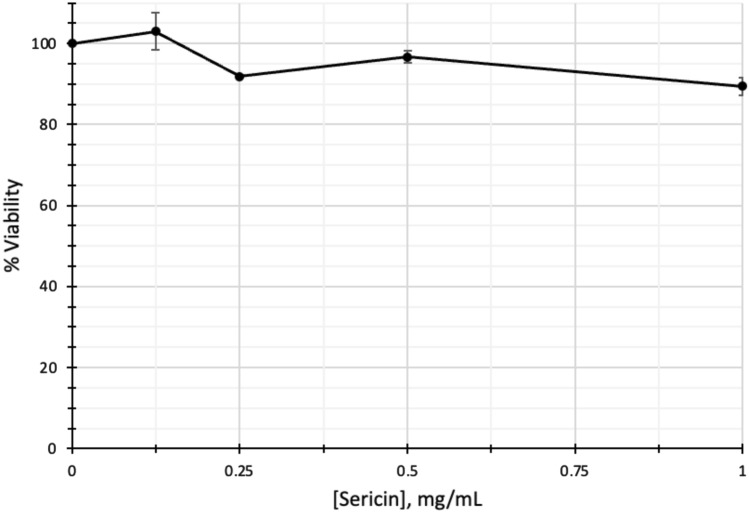
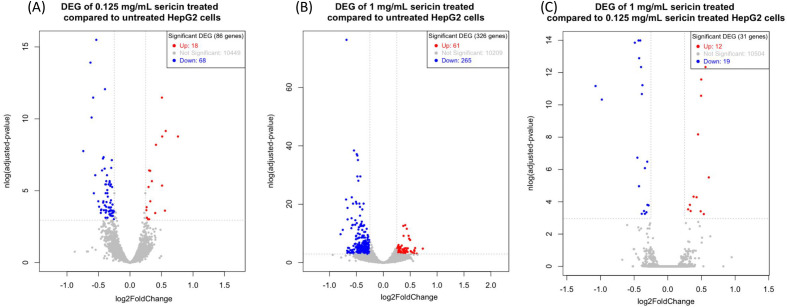
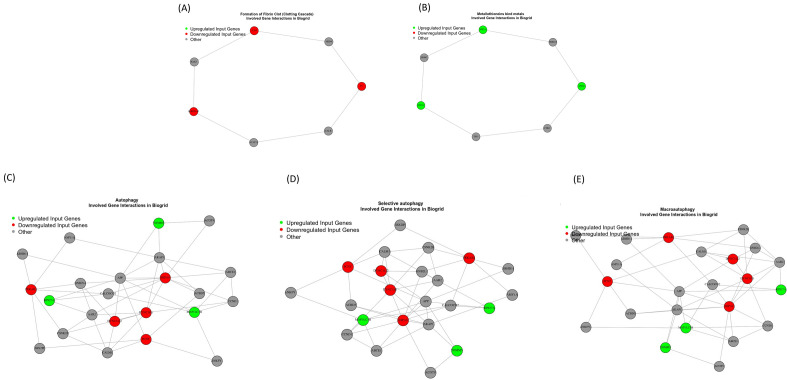
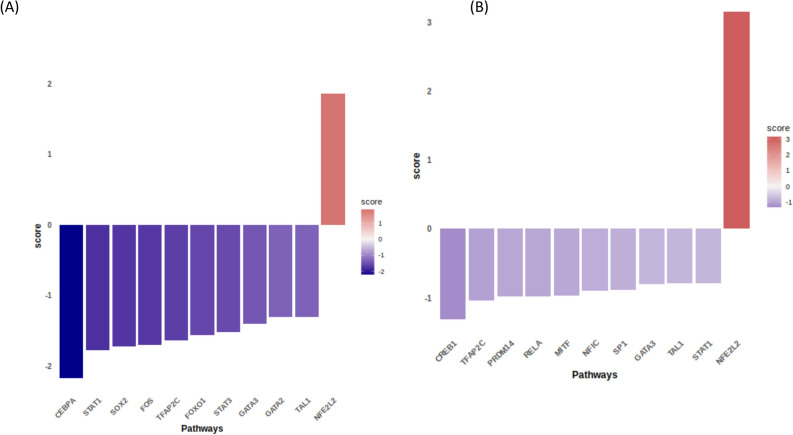
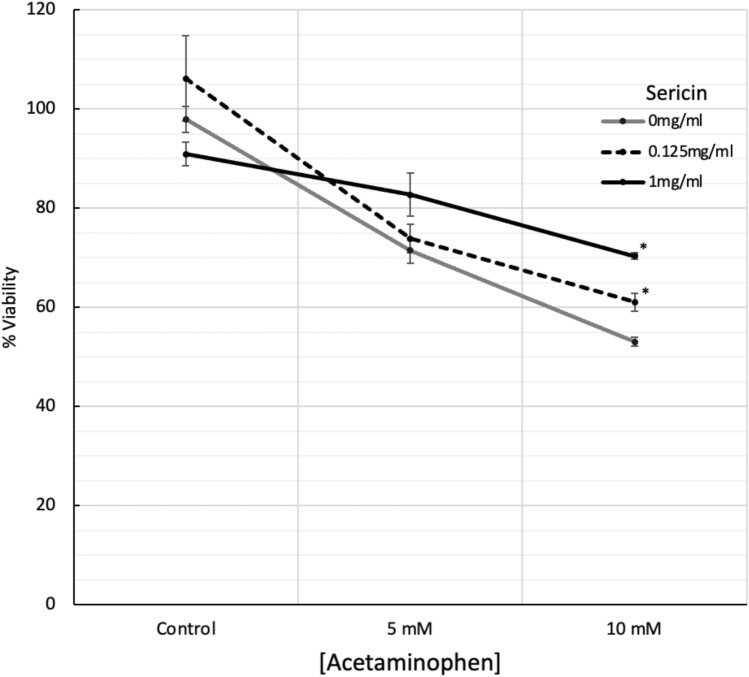
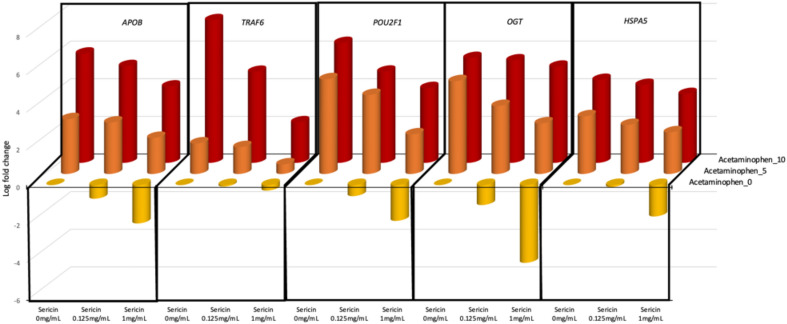
Sericin, a natural protein derived from Bombyx mori, is known to ameliorate liver tissue damage; however, its molecular mechanism remains unclear. Herein, we aimed to identify the possible novel targets of sericin in hepatocytes and related cellular pathways. RNA sequencing analysis indicated that a low dose of sericin resulted in 18 differentially expressed genes (DEGs) being upregulated and 68 DEGs being downregulated, while 61 DEGs were upregulated and 265 DEGs were downregulated in response to a high dose of sericin (FDR ≤ 0.05, fold change > 1.50). Functional analysis revealed that a low dose of sericin regulated pathways associated with the complement and coagulation cascade, metallothionine, and histone demethylate (HDMs), whereas a high dose of sericin was associated with pathways involved in lipid metabolism, mitogen-activated protein kinase (MAPK) signaling and autophagy. The gene network analysis highlighted twelve genes, A2M, SERPINA5, MT2A, MT1G, MT1E, ARID5B, POU2F1, APOB, TRAF6, HSPA8, FGFR1, and OGT, as novel targets of sericin. Network analysis of transcription factor activity revealed that sericin affects NFE2L2, TFAP2C, STAT1, GATA3, CREB1 and CEBPA. Additionally, the protective effects of sericin depended on the counterregulation of APOB, POU2F1, OGT, TRAF6, and HSPA5. These findings suggest that sericin exerts hepatoprotective effects through diverse pathways at different doses, providing novel potential targets for the treatment of liver diseases.
丝胶是一种来源于家蚕的天然蛋白质,已知可改善肝组织损伤;然而,其分子机制尚不清楚。在此,我们旨在鉴定丝胶在肝细胞中的可能的新靶点和相关细胞途径。RNA 测序分析表明,低剂量丝胶导致 18 个差异表达基因(DEGs)上调和 68 个 DEGs 下调,而高剂量丝胶导致 61 个 DEGs 上调和 265 个 DEGs 下调(FDR ≤ 0.05,倍数变化> 1.50)。功能分析表明,低剂量丝胶调节了与补体和凝血级联、金属硫蛋白和组蛋白去甲基化(HDMs)相关的途径,而高剂量丝胶与涉及脂质代谢、丝裂原激活蛋白激酶(MAPK)信号和自噬的途径有关。基因网络分析突出了十二个基因,A2M、SERPINA5、MT2A、MT1G、MT1E、ARID5B、POU2F1、APOB、TRAF6、HSPA8、FGFR1 和 OGT,作为丝胶的新靶点。转录因子活性的网络分析表明,丝胶影响 NFE2L2、TFAP2C、STAT1、GATA3、CREB1 和 CEBPA。此外,丝胶的保护作用取决于 APOB、POU2F1、OGT、TRAF6 和 HSPA5 的反向调节。这些发现表明,丝胶通过不同剂量的多种途径发挥肝保护作用,为治疗肝脏疾病提供了新的潜在靶点。