Department of Internal Medicine, University of South Florida, 17 Davis Blvd., Suite 308, 33606, Tampa, FL, USA.
Division of Hematology, Stanford University, 94305, Stanford, CA, USA.
BMC Infect Dis. 2024 Mar 6;24(1):296. doi: 10.1186/s12879-024-09172-9.
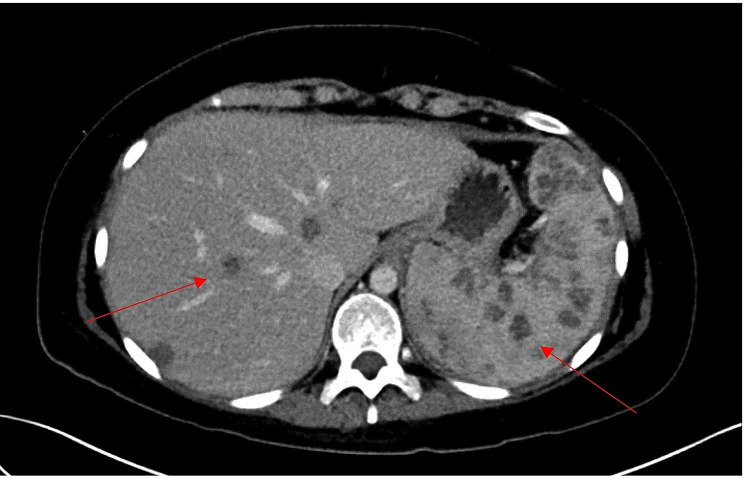
Chronic disseminated candidiasis (CDC) is a severe but rarely seen fungal infection presenting in patients with hematologic malignancies after a prolonged duration of neutropenia. A high index of suspicion is required to diagnose CDC as standard culture workup is often negative. While tissue biopsy is the gold standard of diagnosis, it is frequently avoided in patients with profound cytopenias and increased bleeding risks. A presumptive diagnosis can be made in patients with recent neutropenia, persistent fevers unresponsive to antibiotics, imaging findings of hypoechoic, non-rim enhancing target-like lesions in the spleen and liver, and mycologic evidence. Here, we describe the case of an 18-year-old woman with relapsed B-cell acute lymphoblastic leukemia treated with re-induction chemotherapy who subsequently developed CDC with multi-organ involvement. The diagnosis was made based on clinical and radiologic features with positive tissue culture from a skin nodule and hepatic lesion. The patient was treated for a total course of 11 months with anti-fungal therapy, most notably amphotericin B and micafungin, and splenectomy. After initial diagnosis, the patient was monitored with monthly CT abdomen imaging that showed disease control after 5 months of anti-fungal therapy and splenectomy. The diagnosis, treatment, and common challenges of CDC are outlined here to assist with better understanding, diagnosis, and treatment of this rare condition.
慢性播散性念珠菌病(CDC)是一种严重但罕见的真菌感染,发生在血液恶性肿瘤患者中性粒细胞减少持续时间较长后。由于标准培养检查通常为阴性,因此需要高度怀疑才能诊断 CDC。虽然组织活检是诊断的金标准,但在存在严重细胞减少症和出血风险增加的患者中,通常会避免进行活检。对于近期中性粒细胞减少症、对抗生素无反应的持续发热、脾脏和肝脏超声呈低回声、无边缘增强的靶样病变的影像学发现以及真菌学证据的患者,可以做出推定诊断。在这里,我们描述了一例 18 岁女性复发性 B 细胞急性淋巴细胞白血病患者,该患者接受再诱导化疗后发生多器官受累的 CDC。该诊断基于临床和影像学特征,以及皮肤结节和肝病变的组织培养阳性。该患者接受了为期 11 个月的抗真菌治疗,主要使用两性霉素 B 和米卡芬净,以及脾切除术。初始诊断后,每月进行 CT 腹部成像监测,在抗真菌治疗和脾切除术后 5 个月显示疾病得到控制。本文概述了 CDC 的诊断、治疗和常见挑战,以帮助更好地理解、诊断和治疗这种罕见疾病。