• 文献检索
  • 文档翻译
  • 深度研究
  • 学术资讯
  • Suppr Zotero 插件Zotero 插件
  • 邀请有礼
  • 套餐&价格
  • 历史记录
应用&插件
Suppr Zotero 插件Zotero 插件浏览器插件Mac 客户端Windows 客户端微信小程序
定价
高级版会员购买积分包购买API积分包
服务
文献检索文档翻译深度研究API 文档MCP 服务
关于我们
关于 Suppr公司介绍联系我们用户协议隐私条款
关注我们

Suppr 超能文献

核心技术专利:CN118964589B侵权必究
粤ICP备2023148730 号-1Suppr @ 2026

文献检索

告别复杂PubMed语法,用中文像聊天一样搜索,搜遍4000万医学文献。AI智能推荐,让科研检索更轻松。

立即免费搜索

文件翻译

保留排版,准确专业,支持PDF/Word/PPT等文件格式,支持 12+语言互译。

免费翻译文档

深度研究

AI帮你快速写综述,25分钟生成高质量综述,智能提取关键信息,辅助科研写作。

立即免费体验

EZH2抑制可重新激活脆性X综合征神经元中表观遗传沉默的基因,并使分子和电生理异常恢复正常。

EZH2 inhibition reactivates epigenetically silenced and normalizes molecular and electrophysiological abnormalities in fragile X syndrome neurons.

作者信息

Fang Minggang, Deibler Sara K, Krishnamurthy Pranathi Meda, Wang Feng, Rodriguez Paola, Banday Shahid, Virbasius Ching-Man, Sena-Esteves Miguel, Watts Jonathan K, Green Michael R

机构信息

Department of Molecular, Cell and Cancer Biology, University of Massachusetts Chan Medical School, Worcester, MA, United States.

RNA Therapeutics Institute, University of Massachusetts Chan Medical School, Worcester, MA, United States.

出版信息

Front Neurosci. 2024 Feb 21;18:1348478. doi: 10.3389/fnins.2024.1348478. eCollection 2024.

DOI:10.3389/fnins.2024.1348478
PMID:38449737
原文链接:https://pmc.ncbi.nlm.nih.gov/articles/PMC10915284/
Abstract

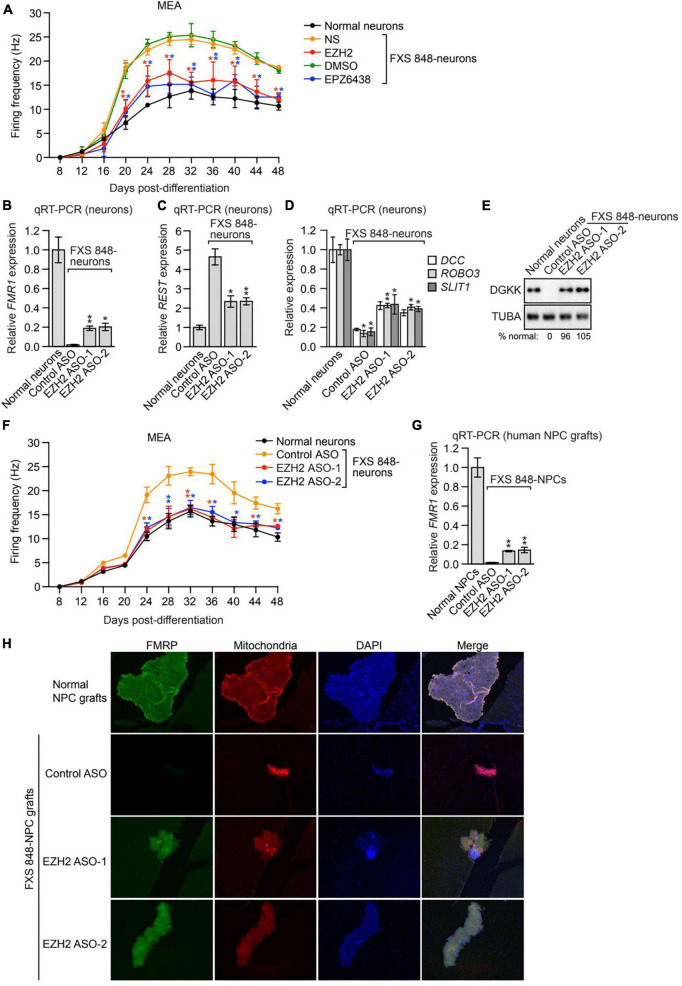
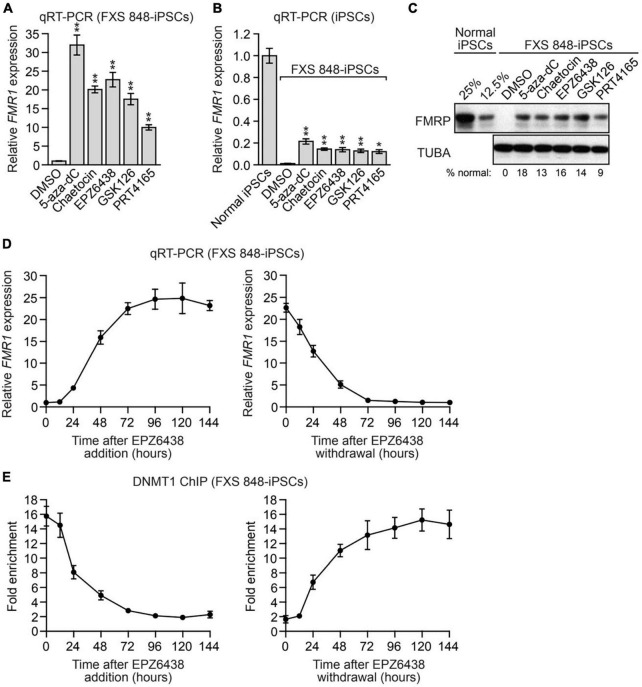
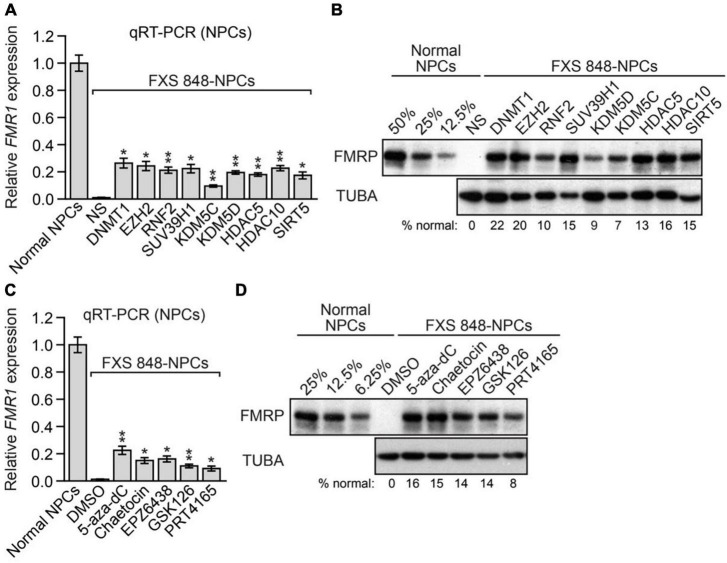
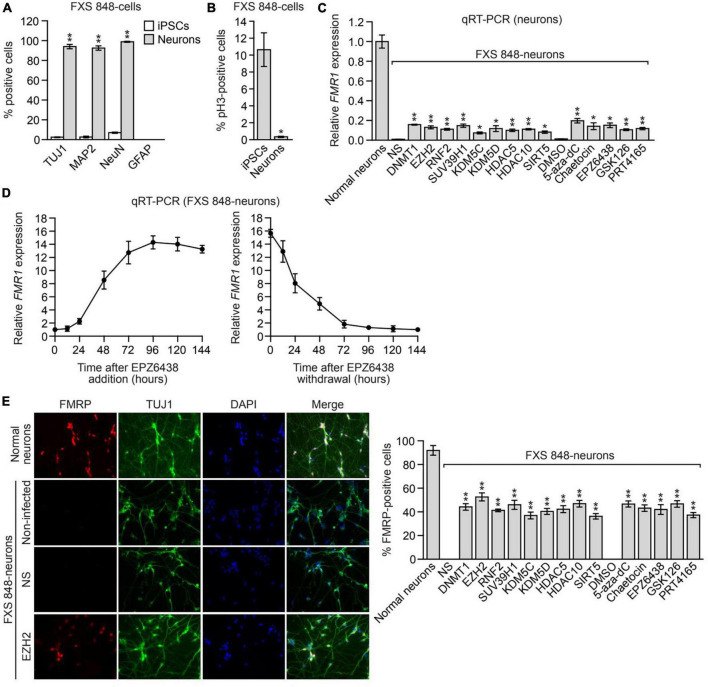
Fragile X Syndrome (FXS) is a neurological disorder caused by epigenetic silencing of the gene. Reactivation of is a potential therapeutic approach for FXS that would correct the root cause of the disease. Here, using a candidate-based shRNA screen, we identify nine epigenetic repressors that promote silencing of in FXS cells (called Silencing Factors, or - SFs). Inhibition of -SFs with shRNAs or small molecules reactivates in cultured undifferentiated induced pluripotent stem cells, neural progenitor cells (NPCs) and post-mitotic neurons derived from FXS patients. One of the -SFs is the histone methyltransferase EZH2, for which an FDA-approved small molecule inhibitor, EPZ6438 (also known as tazemetostat), is available. We show that EPZ6438 substantially corrects the characteristic molecular and electrophysiological abnormalities of cultured FXS neurons. Unfortunately, EZH2 inhibitors do not efficiently cross the blood-brain barrier, limiting their therapeutic use for FXS. Recently, antisense oligonucleotide (ASO)-based approaches have been developed as effective treatment options for certain central nervous system disorders. We therefore derived efficacious ASOs targeting EZH2 and demonstrate that they reactivate expression and correct molecular and electrophysiological abnormalities in cultured FXS neurons, and reactivate expression in human FXS NPCs engrafted within the brains of mice. Collectively, our results establish EZH2 inhibition in general, and EZH2 ASOs in particular, as a therapeutic approach for FXS.

摘要

脆性X综合征(FXS)是一种由该基因表观遗传沉默引起的神经障碍。该基因的重新激活是治疗FXS的一种潜在方法,可纠正疾病的根本原因。在这里,我们通过基于候选基因的短发夹RNA(shRNA)筛选,鉴定出9种表观遗传抑制因子,它们促进FXS细胞中该基因的沉默(称为沉默因子,或FMR1-SFs)。用shRNA或小分子抑制FMR1-SFs可在培养的未分化诱导多能干细胞、神经祖细胞(NPC)和来自FXS患者的有丝分裂后神经元中重新激活该基因。其中一个FMR1-SF是组蛋白甲基转移酶EZH2,有一种美国食品药品监督管理局(FDA)批准的小分子抑制剂EPZ6438(也称为他泽司他)可供使用。我们表明,EPZ6438可显著纠正培养的FXS神经元的特征性分子和电生理异常。不幸的是,EZH2抑制剂不能有效地穿过血脑屏障,限制了它们在FXS治疗中的应用。最近,基于反义寡核苷酸(ASO)的方法已被开发为某些中枢神经系统疾病的有效治疗选择。因此,我们获得了靶向EZH2的有效ASO,并证明它们可重新激活培养的FXS神经元中的该基因表达并纠正分子和电生理异常,还可在植入小鼠大脑的人FXS NPC中重新激活该基因表达。总的来说,我们的结果确立了一般意义上的EZH2抑制,特别是EZH2 ASO作为FXS的一种治疗方法。
https://cdn.ncbi.nlm.nih.gov/pmc/blobs/8f32/10915284/28f7d8402324/fnins-18-1348478-g006.jpg
https://cdn.ncbi.nlm.nih.gov/pmc/blobs/8f32/10915284/117fe96019b1/fnins-18-1348478-g001.jpg
https://cdn.ncbi.nlm.nih.gov/pmc/blobs/8f32/10915284/e582f618c035/fnins-18-1348478-g002.jpg
https://cdn.ncbi.nlm.nih.gov/pmc/blobs/8f32/10915284/5dbf2b90f16e/fnins-18-1348478-g003.jpg
https://cdn.ncbi.nlm.nih.gov/pmc/blobs/8f32/10915284/97f5bda63fee/fnins-18-1348478-g004.jpg
https://cdn.ncbi.nlm.nih.gov/pmc/blobs/8f32/10915284/800973f128f0/fnins-18-1348478-g005.jpg
https://cdn.ncbi.nlm.nih.gov/pmc/blobs/8f32/10915284/28f7d8402324/fnins-18-1348478-g006.jpg
https://cdn.ncbi.nlm.nih.gov/pmc/blobs/8f32/10915284/117fe96019b1/fnins-18-1348478-g001.jpg
https://cdn.ncbi.nlm.nih.gov/pmc/blobs/8f32/10915284/e582f618c035/fnins-18-1348478-g002.jpg
https://cdn.ncbi.nlm.nih.gov/pmc/blobs/8f32/10915284/5dbf2b90f16e/fnins-18-1348478-g003.jpg
https://cdn.ncbi.nlm.nih.gov/pmc/blobs/8f32/10915284/97f5bda63fee/fnins-18-1348478-g004.jpg
https://cdn.ncbi.nlm.nih.gov/pmc/blobs/8f32/10915284/800973f128f0/fnins-18-1348478-g005.jpg
https://cdn.ncbi.nlm.nih.gov/pmc/blobs/8f32/10915284/28f7d8402324/fnins-18-1348478-g006.jpg

相似文献

1
EZH2 inhibition reactivates epigenetically silenced and normalizes molecular and electrophysiological abnormalities in fragile X syndrome neurons.EZH2抑制可重新激活脆性X综合征神经元中表观遗传沉默的基因,并使分子和电生理异常恢复正常。
Front Neurosci. 2024 Feb 21;18:1348478. doi: 10.3389/fnins.2024.1348478. eCollection 2024.
2
Epigenetic characterization of the FMR1 gene and aberrant neurodevelopment in human induced pluripotent stem cell models of fragile X syndrome.脆性 X 综合征患者诱导多能干细胞模型中 FMR1 基因的表观遗传学特征及神经发育异常。
PLoS One. 2011;6(10):e26203. doi: 10.1371/journal.pone.0026203. Epub 2011 Oct 12.
3
Sustained expression of FMR1 mRNA from reactivated fragile X syndrome alleles after treatment with small molecules that prevent trimethylation of H3K27.在使用可防止H3K27三甲基化的小分子进行治疗后,脆性X综合征等位基因重新激活,FMR1 mRNA持续表达。
Hum Mol Genet. 2016 Sep 1;25(17):3689-3698. doi: 10.1093/hmg/ddw215. Epub 2016 Jul 4.
4
Establishment of Reporter Lines for Detecting Fragile X Mental Retardation (FMR1) Gene Reactivation in Human Neural Cells.用于检测人类神经细胞中脆性X智力低下(FMR1)基因重新激活的报告基因系的建立。
Stem Cells. 2017 Jan;35(1):158-169. doi: 10.1002/stem.2463. Epub 2016 Jul 27.
5
Partial FMRP expression is sufficient to normalize neuronal hyperactivity in Fragile X neurons.部分脆性X智力低下蛋白(FMRP)表达足以使脆性X神经元中的神经元活动亢进恢复正常。
Eur J Neurosci. 2020 May;51(10):2143-2157. doi: 10.1111/ejn.14660. Epub 2020 Feb 4.
6
Epigenetic modifications in human fragile X pluripotent stem cells; Implications in fragile X syndrome modeling.人类脆性X多能干细胞中的表观遗传修饰;对脆性X综合征建模的影响。
Brain Res. 2017 Feb 1;1656:55-62. doi: 10.1016/j.brainres.2015.10.004. Epub 2015 Oct 20.
7
CGG-repeat dynamics and gene silencing in fragile X syndrome stem cells and stem cell-derived neurons.脆性X综合征干细胞及干细胞衍生神经元中的CGG重复序列动态变化与基因沉默
Mol Autism. 2016 Oct 6;7:42. doi: 10.1186/s13229-016-0105-9. eCollection 2016.
8
Reciprocal changes in DNA methylation and hydroxymethylation and a broad repressive epigenetic switch characterize FMR1 transcriptional silencing in fragile X syndrome.DNA甲基化和羟甲基化的相互变化以及广泛的抑制性表观遗传开关是脆性X综合征中FMR1转录沉默的特征。
Clin Epigenetics. 2016 Feb 5;8:15. doi: 10.1186/s13148-016-0181-x. eCollection 2016.
9
High-Throughput Screening to Identify Compounds That Increase Fragile X Mental Retardation Protein Expression in Neural Stem Cells Differentiated From Fragile X Syndrome Patient-Derived Induced Pluripotent Stem Cells.高通量筛选以鉴定能增加从脆性X综合征患者来源的诱导多能干细胞分化而来的神经干细胞中脆性X智力低下蛋白表达的化合物。
Stem Cells Transl Med. 2015 Jul;4(7):800-8. doi: 10.5966/sctm.2014-0278. Epub 2015 May 21.
10
Small Molecules Targeting H3K9 Methylation Prevent Silencing of Reactivated Alleles in Fragile X Syndrome Patient Derived Cells.小分子靶向 H3K9 甲基化可防止脆性 X 综合征患者来源细胞中重新激活的等位基因沉默。
Genes (Basel). 2020 Mar 27;11(4):356. doi: 10.3390/genes11040356.

本文引用的文献

1
Genome-wide screening for genes involved in the epigenetic basis of fragile X syndrome.全基因组筛选脆性 X 综合征表观遗传学基础相关基因。
Stem Cell Reports. 2022 May 10;17(5):1048-1058. doi: 10.1016/j.stemcr.2022.03.011. Epub 2022 Apr 14.
2
AAV-delivered diacylglycerol kinase DGKk achieves long-term rescue of fragile X syndrome mouse model.腺相关病毒(AAV)递送的二酰基甘油激酶 DGKk 可实现脆性 X 综合征小鼠模型的长期挽救。
EMBO Mol Med. 2022 May 9;14(5):e14649. doi: 10.15252/emmm.202114649. Epub 2022 Apr 4.
3
Tazemetostat: EZH2 Inhibitor.
他泽司他:EZH2抑制剂。
J Adv Pract Oncol. 2022 Mar;13(2):158-163. doi: 10.6004/jadpro.2022.13.2.7. Epub 2022 Mar 25.
4
Fragile X premutation and associated health conditions: A review.脆性 X 前突变及相关健康状况:综述。
Clin Genet. 2021 Jun;99(6):751-760. doi: 10.1111/cge.13924. Epub 2021 Jan 24.
5
Tazemetostat in advanced epithelioid sarcoma with loss of INI1/SMARCB1: an international, open-label, phase 2 basket study.Tazemetostat 治疗 INI1/SMARCB1 缺失的晚期上皮样肉瘤:一项国际、开放标签、2 期篮子研究。
Lancet Oncol. 2020 Nov;21(11):1423-1432. doi: 10.1016/S1470-2045(20)30451-4. Epub 2020 Oct 6.
6
Tazemetostat for patients with relapsed or refractory follicular lymphoma: an open-label, single-arm, multicentre, phase 2 trial.塔西美替尼治疗复发或难治性滤泡性淋巴瘤患者的疗效:一项开放标签、单臂、多中心、2 期临床试验。
Lancet Oncol. 2020 Nov;21(11):1433-1442. doi: 10.1016/S1470-2045(20)30441-1. Epub 2020 Oct 6.
7
Dynamics of the fragile X mental retardation protein correlates with cellular and synaptic properties in primary auditory neurons following afferent deprivation.脆性 X 智力迟钝蛋白的动力学与传入剥夺后初级听觉神经元的细胞和突触特性相关。
J Comp Neurol. 2021 Feb;529(3):481-500. doi: 10.1002/cne.24959. Epub 2020 Jun 27.
8
Plasma and cerebrospinal fluid pharmacokinetics of the DNA methyltransferase inhibitor, 5-azacytidine, alone and with inulin, in nonhuman primate models.DNA甲基转移酶抑制剂5-氮杂胞苷单独及与菊粉联合使用时在非人类灵长类动物模型中的血浆和脑脊液药代动力学
Neurooncol Adv. 2020 Jan-Dec;2(1):vdaa005. doi: 10.1093/noajnl/vdaa005. Epub 2020 Jan 1.
9
Small Molecules Targeting H3K9 Methylation Prevent Silencing of Reactivated Alleles in Fragile X Syndrome Patient Derived Cells.小分子靶向 H3K9 甲基化可防止脆性 X 综合征患者来源细胞中重新激活的等位基因沉默。
Genes (Basel). 2020 Mar 27;11(4):356. doi: 10.3390/genes11040356.
10
Reactivation of FMR1 gene expression is a promising strategy for fragile X syndrome therapy.FMR1 基因表达的重新激活是脆性 X 综合征治疗的一种有前途的策略。
Gene Ther. 2020 Jun;27(6):247-253. doi: 10.1038/s41434-020-0141-0. Epub 2020 Mar 12.