Novirianthy Rima, Syukri Maimun, Gondhowiardjo Soehartati, Suhanda Rachmad, Mawapury Marty, Pranata Agung, Renaldi Teuku
Doctoral Program in Medical Sciences, Faculty of Medicine, Universitas Syiah Kuala, Banda Aceh, Indonesia.
Department of Radiology, Faculty of Medicine, Universitas Syiah Kuala, Banda Aceh, Indonesia.
Narra J. 2023 Dec;3(3):e197. doi: 10.52225/narra.v3i3.197. Epub 2023 Nov 11.
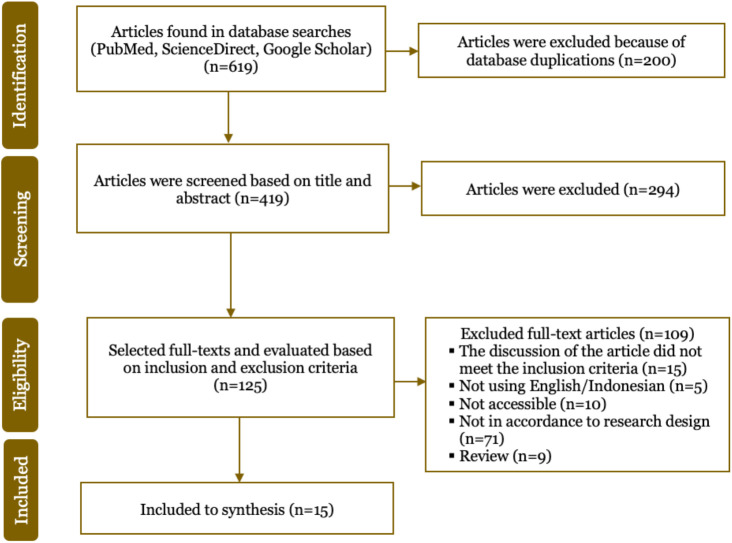
Treatment recommendations for cancer patients are carried out according to clinical assessment, type and stage of cancer and treatment guidelines. However, many patients do not accept the recommendations. This raises obstacles in managing of cancers, which not only affects the patients, but also the family and people around the patients. This problem could increase morbidity, mortality and recurrence rate, which might result in lower quality of life. Since this condition is a complex problem, there is necessity to explore and determine various determinants from different levels. The aim of this systematic review was to explore the acceptances of cancer treatments among cancer patients and its associated determinants. Articles published from 2010 to 2023 were searched in four databases: ScienceDirect, Medline, Google Scholar and PubMed. Articles written in English and focussing on three main cancer treatments (surgery, chemotherapy and radiotherapy) were eligible. A narrative approach was used and the data were analysed into selected themes. Data suggest that several factors influence patient acceptance for cancer therapy including sociodemographic, economic and spiritual cultural backgrounds; patient knowledge and perceptions; community support, as well as policy and availability of health facilities. The determinants consist of individual, interpersonal, institutional, community and public policy level and interaction between levels are contributing to cancer treatment acceptance. In conclusion, cancer treatment acceptance remains a problem in particular in low middle income countries. In addition, the data on radiotherapy referral acceptance were limited and needed further study.
癌症患者的治疗建议是根据临床评估、癌症类型和阶段以及治疗指南来实施的。然而,许多患者并不接受这些建议。这给癌症管理带来了障碍,不仅影响患者,也影响患者的家庭和周围的人。这个问题可能会增加发病率、死亡率和复发率,进而可能导致生活质量下降。由于这种情况是一个复杂的问题,有必要从不同层面探索和确定各种决定因素。本系统综述的目的是探讨癌症患者对癌症治疗的接受情况及其相关决定因素。在四个数据库中检索了2010年至2023年发表的文章:ScienceDirect、Medline、谷歌学术和PubMed。符合条件的文章需用英文撰写,并聚焦于三种主要的癌症治疗方法(手术、化疗和放疗)。采用叙述性方法,并将数据分析为选定的主题。数据表明,有几个因素会影响患者对癌症治疗的接受度,包括社会人口统计学、经济和精神文化背景;患者的知识和认知;社区支持,以及卫生设施的政策和可及性。这些决定因素包括个人、人际、机构、社区和公共政策层面,各层面之间的相互作用有助于提高对癌症治疗的接受度。总之,尤其是在中低收入国家,对癌症治疗的接受度仍然是一个问题。此外,关于放疗转诊接受度的数据有限,需要进一步研究。