College of Biological and Food Engineering, Guangdong University of Petrochemical Technology, Maoming, 525000, People's Republic of China.
College of Life and Geographic Sciences, Kashi University, Kashi, 844000, People's Republic of China.
Sci Rep. 2024 Mar 7;14(1):5594. doi: 10.1038/s41598-024-56196-x.
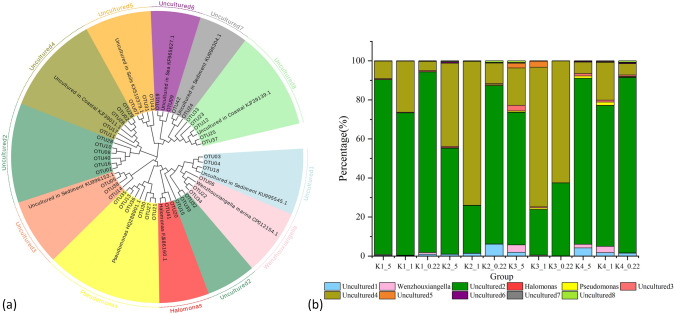
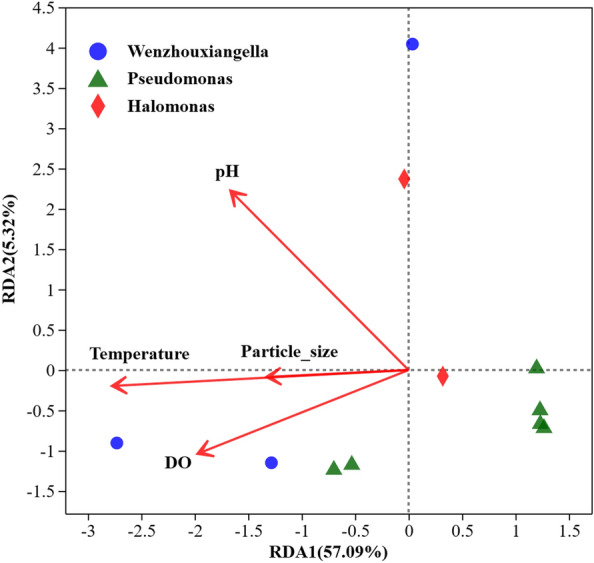
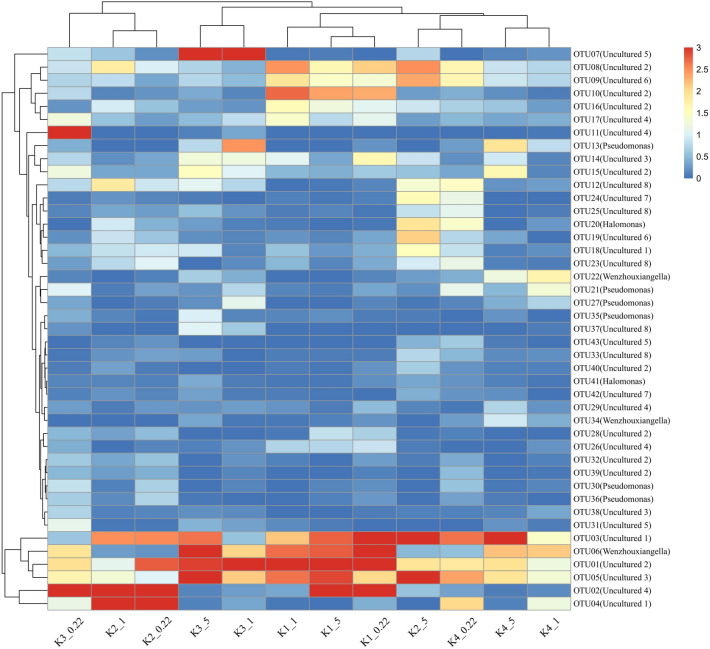
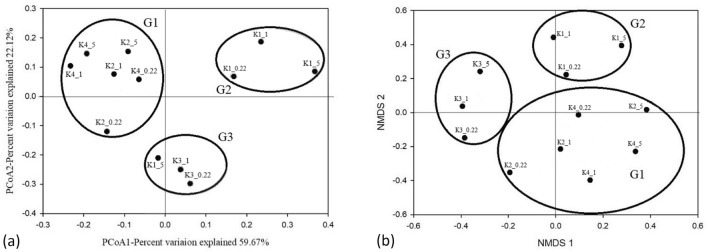
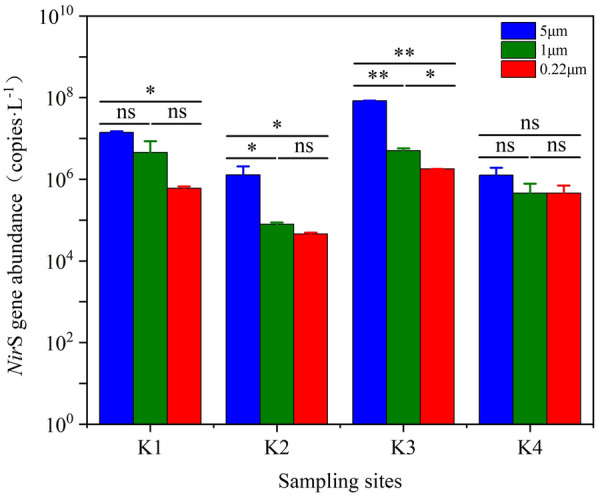
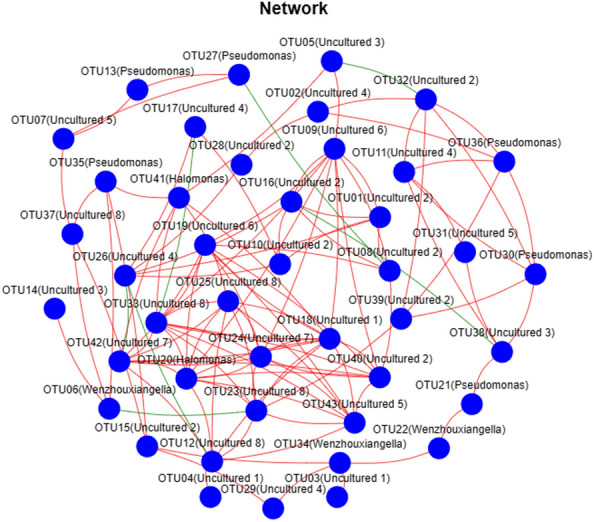
Denitrifying bacteria harboring the nitrate reductase S (nirS) gene convert active nitrogen into molecular nitrogen, and alleviate eutrophication in aquaculture water. Suspended particulate matter (SPM) is an important component of aquaculture water and a carrier for denitrification. SPM with different particle sizes were collected from a coastal high-altitude aquaculture pond in Maoming City, China. Diversity, community structure, abundance of nirS-type denitrifying bacteria on SPM and environmental influencing factors were studied using high-throughput sequencing, fluorescence quantitative PCR, and statistical analysis. Pseudomonas, Halomonas, and Wenzhouxiangella were the dominant genera of nirS-type denitrifying bacteria on SPM from the ponds. Network analysis revealed Pseudomonas and Halomonas as the key genera involved in the interaction of nirS-type denitrifying bacteria on SPM in the ponds. qPCR indicated a trend toward greater nirS gene abundance in progressively larger SPM. Dissolved oxygen, pH, temperature, and SPM particle size were the main environmental factors influencing changes in the nirS-type denitrifying bacterial community on SPM in coastal high-altitude aquaculture pond water. These findings increase our understanding of the microbiology of nitrogen cycle processes in aquaculture ecosystem, and will help optimize aquatic tailwater treatment strategies.
具有硝酸盐还原酶 S(nirS)基因的反硝化细菌将活性氮转化为氮气,从而减轻水产养殖水中的富营养化。悬浮颗粒物(SPM)是水产养殖水的重要组成部分,也是反硝化作用的载体。本研究从中国茂名市沿海高位养殖池塘中采集了不同粒径的 SPM。采用高通量测序、荧光定量 PCR 和统计分析等方法,研究了 SPM 上 nirS 型反硝化细菌的多样性、群落结构、丰度及其环境影响因素。假单胞菌、盐单胞菌和温州希瓦氏菌是池塘 SPM 上 nirS 型反硝化细菌的优势属。网络分析表明,假单胞菌和盐单胞菌是池塘 SPM 上 nirS 型反硝化细菌相互作用的关键属。qPCR 表明,随着 SPM 粒径的增大,nirS 基因丰度呈增大趋势。溶解氧、pH 值、温度和 SPM 粒径是影响沿海高位养殖池塘水中 SPM 上 nirS 型反硝化细菌群落变化的主要环境因素。这些发现增加了我们对水产养殖生态系统氮循环过程中微生物学的理解,并将有助于优化水产养殖尾水处理策略。