Brown Thomas J, Rutland Catrin S, Choi Katie K, Tse Feng, Peffers Mandy J, Mongan Nigel P, Arkill Kenton P, Ritchie Alison, Clarke Philip A, Ratan Hari, Allegrucci Cinzia, Grabowska Anna M, James Victoria
Faculty of Medicine and Health Sciences, School of Veterinary Medicine and Science, University of Nottingham, Sutton Bonington Campus, Loughborough, United Kingdom.
Faculty of Medicine and Health Sciences, School of Medicine, Biodiscovery Institute, University of Nottingham, Nottingham, United Kingdom.
Front Cell Dev Biol. 2024 Feb 22;12:1354606. doi: 10.3389/fcell.2024.1354606. eCollection 2024.
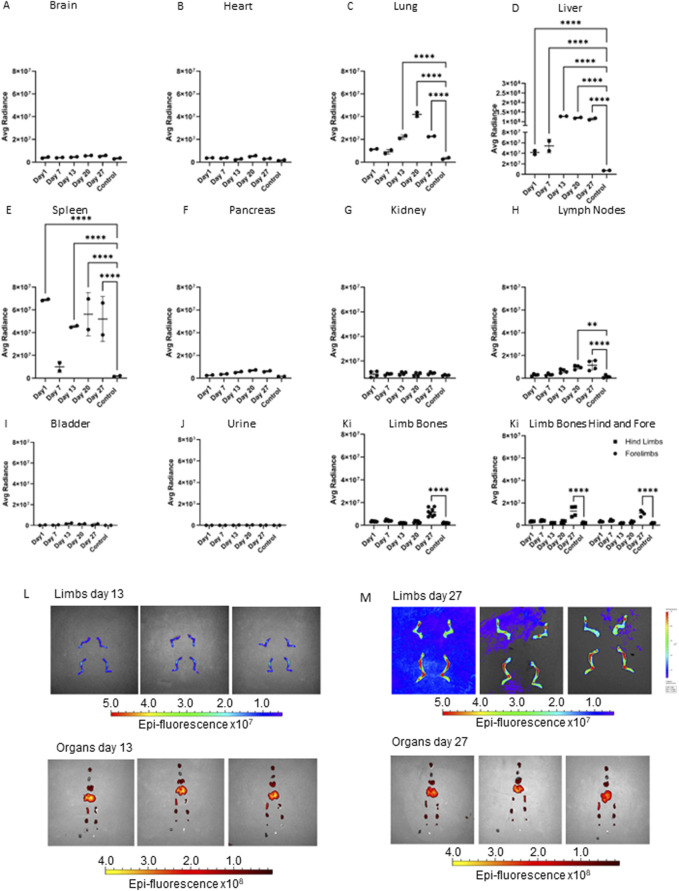
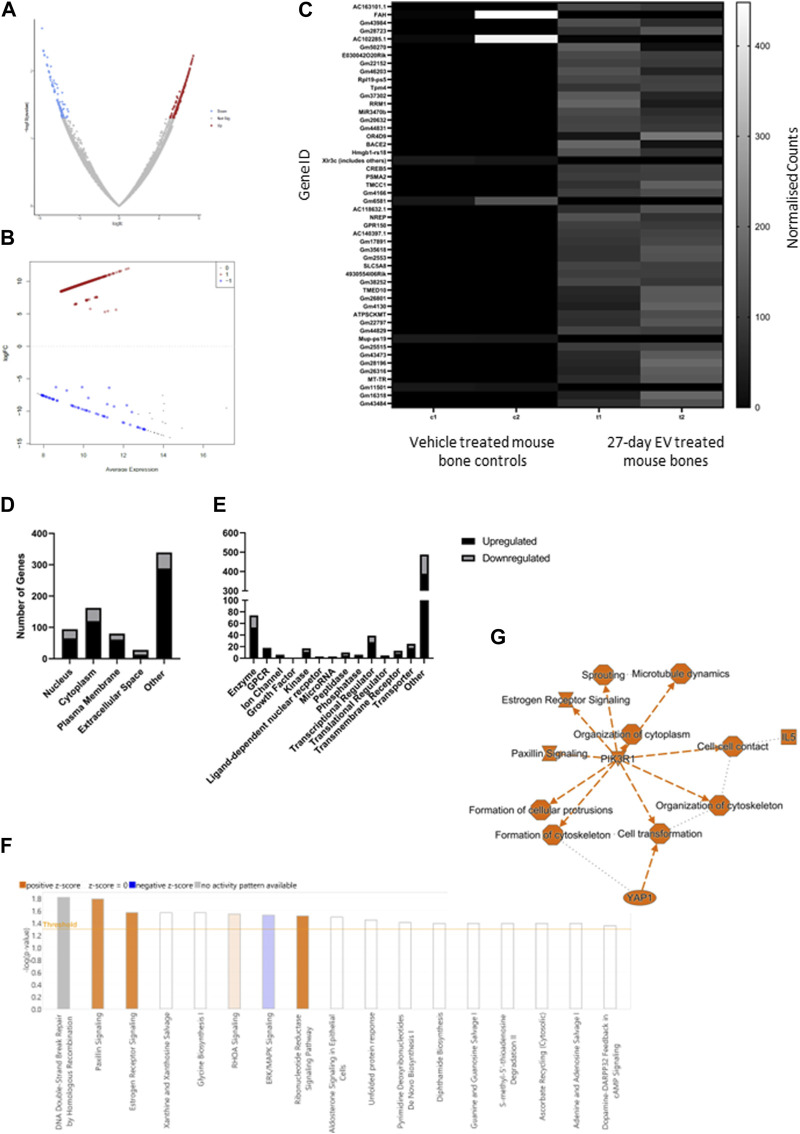
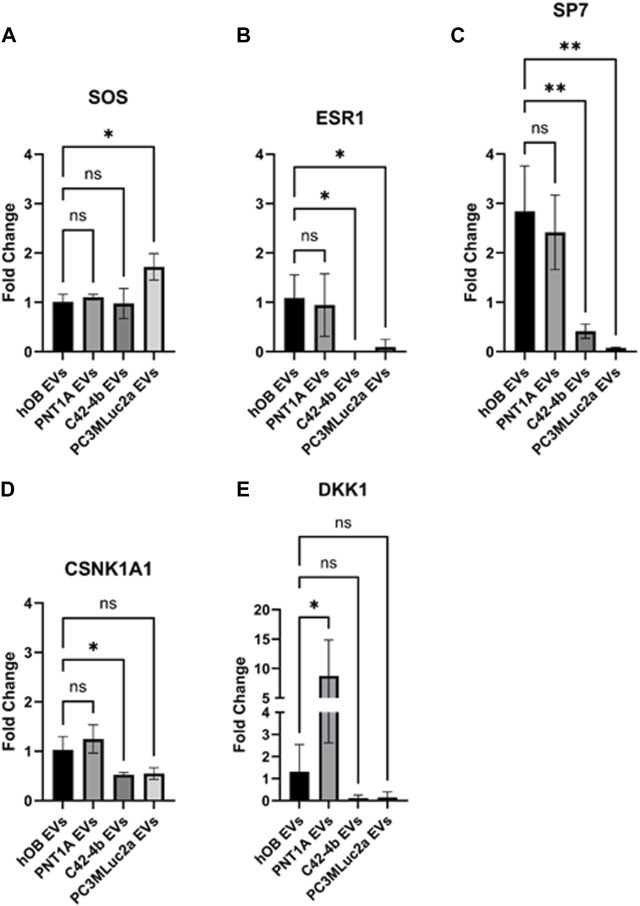
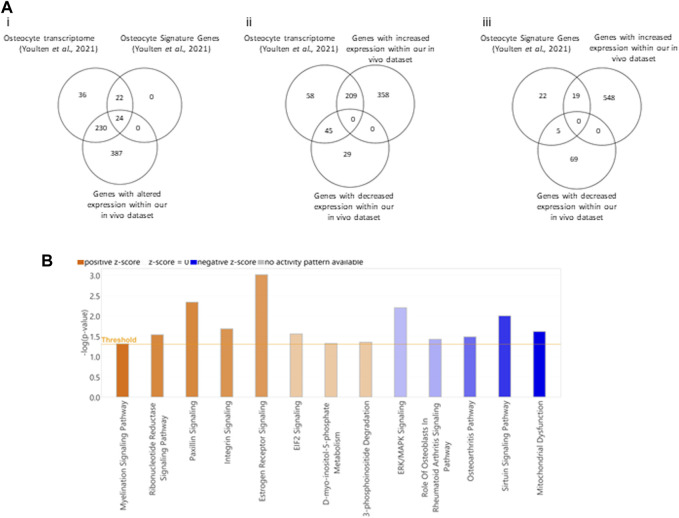
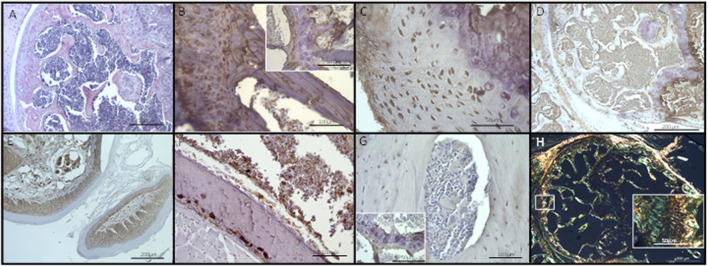
Prostate cancer (PCa) is a leading male malignancy worldwide, often progressing to bone metastasis, with limited curative options. Extracellular vesicles (EVs) have emerged as key players in cancer communication and metastasis, promoting the formation of supportive microenvironments in distant sites. Our previous studies have highlighted the role of PCa EVs in modulating osteoblasts and facilitating tumor progression. However, the early pre-metastatic changes induced by PCa EVs within the bone microenvironment remain poorly understood. To investigate the early effects of repeated exposure to PCa EVs , mimicking EVs being shed from the primary tumor, PCa EVs isolated from cell line PC3MLuc2a were fluorescently labelled and repeatedly administered via tail vein injection to adult CD1 NuNu male mice for a period of 4 weeks. imagining, histological analysis and gene expression profiling were performed to assess the impact of PCa EVs on the bone microenvironment. We demonstrate for the first time that PCa EVs home to both bone and lymph nodes following repeated exposures. Furthermore, the accumulation of EVs within the bone leads to distinct molecular changes indicative of disrupted bone homeostasis (e.g., changes to signaling pathways such as Paxillin = 0.0163, Estrogen Receptor = 0.0271, RHOA = 0.0287, Ribonucleotide reductase = 0.0307 and ERK/MAPK = 0.0299). Changes in key regulators of these pathways were confirmed on human osteoblasts. In addition, our data compares the known gene signature of osteocytes and demonstrates a high proportion of overlap (52.2%), suggesting a potential role for this cell type in response to PCa EV exposure. No changes in bone histology or immunohistochemistry were detected, indicating that PCa EV mediated changes were induced at the molecular level. This study provides novel insights into the alterations induced by PCa EVs on the bone microenvironment. The observed molecular changes indicate changes in key pathways and suggest a role for osteocytes in these EV mediated early changes to bone. Further research to understand these early events may aid in the development of targeted interventions to disrupt the metastatic cascade in PCa.
前列腺癌(PCa)是全球主要的男性恶性肿瘤,常进展为骨转移,治疗选择有限。细胞外囊泡(EVs)已成为癌症通讯和转移的关键参与者,促进远处部位支持性微环境的形成。我们之前的研究强调了PCa EVs在调节成骨细胞和促进肿瘤进展中的作用。然而,PCa EVs在骨微环境中诱导的早期转移前变化仍知之甚少。为了研究重复暴露于PCa EVs的早期影响,模拟从原发性肿瘤脱落的EVs,从细胞系PC3MLuc2a中分离的PCa EVs进行荧光标记,并通过尾静脉注射反复给予成年CD1 NuNu雄性小鼠,持续4周。进行成像、组织学分析和基因表达谱分析,以评估PCa EVs对骨微环境的影响。我们首次证明,重复暴露后PCa EVs会归巢至骨骼和淋巴结。此外,EVs在骨内的积累导致明显的分子变化,表明骨稳态受到破坏(例如,信号通路如桩蛋白=0.0163、雌激素受体=0.0271、RHOA=0.0287、核糖核苷酸还原酶=0.0307和ERK/MAPK=0.0299发生变化)。这些通路关键调节因子的变化在人成骨细胞上得到证实。此外,我们的数据比较了已知的骨细胞基因特征,显示出高比例的重叠(52.2%),表明这种细胞类型在对PCa EV暴露的反应中可能发挥作用。未检测到骨组织学或免疫组织化学的变化,表明PCa EV介导的变化是在分子水平上诱导的。本研究为PCa EVs对骨微环境诱导的改变提供了新的见解。观察到的分子变化表明关键通路发生了变化,并提示骨细胞在这些EV介导的骨早期变化中发挥作用。进一步研究以了解这些早期事件可能有助于开发针对性干预措施,以破坏PCa的转移级联反应。