Weerawardane Totawatte Don Srilak, Bürgisser Nils, Berner Amandine, Coen Matteo
Division of General Internal Medicine, Department of Medicine, Geneva University Hospitals, Geneva, Switzerland.
Unit of Development and Research in Medical Education (UDREM), University of Geneva, Geneva, Switzerland.
Eur J Case Rep Intern Med. 2024 Feb 28;11(3):004217. doi: 10.12890/2024_004217. eCollection 2024.
Until now, only a few cases of Valsalva-induced barotraumas (pneumothorax, pneumomediastinum and subcutaneous emphysema) have been described, and none of them among COVID-19 patients.
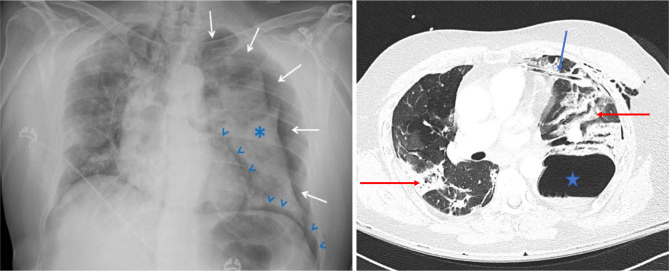
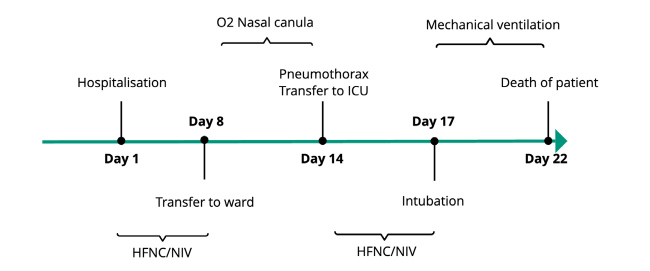
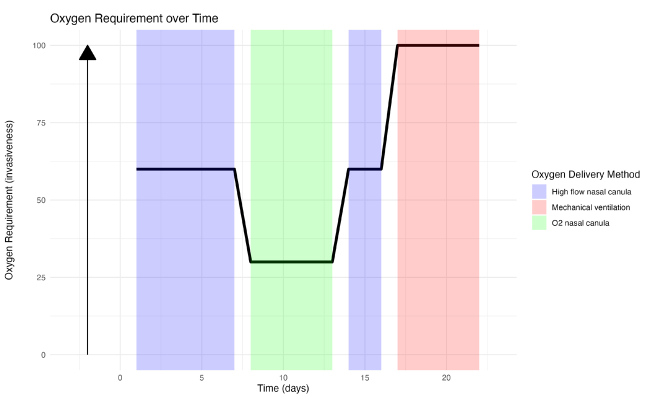
A man in his 50s was admitted for SARS-CoV-2-related acute respiratory distress syndrome (ARDS). Initial evolution was favourable with non-invasive ventilatory support, high-flow oxygen nasal cannula and the best supportive drugs available at the time. During the Valsalva manoeuvre while defecating, the patient reported sudden chest pain and showed a new acute hypoxemic respiratory failure due to a pneumothorax. It led to multiple complications (pulmonary embolism, haemoptysis, and cardiac arrest), and despite the best supportive care, led to the patient's death.
The Valsalva manoeuvre can be an overlooked cause of pneumothorax in patients with COVID-19. Predisposition to barotrauma in COVID-19 patients could be explained by several factors, including the extensive use of non-invasive and invasive ventilation during the pandemic, and the histological changes observed in the lungs of those infected with COVID-19.
We report the first description of a Valsalva-induced barotrauma in a COVID-19 infection. We emphasise the importance of treating constipation particularly in severe COVID-19 cases, to prevent complications such as barotrauma.
Pneumothorax is a common complication of severe COVID-19 infection, but Valsalva manoeuvre-induced pneumothorax in COVID-19 patients has never been reported previously.Particular care should be taken to prevent and treat constipation in hospitalised patients as it may cause a wide range of complications, including barotraumatism.The extensive use of non-invasive and invasive ventilation may play a role in barotrauma, but causal association has not been proven.
迄今为止,仅报道过少数几例瓦尔萨尔瓦动作诱发的气压伤(气胸、纵隔气肿和皮下气肿)病例,且在新冠病毒病患者中尚未有此类报道。
一名50多岁男性因新型冠状病毒2相关的急性呼吸窘迫综合征(ARDS)入院。最初在无创通气支持、高流量鼻导管吸氧及当时可用的最佳支持药物治疗下病情好转。在排便时进行瓦尔萨尔瓦动作期间,患者报告突发胸痛,并因气胸出现新的急性低氧性呼吸衰竭。这导致了多种并发症(肺栓塞、咯血和心脏骤停),尽管给予了最佳支持治疗,患者仍死亡。
瓦尔萨尔瓦动作可能是新冠病毒病患者气胸的一个被忽视的病因。新冠病毒病患者易发生气压伤可由多种因素解释,包括疫情期间广泛使用无创和有创通气,以及在感染新冠病毒病患者肺部观察到的组织学变化。
我们报告了首例新冠病毒感染中瓦尔萨尔瓦动作诱发气压伤的病例。我们强调尤其在重症新冠病毒病病例中治疗便秘以预防气压伤等并发症的重要性。
气胸是重症新冠病毒感染的常见并发症,但此前从未报道过新冠病毒病患者因瓦尔萨尔瓦动作诱发气胸的情况。应特别注意预防和治疗住院患者的便秘,因为它可能导致包括气压伤在内的多种并发症。无创和有创通气的广泛使用可能在气压伤中起作用,但因果关系尚未得到证实。