Obstetrics and Gynecology Unit, Department of Woman, Child and General and Specialized Surgery, Università degli Studi della Campania "Luigi Vanvitelli", 80138 Naples, Italy.
Department of Obstetrics and Gynecology, University of Messina, 98122 Messina, Italy.
Int J Environ Res Public Health. 2022 Apr 12;19(8):4618. doi: 10.3390/ijerph19084618.
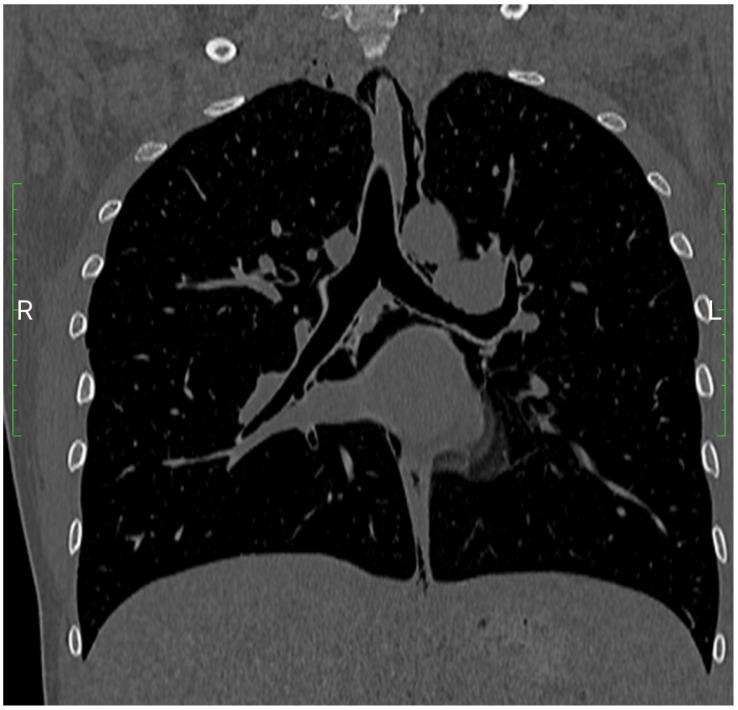
Spontaneous pneumomediastinum (SPM) during pregnancy or labor is a rare event. We presented a case report and a systematic review of the literature to provide comprehensive symptoms, treatments, and complications analysis in the pregnant population affected by SPM.
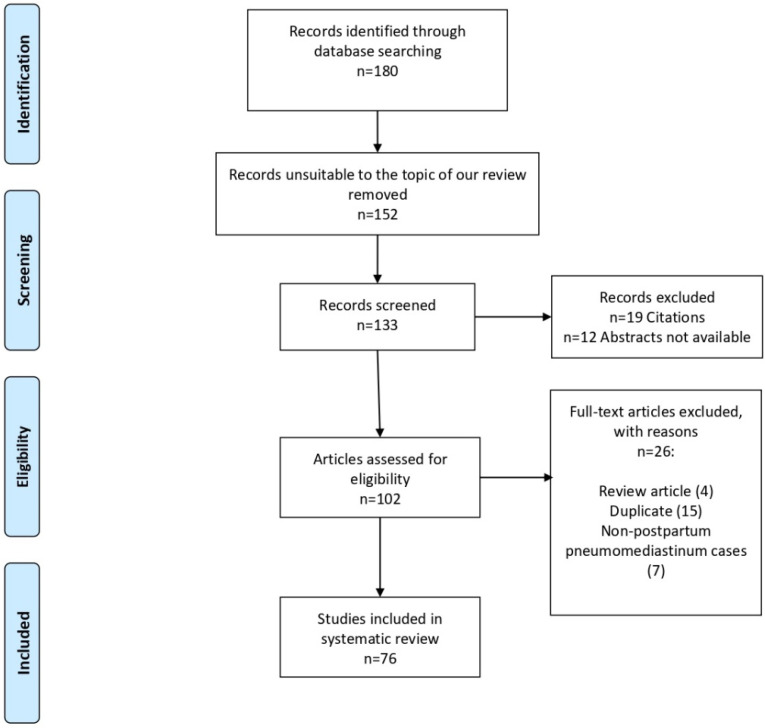
We conducted a comprehensive search of four databases for published papers in all languages from the beginning to 1 September 2021; Results: We included 76 papers with a total of 80 patients. A total of 76% patients were young primiparous, with a median age of 24 ± 5.4 years. The median gestational age was 40 ± 2.4 weeks, with a median duration of labor of 7.4 ± 4.2 h. In 86%, the ethnic origin was not specified. SPM develops in 55% of cases during the second stage of labor. Subcutaneous swelling and subcutaneous emphysema were present in 91.4%. Chest pain and dyspnea were present in 51.4% and 50% of the patients, respectively. We found that 32.9% patients had crepitus, and less common symptoms were dysphonia and tachycardia (14.3% and 14.3%, respectively). Oxygen and bronchodilators were used in 37.7% of the cases. Analgesics or sedatives were administered in 27.1%. Conservative management or the observation was performed in 21.4% and 28.6%, respectively. Antibiotics treatment was offered in 14.3%, whereas invasive procedures such as chest-tube drainage were used in just 5.7% of patients. There were no complications documented in most SPM (70.0%). We found that 16.7% of the SPM developed a pneumothorax and 5% developed a pneumopericardium.; Conclusions: In pregnancy, SPM occurs as subcutaneous swelling or emphysema during the second stage of labor. The treatment is usually conservative, with oxygen and bronchodilators and a low sequela rate. A universal consensus on therapy of spontaneous pneumomediastinum in pregnancy is necessary to reduce the risk of complications.
妊娠或分娩期间自发性纵隔气肿(SPM)是一种罕见的事件。我们报告了一例病例,并对文献进行了系统回顾,以提供妊娠人群中受 SPM 影响的全面症状、治疗和并发症分析。
我们对四个数据库进行了全面检索,检索了从开始到 2021 年 9 月 1 日的所有语言发表的论文;结果:我们纳入了 76 篇论文,共 80 例患者。共有 76%的患者为年轻初产妇,中位年龄为 24±5.4 岁。中位孕龄为 40±2.4 周,中位产程为 7.4±4.2 小时。86%的患者种族未具体说明。SPM 在 55%的病例中发生在第二产程。91.4%的患者存在皮下肿胀和皮下气肿。51.4%和 50%的患者分别存在胸痛和呼吸困难。我们发现 32.9%的患者有捻发音,较少见的症状是声音嘶哑和心动过速(分别为 14.3%和 14.3%)。37.7%的病例使用了氧气和支气管扩张剂。27.1%的病例使用了镇痛剂或镇静剂。分别有 21.4%和 28.6%的患者接受了保守治疗或观察。14.3%的患者接受了抗生素治疗,只有 5.7%的患者接受了胸腔引流等有创治疗。大多数 SPM(70.0%)未发生并发症。我们发现 16.7%的 SPM 发展为气胸,5%的 SPM 发展为心包积气。结论:在妊娠期间,SPM 在第二产程中表现为皮下肿胀或气肿。治疗通常是保守的,使用氧气和支气管扩张剂,后遗症发生率低。需要对妊娠期间自发性纵隔气肿的治疗达成普遍共识,以降低并发症风险。