Kou Bo, Shi Yuhan, Zhou Zhaoyue, Yun Yanning, Wu Qun, Zhou Jinsong, Liu Wei
Department of Otorhinolaryngology-Head&Neck Surgery, The First Affiliated Hospital of Xi'an Jiaotong University, Xi'an, Shaanxi 710061, China.
Department of Legal Affairs, Shaanxi Provincial People's Hospital, Xi 'an 710054, China.
Int J Med Sci. 2024 Jan 21;21(4):623-632. doi: 10.7150/ijms.92182. eCollection 2024.
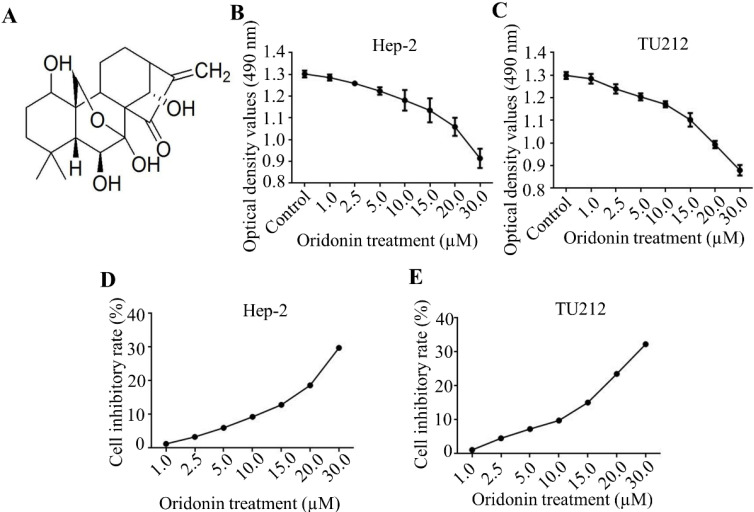
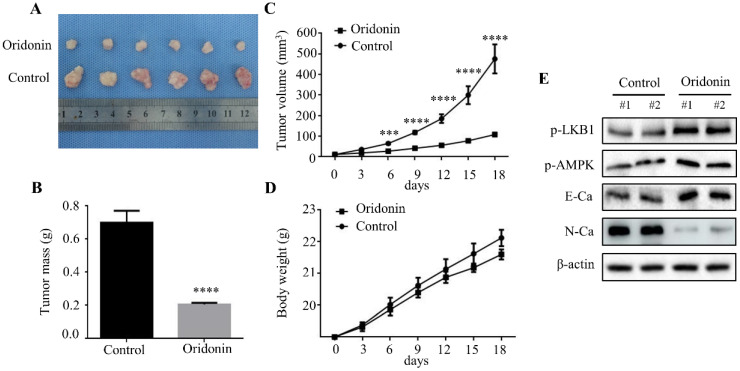
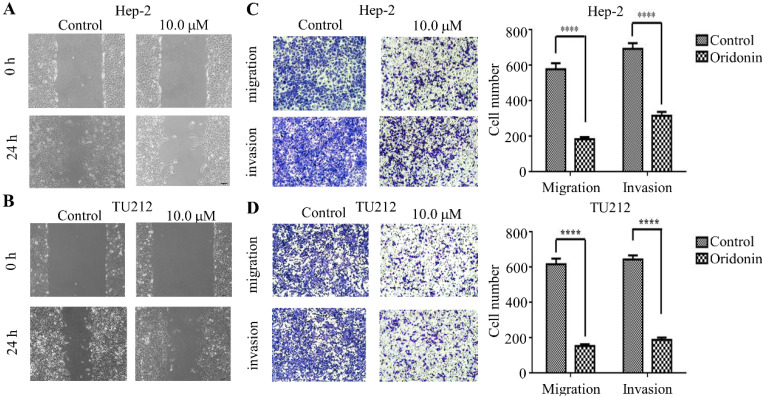
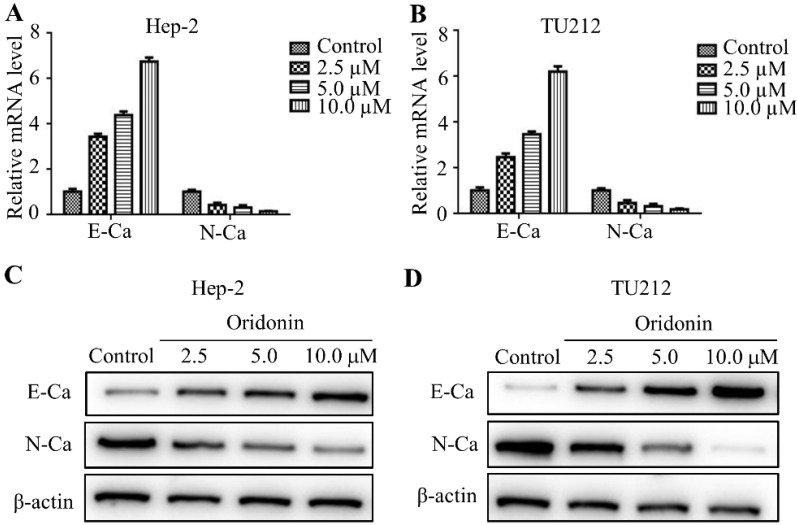
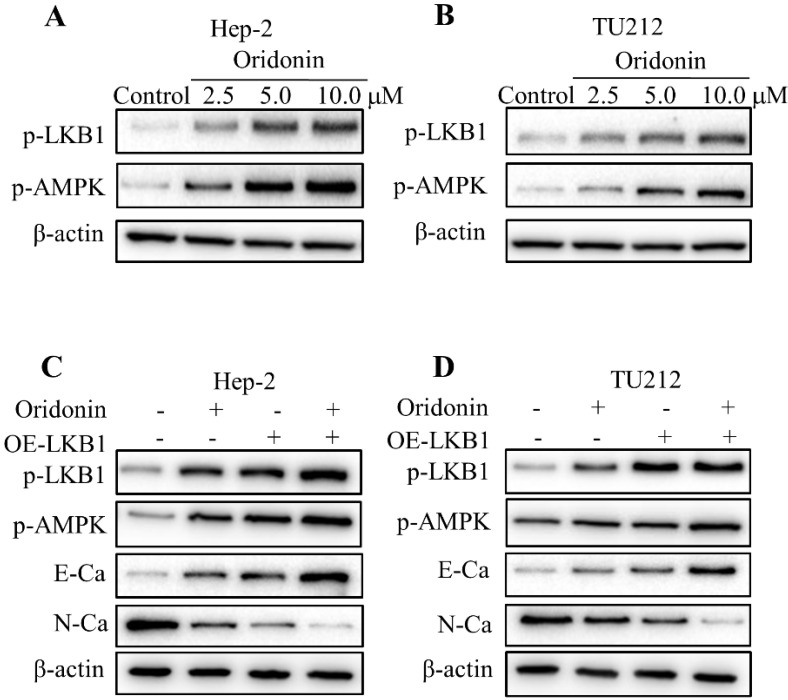
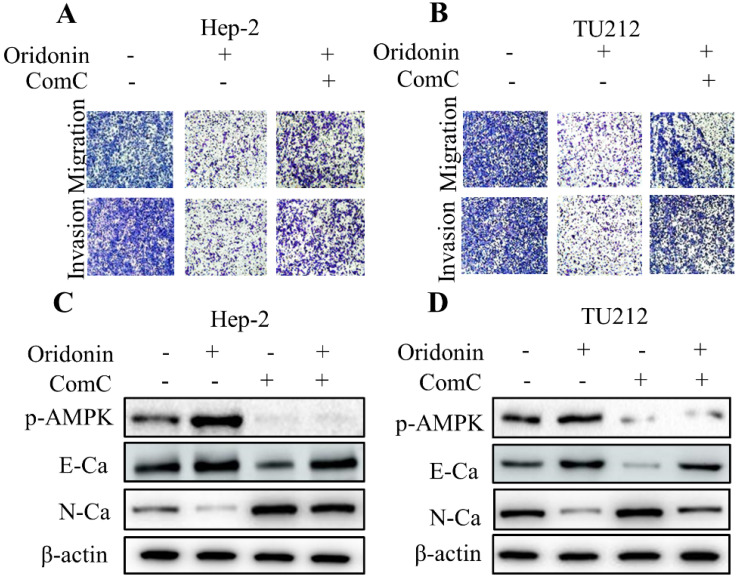
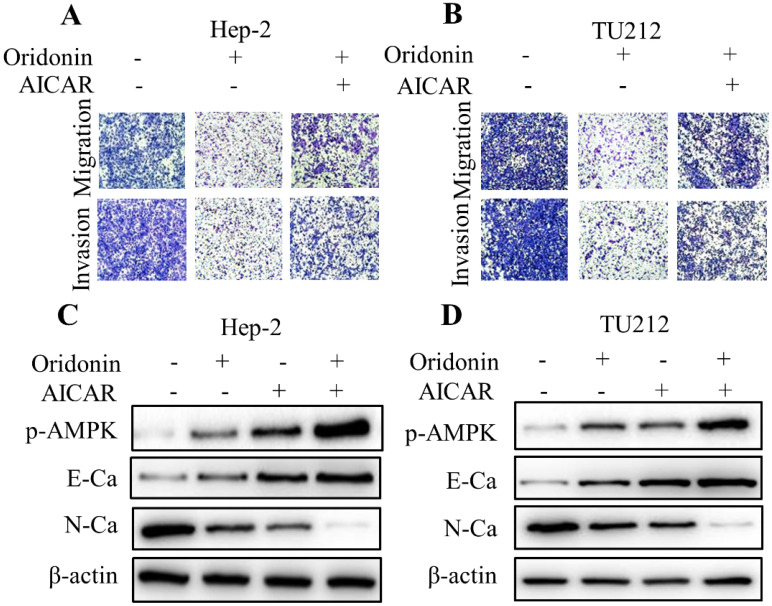
Oridonin is the main bioactive component of Rabdosia rubescens, and its anticancer activity has been reported in a variety of cancers. However, the molecular mechanism of oridonin in laryngeal carcinoma remains unclear. In the present study, the cytotoxic effect of oridonin on laryngeal carcinoma Hep-2 and TU212 cell lines were initially detected by modified MTT assay. The results showed that oridonin had a dose-dependent anti-proliferative effect on laryngeal carcinoma Hep-2 and TU212 cells. Next, we found that oridonin significantly inhibited the migration and invasion of human laryngeal carcinoma Hep-2 and TU212 cell lines by wound healing assay and transwell assay. Subsequently, the results of quantitative real-time PCR assay and western blotting assay confirmed that oridonin upregulated the expression of E-cadherin while downregulated the expression of N-cadherin in a concentration-dependent manner at mRNA and protein levels. In addition, phosphorylation levels of liver kinase B1 (p-LKB1) and AMP-activated protein kinase (p-AMPK) were also elevated upon oridonin treatment. To further verify the role of LKB1/AMPK signaling pathway in laryngeal carcinoma, overexpression of LKB1 was constructed by plasmid transfection. The data exhibited that overexpression of LKB1 could further reinforce the increase of E-cadherin level and decrease of N-cadherin level mediated by oridonin. Additionally, AMPK inhibitor compound C could reverse anti-metastatic effect of oridonin on laryngeal carcinoma, and antagonise EMT expression. In contrast, AMPK activator AICAR presented the opposite effect. In conclusion, our study revealed that oridonin could remarkably reverse the epithelial-mesenchymal transition of laryngeal carcinoma by positively regulating LKB1/AMPK signaling pathway, which suggested that oridonin may be a potential candidate for the treatment of laryngeal carcinoma in the future.
冬凌草甲素是冬凌草的主要生物活性成分,其抗癌活性已在多种癌症中得到报道。然而,冬凌草甲素在喉癌中的分子机制仍不清楚。在本研究中,最初通过改良的MTT法检测了冬凌草甲素对喉癌Hep-2和TU212细胞系的细胞毒性作用。结果表明,冬凌草甲素对喉癌Hep-2和TU212细胞具有剂量依赖性的抗增殖作用。接下来,我们发现冬凌草甲素通过伤口愈合试验和Transwell试验显著抑制人喉癌Hep-2和TU212细胞系的迁移和侵袭。随后,定量实时PCR试验和蛋白质印迹试验结果证实,冬凌草甲素在mRNA和蛋白质水平上以浓度依赖性方式上调E-钙黏蛋白的表达,同时下调N-钙黏蛋白的表达。此外,冬凌草甲素处理后肝激酶B1(p-LKB1)和AMP活化蛋白激酶(p-AMPK)的磷酸化水平也升高。为了进一步验证LKB1/AMPK信号通路在喉癌中的作用,通过质粒转染构建了LKB1的过表达。数据显示,LKB1的过表达可以进一步增强冬凌草甲素介导的E-钙黏蛋白水平的升高和N-钙黏蛋白水平的降低。此外,AMPK抑制剂化合物C可以逆转冬凌草甲素对喉癌的抗转移作用,并拮抗上皮-间质转化的表达。相反,AMPK激活剂AICAR则呈现相反的效果。总之,我们的研究表明,冬凌草甲素可以通过正向调节LKB1/AMPK信号通路显著逆转喉癌的上皮-间质转化,这表明冬凌草甲素可能是未来治疗喉癌的潜在候选药物。