Wilson Emma L, Yu Yizhou, Leal Nuno S, Woodward James A, Patikas Nikolaos, Morris Jordan L, Field Sarah F, Plumbly William, Paupe Vincent, Chowdhury Suvagata R, Antrobus Robin, Lindop Georgina E, Adia Yusuf M, Loh Samantha H Y, Prudent Julien, Martins L Miguel, Metzakopian Emmanouil
UK Dementia Research Institute, University of Cambridge, Clifford Albutt building, Cambridge biomedical campus, Cambridge, CB2 0AH, UK.
MRC Mitochondrial Biology Unit, University of Cambridge, The Keith Peters building, Cambridge Biomedical Campus, Cambridge, CB2 0XY, UK.
Cell Death Dis. 2024 Mar 11;15(3):203. doi: 10.1038/s41419-024-06568-y.
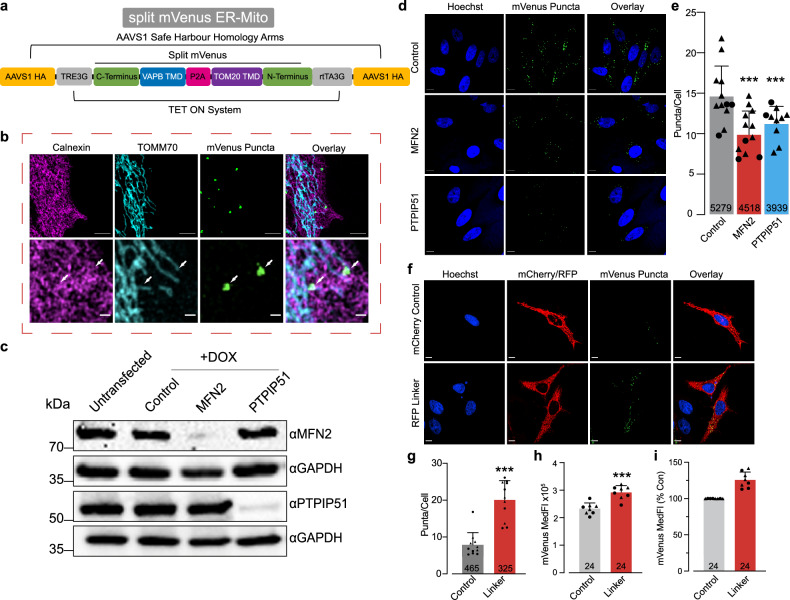
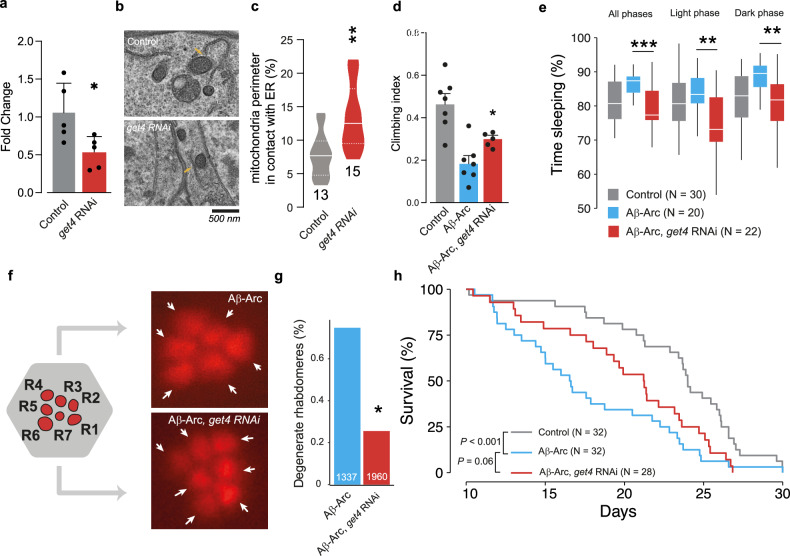
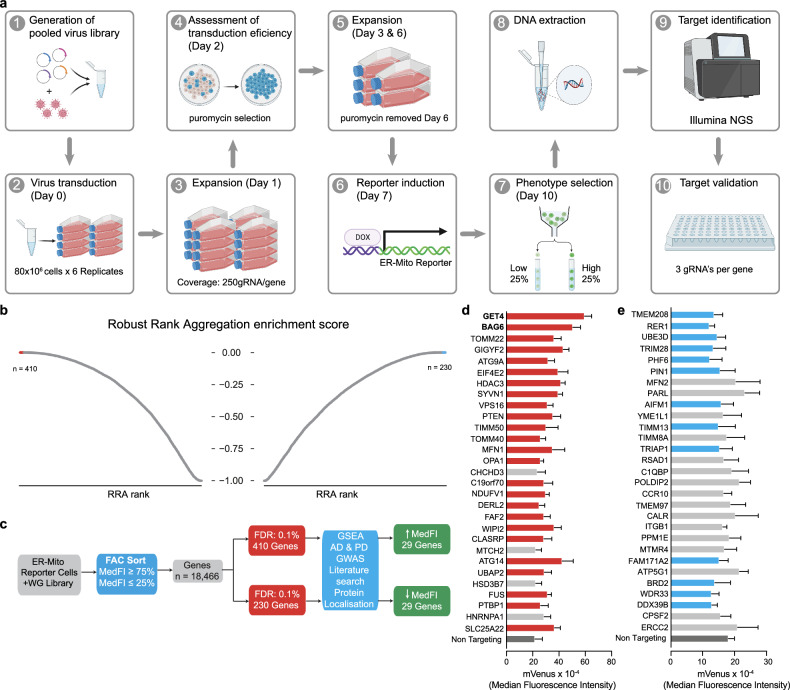
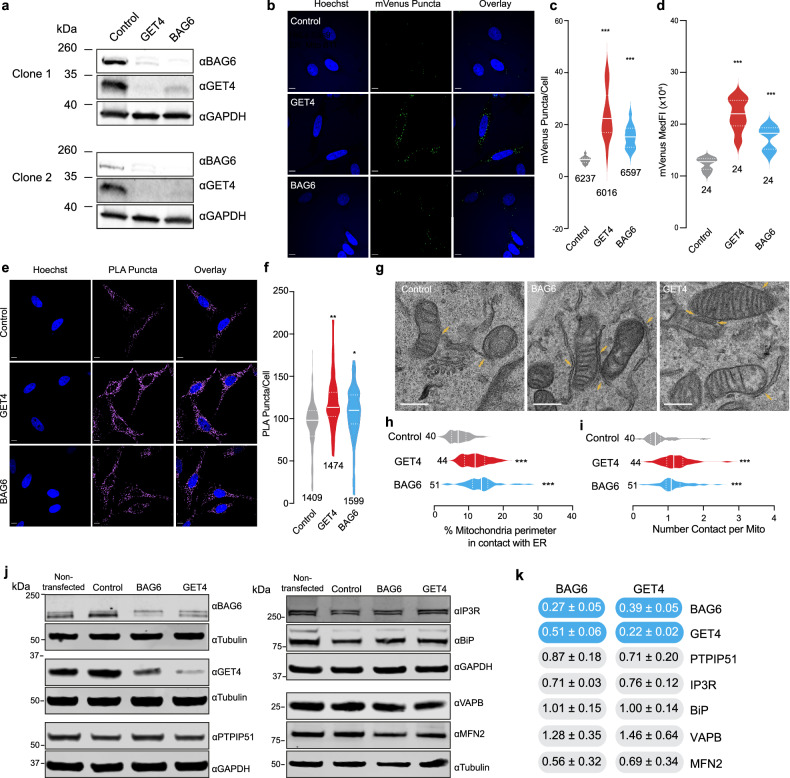
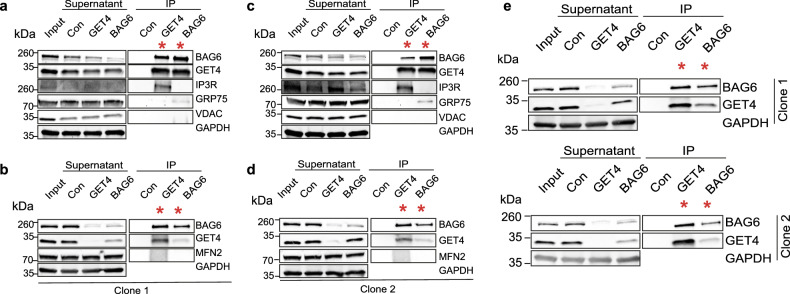
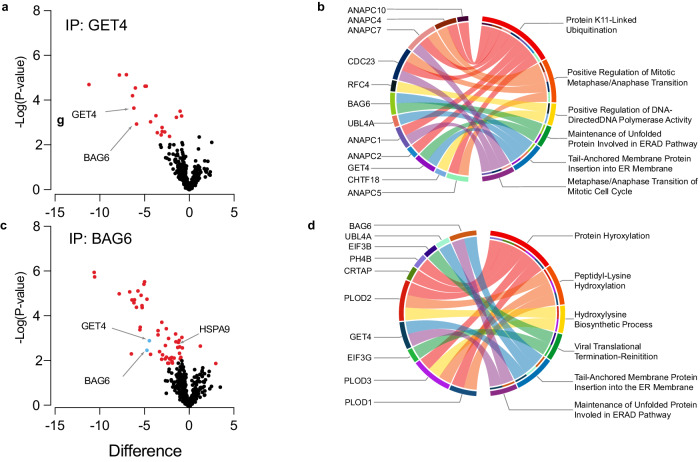
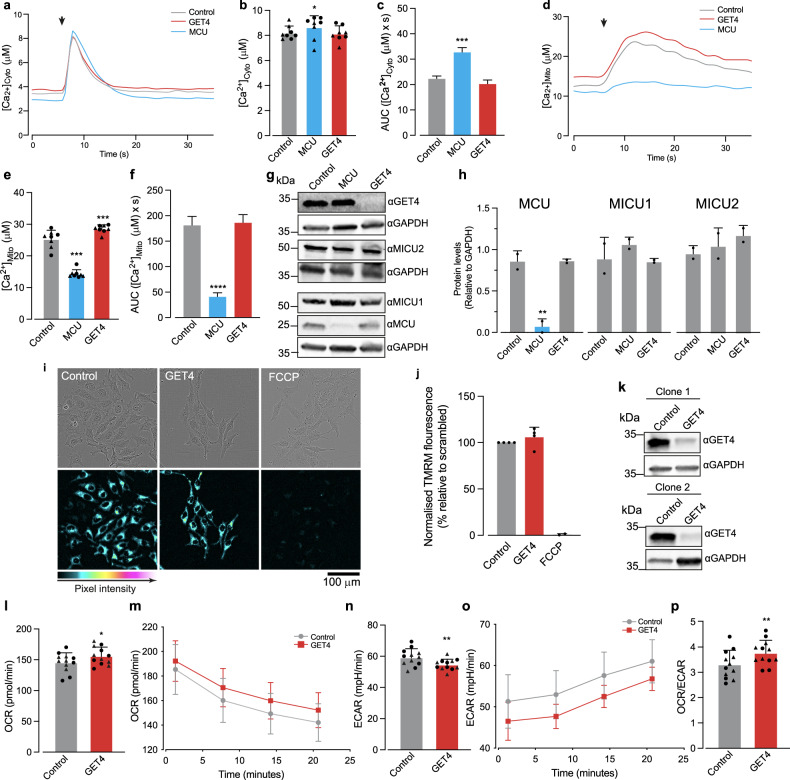
Organelles form membrane contact sites between each other, allowing for the transfer of molecules and signals. Mitochondria-endoplasmic reticulum (ER) contact sites (MERCS) are cellular subdomains characterized by close apposition of mitochondria and ER membranes. They have been implicated in many diseases, including neurodegenerative, metabolic, and cardiac diseases. Although MERCS have been extensively studied, much remains to be explored. To uncover novel regulators of MERCS, we conducted a genome-wide, flow cytometry-based screen using an engineered MERCS reporter cell line. We found 410 genes whose downregulation promotes MERCS and 230 genes whose downregulation decreases MERCS. From these, 29 genes were selected from each population for arrayed screening and 25 were validated from the high population and 13 from the low population. GET4 and BAG6 were highlighted as the top 2 genes that upon suppression increased MERCS from both the pooled and arrayed screens, and these were subjected to further investigation. Multiple microscopy analyses confirmed that loss of GET4 or BAG6 increased MERCS. GET4 and BAG6 were also observed to interact with the known MERCS proteins, inositol 1,4,5-trisphosphate receptors (IP3R) and glucose-regulated protein 75 (GRP75). In addition, we found that loss of GET4 increased mitochondrial calcium uptake upon ER-Ca release and mitochondrial respiration. Finally, we show that loss of GET4 rescues motor ability, improves lifespan and prevents neurodegeneration in a Drosophila model of Alzheimer's disease (Aβ42Arc). Together, these results suggest that GET4 is involved in decreasing MERCS and that its loss is neuroprotective.
细胞器之间形成膜接触位点,允许分子和信号的传递。线粒体-内质网(ER)接触位点(MERCS)是细胞亚结构域,其特征是线粒体和内质网膜紧密相邻。它们与许多疾病有关,包括神经退行性疾病、代谢性疾病和心脏疾病。尽管对MERCS进行了广泛研究,但仍有许多有待探索。为了发现MERCS的新型调节因子,我们使用工程化的MERCS报告细胞系进行了全基因组、基于流式细胞术的筛选。我们发现410个基因的下调促进MERCS,230个基因的下调减少MERCS。从中,从每个群体中选择29个基因进行阵列筛选,25个从高群体中得到验证,13个从低群体中得到验证。GET4和BAG6被突出显示为在汇集筛选和阵列筛选中抑制后增加MERCS的前两个基因,并对它们进行了进一步研究。多种显微镜分析证实,GET4或BAG6的缺失增加了MERCS。还观察到GET4和BAG6与已知的MERCS蛋白肌醇1,4,5-三磷酸受体(IP3R)和葡萄糖调节蛋白75(GRP75)相互作用。此外,我们发现GET4的缺失增加了内质网钙释放后线粒体的钙摄取和线粒体呼吸。最后,我们表明GET4的缺失挽救了阿尔茨海默病(Aβ42Arc)果蝇模型中的运动能力,延长了寿命并预防了神经退行性变。总之,这些结果表明GET4参与减少MERCS,其缺失具有神经保护作用。