Kwak Soyoung, Usyk Mykhaylo, Beggs Dia, Choi Heesun, Ahdoot Dariush, Wu Feng, Maceda Lorraine, Li Huilin, Im Eun-Ok, Han Hae-Ra, Lee Eunjung, Wu Anna H, Hayes Richard B, Ahn Jiyoung
Perlmutter Cancer Center, NYU Langone Health, New York, NY, USA.
Department of Population Health, NYU Grossman School of Medicine, New York, NY, USA.
NPJ Biofilms Microbiomes. 2024 Mar 11;10(1):19. doi: 10.1038/s41522-024-00491-y.
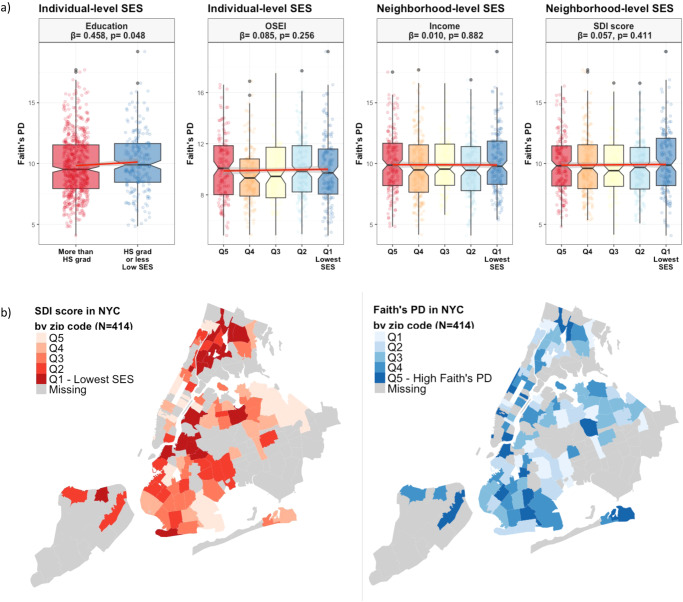
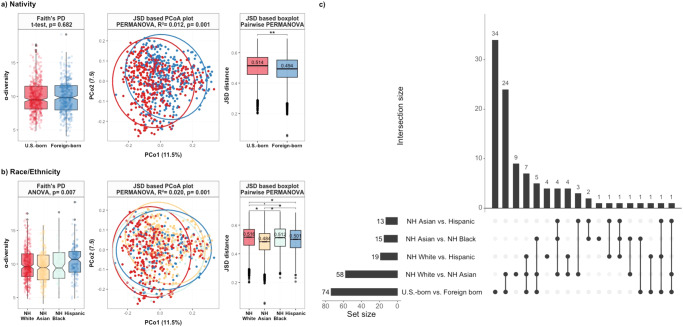
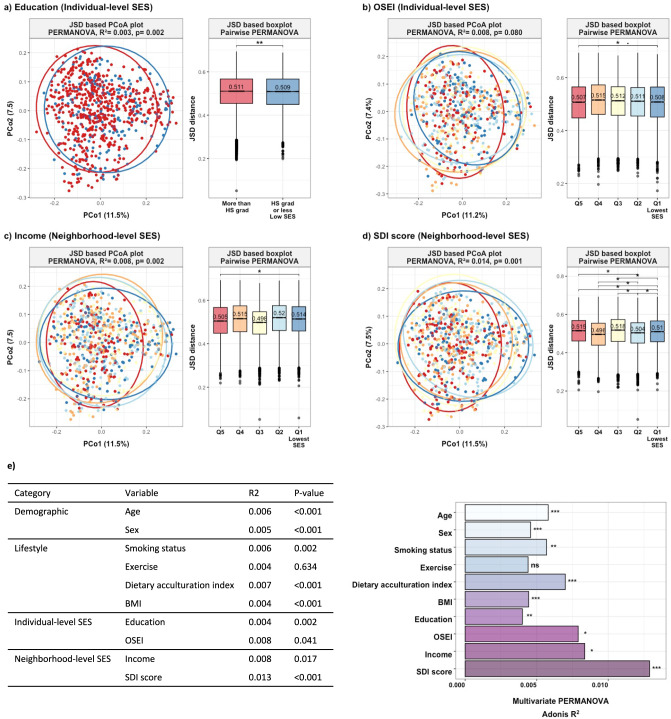
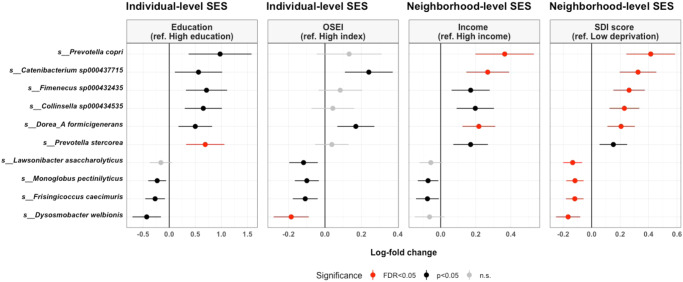
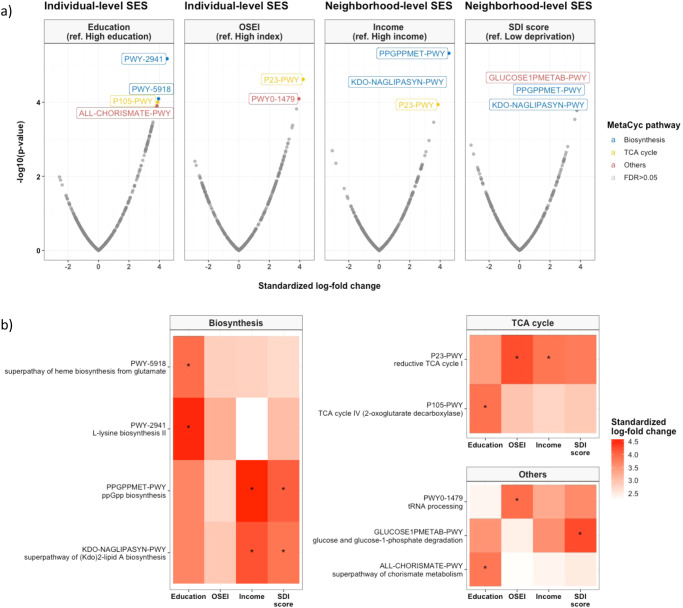
Lower socioeconomic status (SES) is related to increased incidence and mortality due to chronic diseases in adults. Association between SES variables and gut microbiome variation has been observed in adults at the population level, suggesting that biological mechanisms may underlie the SES associations; however, there is a need for larger studies that consider individual- and neighborhood-level measures of SES in racially diverse populations. In 825 participants from a multi-ethnic cohort, we investigated how SES shapes the gut microbiome. We determined the relationship of a range of individual- and neighborhood-level SES indicators with the gut microbiome. Individual education level and occupation were self-reported by questionnaire. Geocoding was applied to link participants' addresses with neighborhood census tract socioeconomic indicators, including average income and social deprivation in the census tract. Gut microbiome was measured using 16SV4 region rRNA gene sequencing of stool samples. We compared α-diversity, β-diversity, and taxonomic and functional pathway abundance by SES. Lower SES was significantly associated with greater α-diversity and compositional differences among groups, as measured by β-diversity. Several taxa related to low SES were identified, especially an increasing abundance of Prevotella copri and Catenibacterium sp000437715, and decreasing abundance of Dysosmobacter welbionis in terms of their high log-fold change differences. In addition, nativity and race/ethnicity have emerged as ecosocial factors that also influence the gut microbiota. Together, these results showed that lower SES was strongly associated with compositional and taxonomic measures of the gut microbiome, and may contribute to shaping the gut microbiota.
社会经济地位较低(SES)与成年人慢性病发病率和死亡率增加有关。在人群层面已观察到成年人SES变量与肠道微生物群变化之间的关联,这表明生物学机制可能是SES关联的基础;然而,需要开展更大规模的研究,在种族多样化人群中考虑个体和邻里层面的SES测量指标。在一个多民族队列的825名参与者中,我们研究了SES如何塑造肠道微生物群。我们确定了一系列个体和邻里层面的SES指标与肠道微生物群的关系。个体教育水平和职业通过问卷调查自我报告。应用地理编码将参与者的地址与邻里普查区社会经济指标相联系,包括普查区的平均收入和社会剥夺情况。使用粪便样本的16SV4区域rRNA基因测序来测量肠道微生物群。我们按SES比较了α多样性、β多样性以及分类学和功能途径丰度。较低的SES与更高的α多样性以及组间组成差异显著相关,β多样性测量结果表明了这一点。确定了几种与低SES相关的分类群,特别是普氏粪杆菌和链状杆菌sp000437715的丰度增加,而韦尔比奥氏菌的丰度在其高对数倍变化差异方面有所下降。此外,出生地和种族/民族已成为影响肠道微生物群的生态社会因素。总之,这些结果表明较低的SES与肠道微生物群的组成和分类学指标密切相关,可能有助于塑造肠道微生物群。