Department of Epidemiology and Preventive Medicine, School of Public Health, The Sackler Faculty of Medicine, Tel Aviv University, Ramat Aviv, Tel Aviv, 6139001, Israel.
The Shmunis School of Biomedicine and Cancer Research, Faculty of Life Sciences, Tel Aviv University, Tel Aviv, Israel.
NPJ Biofilms Microbiomes. 2022 Mar 3;8(1):10. doi: 10.1038/s41522-022-00271-6.
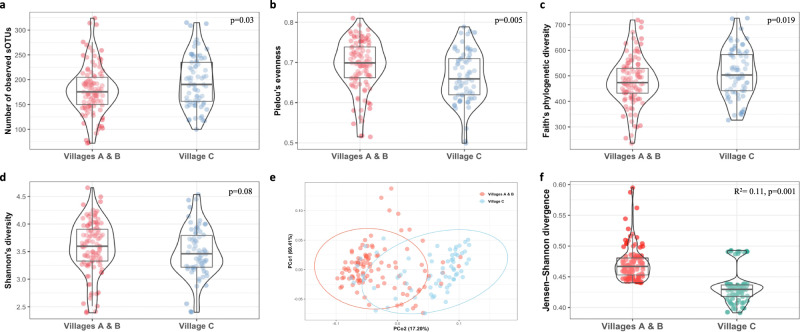
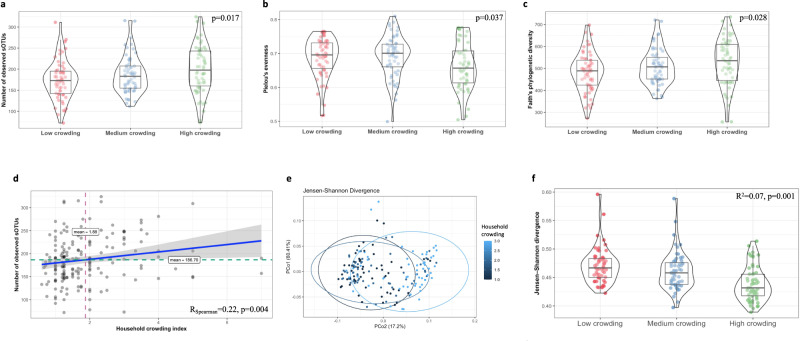
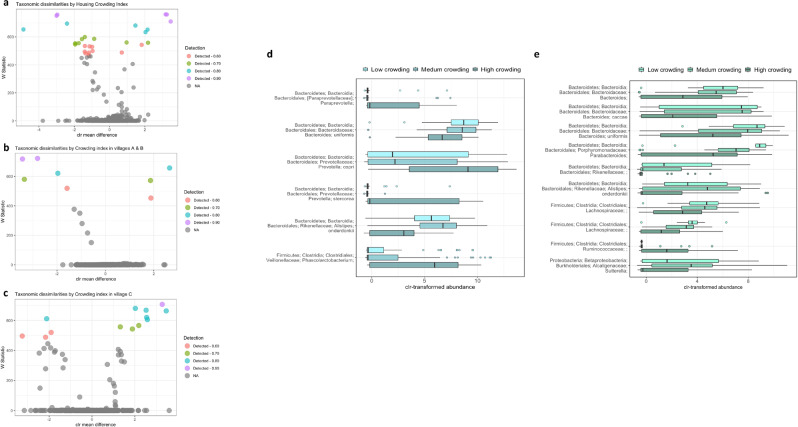
The development of the gut microbiome occurs mainly during the first years of life; however, little is known on the role of environmental and socioeconomic exposures, particularly within the household, in shaping the microbial ecology through childhood. We characterized differences in the gut microbiome of school-age healthy children, in association with socioeconomic disparities and household crowding. Stool samples were analyzed from 176 Israeli Arab children aged six to nine years from three villages of different socioeconomic status (SES). Sociodemographic data were collected through interviews with the mothers. We used 16 S rRNA gene sequencing to characterize the gut microbiome, including an inferred analysis of metabolic pathways. Differential analysis was performed using the analysis of the composition of microbiomes (ANCOM), with adjustment for covariates. An analysis of inferred metagenome functions was performed implementing PICRUSt2. Gut microbiome composition differed across the villages, with the largest difference attributed to socioeconomic disparities, with household crowding index being a significant explanatory variable. Living in a low SES village and high household crowding were associated with increased bacterial richness and compositional differences, including an over-representation of Prevotella copri and depleted Bifidobacterium. Secondary bile acid synthesis, d-glutamine and d-glutamate metabolism and Biotin metabolism were decreased in the lower SES village. In summary, residential SES is a strong determinant of the gut microbiome in healthy school-age children, mediated by household crowding and characterized by increased bacterial richness and substantial taxonomic and metabolic differences. Further research is necessary to explore possible implications of SES-related microbiome differences on children's health and development.
肠道微生物组的发展主要发生在生命的最初几年;然而,对于环境和社会经济暴露,特别是家庭内部,如何通过儿童期塑造微生物生态,人们知之甚少。我们研究了不同社会经济地位(SES)的三个村庄中 176 名 6 至 9 岁的以色列阿拉伯健康儿童的肠道微生物组差异,与 SES 差异和家庭拥挤有关。通过对母亲的访谈收集社会人口统计学数据。我们使用 16S rRNA 基因测序来描述肠道微生物组,包括对代谢途径的推断分析。使用微生物组组成分析(ANCOM)进行差异分析,并对协变量进行调整。通过 PICRUSt2 实施对推断的宏基因组功能进行分析。肠道微生物组组成在不同村庄之间存在差异,最大的差异归因于 SES 差异,家庭拥挤指数是一个重要的解释变量。生活在 SES 较低的村庄和家庭拥挤程度较高与细菌丰富度增加和组成差异有关,包括Prevotella copri 的过度表达和双歧杆菌的减少。低 SES 村庄的次级胆汁酸合成、d-谷氨酰胺和 d-谷氨酸代谢以及生物素代谢减少。总之,居住 SES 是健康学龄儿童肠道微生物组的一个重要决定因素,受家庭拥挤程度的影响,并表现为细菌丰富度增加以及分类和代谢差异显著。需要进一步研究来探讨 SES 相关微生物组差异对儿童健康和发育的可能影响。