Liu Jingxuan, Wang Rui, Tan Song, Zhao Xiaohu, Hou Aihua
College of Traditional Chinese Medicine, Shandong University of Traditional Chinese Medicine, Jinan, China.
Department of Oncology, Yantai Hospital of Traditional Chinese Medicine, Yantai, China.
Diabetol Metab Syndr. 2024 Mar 11;16(1):63. doi: 10.1186/s13098-024-01308-w.
A growing body of evidence points to the association between insulin resistance (IR), metabolic syndrome (MetS) and its components and lung cancer incidence, but remains controversial and unknown.
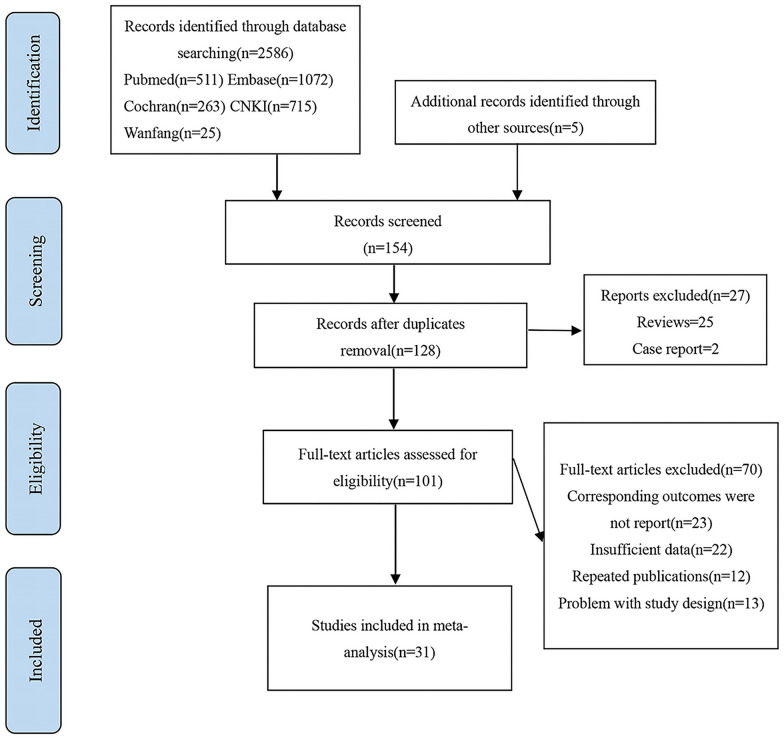
A systematic search was conducted through PubMed, Embase, Cochrane Library, the China National Knowledge Infrastructure (CNKI) and Wanfang databases for the corresponding studies. Each study reported the risk estimate and 95% confidence intervals (CI) for lung cancer, and a fixed effects model or random effects model was used for outcome.
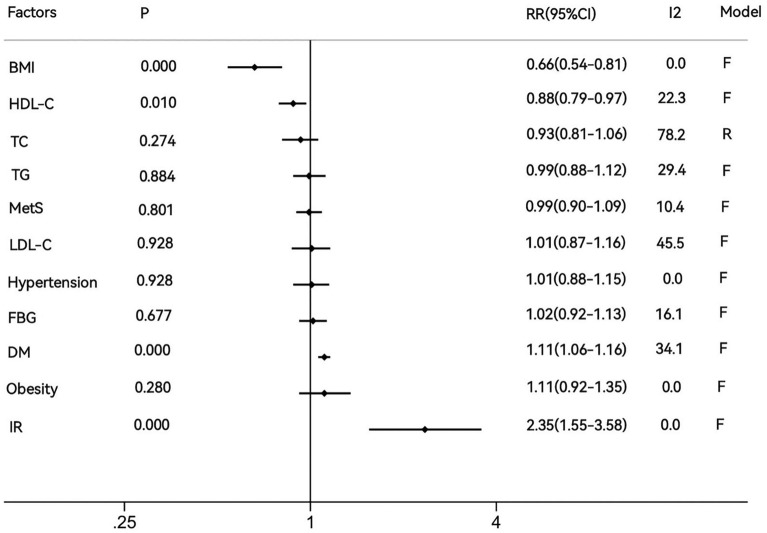
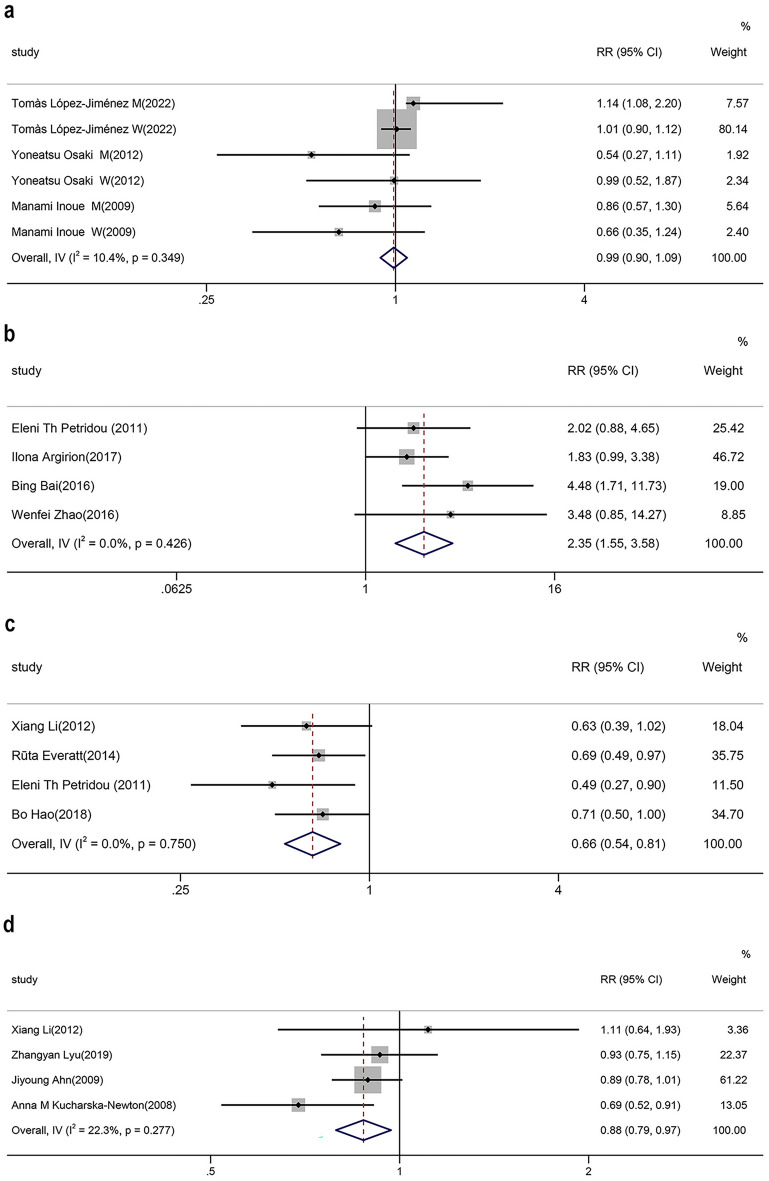
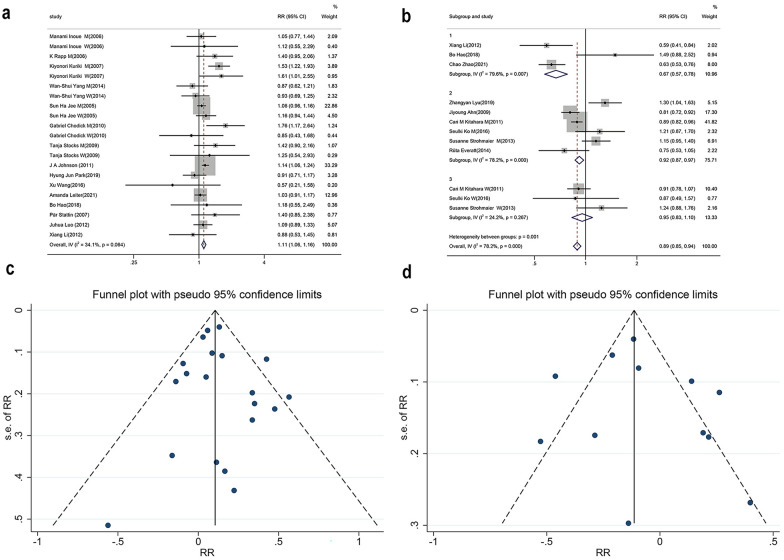
We included 31 publications involving 6,589,383 people with 62,246 cases of lung cancer. Diabetes mellitus (DM) (RR = 1.11, 95% CI 1.06-1.16, P = 0.000) and IR (RR = 2.35, 95% CI 1.55-3.58, P = 0.000) showed a positive association with lung cancer risk. BMI (RR = 0.66, 95% CI 0.54-0.81, P = 0.000) and HDL-C (RR = 0.88, 95% CI 0.79-0.97, P = 0.010) were negatively correlated with lung cancer. MetS(RR = 0.99, 95% CI 0.90-1.09, P = 0.801), TC (RR = 0.93, 95% CI 0.81-1.06, P = 0.274), TG (RR = 0.99, 95% CI 0.88-1.12,P = 0.884), LDL-C (RR = 1.01, 95% CI 0.87-1.16, P = 0.928), hypertension (RR = 1.01, 95% CI 0.88-1.15, P = 0.928), FBG (RR = 1.02, 95% CI 0.92-1.13, P = 0.677) and obesity (RR = 1.11, 95% CI 0.92-1.35, P = 0.280) were not associated with lung cancer.
Our study showed that the risk of lung cancer is correlated with DM, IR, BMI, and HDL-C. Timely control of these metabolic disorders may have a positive effect on preventing lung cancer. Trial registration Our study has been registered in the Prospective Register of Systematic Reviews (PROSPERO), ID: CRD42023390710.
越来越多的证据表明胰岛素抵抗(IR)、代谢综合征(MetS)及其组分与肺癌发病率之间存在关联,但仍存在争议且尚不明确。
通过PubMed、Embase、Cochrane图书馆、中国知网(CNKI)和万方数据库系统检索相关研究。每项研究均报告了肺癌的风险估计值和95%置信区间(CI),并采用固定效应模型或随机效应模型进行分析。
我们纳入了31篇文献,涉及6589383人,其中肺癌病例62246例。糖尿病(DM)(RR = 1.11,95%CI 1.06 - 1.16,P = 0.000)和IR(RR = 2.35,95%CI 1.55 - 3.58,P = 0.000)与肺癌风险呈正相关。体重指数(BMI)(RR = 0.66,95%CI 0.54 - 0.81,P = 0.000)和高密度脂蛋白胆固醇(HDL-C)(RR = 0.88,95%CI 0.79 - 0.97,P = 0.010)与肺癌呈负相关。MetS(RR = 0.99,95%CI 0.90 - 1.09,P = 0.801)、总胆固醇(TC)(RR = 0.93,95%CI 0.81 - 1.06,P = 0.274)、甘油三酯(TG)(RR = 0.99,95%CI 0.88 - 1.12,P = 0.884)、低密度脂蛋白胆固醇(LDL-C)(RR = 1.01,95%CI 0.87 - 1.16,P = 0.928)、高血压(RR = 1.01,95%CI 0.88 - 1.15,P = 0.928)、空腹血糖(FBG)(RR = 1.02,95%CI 0.92 - 1.13,P = 0.677)和肥胖(RR = 1.11,95%CI 0.92 - 1.35,P = 0.280)与肺癌无关。
我们的研究表明,肺癌风险与DM、IR、BMI和HDL-C相关。及时控制这些代谢紊乱可能对预防肺癌有积极作用。试验注册 我们的研究已在系统评价前瞻性注册库(PROSPERO)注册,注册号:CRD42023390710。