Nhung Nguyen Thi, Phu Doan Hoang, Carrique-Mas Juan J, Padungtod Pawin
Oxford University Clinical Research Unit, Ho Chi Minh City, Viet Nam.
Faculty of Animal Science and Veterinary Medicine, Nong Lam University, Ho Chi Minh City, Viet Nam.
One Health. 2024 Mar 2;18:100698. doi: 10.1016/j.onehlt.2024.100698. eCollection 2024 Jun.
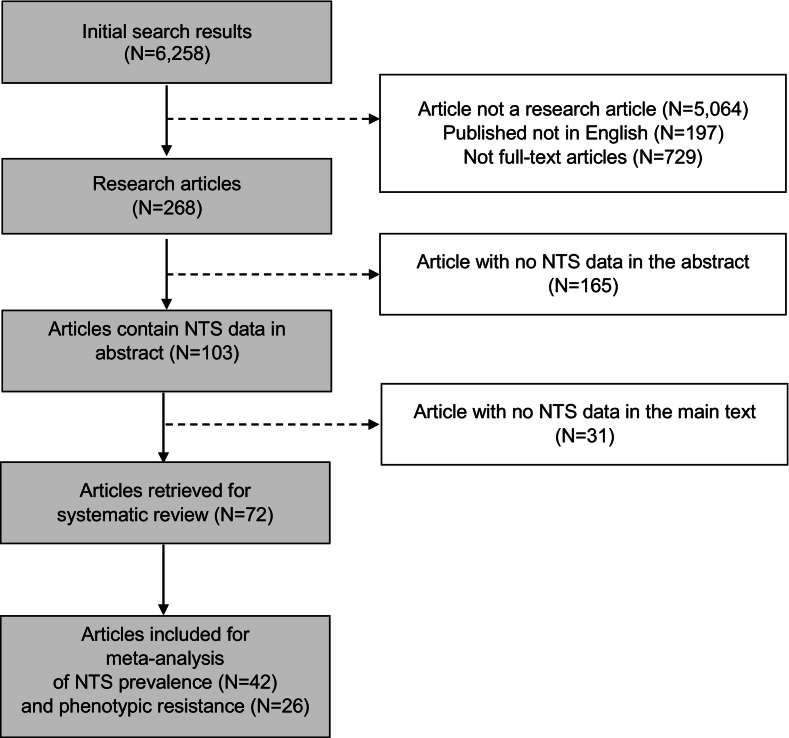
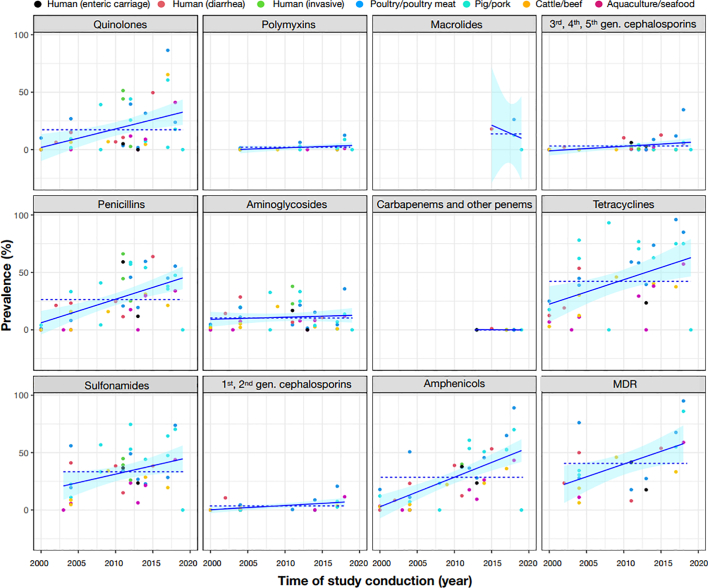
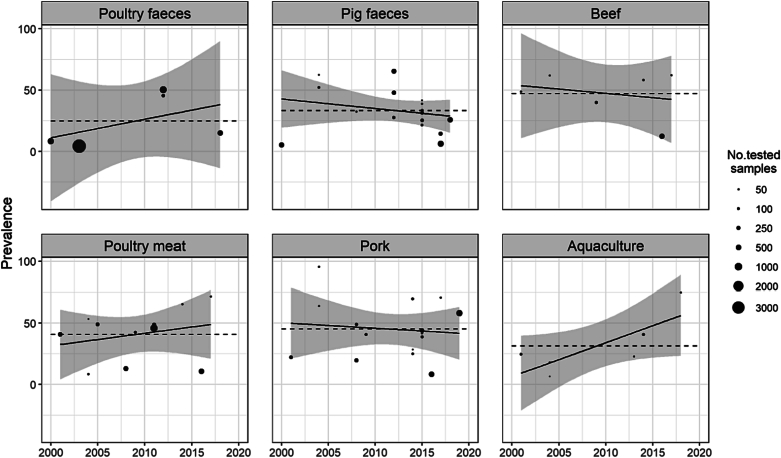
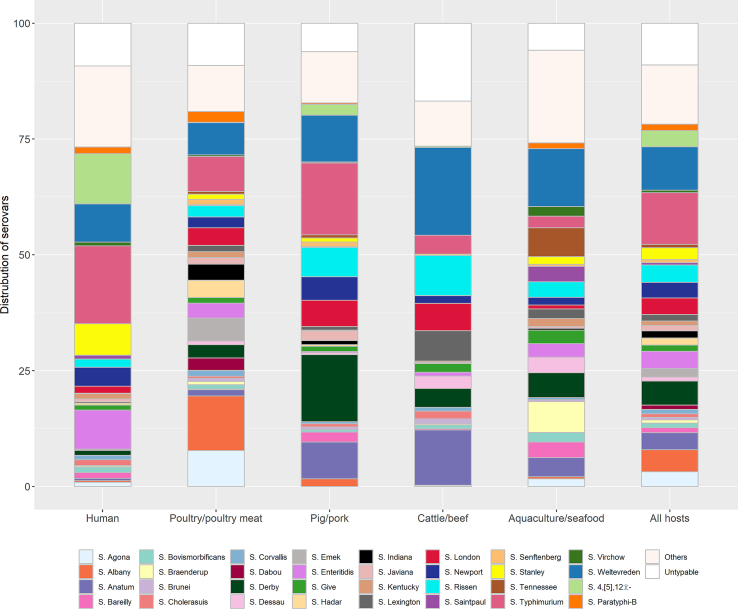
Non-typhoidal (NTS) is a food-borne zoonotic pathogen with important implications for human health. Despite its importance, the burden of NTS infections in Vietnam is unknown. We conducted a systematic review and a meta-analysis to describe the prevalence and phenotypic antimicrobial resistance (AMR) for NTS over time in Vietnam. Following PRISMA guidelines, we identified 72 studies from PubMed and Google Scholar containing data relevant to ', 'Salmonellosis', and 'Vietnam', or 'Viet Nam'. Of those, forty-two papers reporting prevalence of NTS, and twenty-six including data on phenotypic resistance were selected for meta-analysis. The prevalence of NTS ranged from 2% to 5% in humans and from 30% to 41% in samples from animals and the farm/slaughterhouse environment. Between 2000 and 2020 we observed a 27.3% ( = 0.044) increase in absolute terms in prevalence among individuals with enteric diseases and a 12.0% ( = 0.047) increase in aquaculture/seafood samples. The most commonly serovars identified across studies included . Weltevreden (12.0%), followed by Typhimurium (10.1%), . Derby (6.4%), . London (5.8%), . Anatum (4.4%), . Rissen (3.9%), Enteritidis (3.7%), . Albany (3.3%) and . 4,[5],12:i:- (3.0%). Over the same period, there was an increasing trend in the pooled AMR prevalence for quinolones (15.6% relative increase), 3rd-, 4th-, and 5th-generation cephalosporins (23.7%), penicillins (16.1%), tetracyclines (12.9%), sulfonamides (8.8%), amphenicol (17.8%), and multidrug resistance (11.4%) (all ≤ 0.014). A broad range of AMR genes (ARGs) were detected in both human and animal populations. The observed prevalence and AMR trends in Vietnam underscore the need of adopting a One Health strategy encompassing surveillance systems, research initiatives, and awareness campaigns to effectively address the challenges posed by NTS.
非伤寒沙门氏菌(NTS)是一种食源性人畜共患病原体,对人类健康具有重要影响。尽管其重要性,但越南NTS感染的负担尚不清楚。我们进行了一项系统综述和荟萃分析,以描述越南NTS随时间推移的流行率和表型抗菌药物耐药性(AMR)。按照PRISMA指南,我们从PubMed和谷歌学术中确定了72项研究,这些研究包含与“沙门氏菌病”、“越南”相关的数据。其中,42篇报告NTS流行率的论文以及26篇包含表型耐药性数据的论文被选入荟萃分析。NTS在人类中的流行率为2%至5%,在动物及农场/屠宰场环境样本中的流行率为30%至41%。在2000年至2020年期间,我们观察到肠道疾病患者中流行率的绝对值增加了27.3%(P = 0.044),水产养殖/海鲜样本中增加了12.0%(P = 0.047)。各研究中最常鉴定出的血清型包括韦尔泰弗里登(12.0%),其次是鼠伤寒(10.1%)、德比(6.4%)、伦敦(5.8%)、阿纳托姆(4.4%)、里森(3.9%)、肠炎(3.7%)、奥尔巴尼(3.3%)和4,[5],12:i:-(3.0%)。在同一时期,喹诺酮类药物(相对增加15.6%)、第三代、第四代和第五代头孢菌素(23.7%)、青霉素(16.1%)、四环素(12.9%)、磺胺类药物(8.8%)、氯霉素(17.8%)和多重耐药性(11.4%)的汇总AMR流行率呈上升趋势(所有P≤0.014)。在人类和动物群体中均检测到广泛多样的AMR基因(ARGs)。越南观察到的流行率和AMR趋势凸显了采取一种涵盖监测系统、研究倡议和宣传活动的“同一健康”战略以有效应对NTS带来挑战的必要性。