Department of Biomedicine and Prevention, University of Rome Tor Vergata, Via Montpellier 1, 00133 Rome, Italy.
Saint Camillus International University of Health Sciences, Via di Sant'Alessandro 8, 00131 Rome, Italy.
Int J Mol Sci. 2024 Feb 29;25(5):2834. doi: 10.3390/ijms25052834.
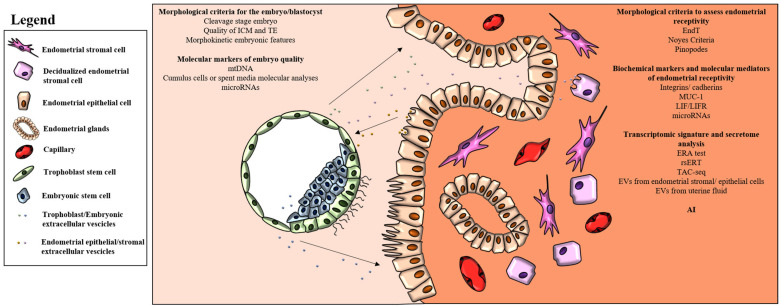
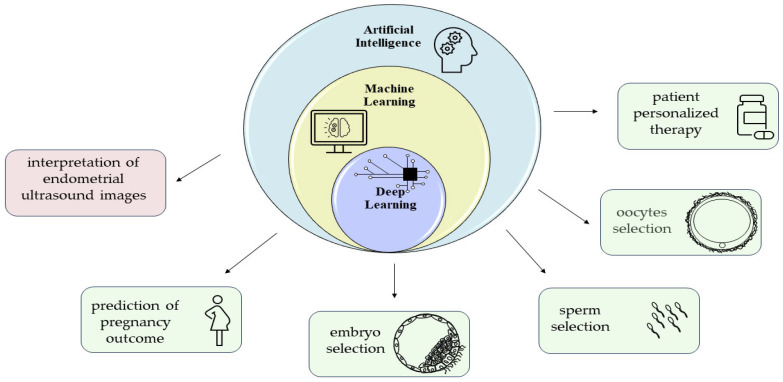
Evaluation of the optimal number of embryos, their quality, and the precise timing for transfer are critical determinants in reproductive success, although still remaining one of the main challenges in assisted reproduction technologies (ART). Indeed, the success of in vitro fertilization (IVF) treatments relies on a multitude of events and factors involving both the endometrium and the embryo. Despite concerted efforts on both fronts, the overall success rates of IVF techniques continue to range between 25% and 30%. The role of the endometrium in implantation has been recently recognized, leading to the hypothesis that both the "soil" and the "seed" play a central role in a successful pregnancy. In this respect, identification of the molecular signature of endometrial receptivity together with the selection of the best embryo for transfer become crucial in ART. Currently, efforts have been made to develop accurate, predictive, and personalized tests to identify the window of implantation and the best quality embryo. However, the value of these tests is still debated, as conflicting results are reported in the literature. The purpose of this review is to summarize and critically report the available criteria to optimize the success of embryo transfer and to better understand current limitations and potential areas for improvement.
评估最佳胚胎数量、质量和精确的移植时间是生殖成功的关键决定因素,但这仍然是辅助生殖技术(ART)的主要挑战之一。事实上,体外受精(IVF)治疗的成功依赖于涉及子宫内膜和胚胎的多种事件和因素。尽管在这两个方面都进行了协同努力,但 IVF 技术的总体成功率仍在 25%至 30%之间。最近人们认识到了子宫内膜在着床中的作用,这导致了这样一种假设,即“土壤”和“种子”在成功妊娠中都起着核心作用。在这方面,鉴定子宫内膜容受性的分子特征以及选择最佳胚胎进行移植在 ART 中变得至关重要。目前,已经努力开发准确、可预测和个性化的测试来识别着床窗口和最佳质量的胚胎。然而,这些测试的价值仍存在争议,因为文献中报告了相互矛盾的结果。本文的目的是总结和批判性地报告现有的标准,以优化胚胎移植的成功率,并更好地了解当前的局限性和潜在的改进领域。