Murphy Dearbhla M, Walsh Anastasija, Stein Laura, Petrasca Andreea, Cox Donal J, Brown Kevin, Duffin Emily, Jameson Gráinne, Connolly Sarah A, O'Connell Fiona, O'Sullivan Jacintha, Basdeo Sharee A, Keane Joseph, Phelan James J
Department of Clinical Medicine, School of Medicine, Trinity Translational Medicine Institute (TTMI), Trinity Centre for Health Sciences, St. James's Hospital, Trinity College Dublin, The University of Dublin, Dublin 8, D08 W9RT Dublin, Ireland.
School of Biochemistry and Immunology, Trinity Biomedical Sciences Institute (TBSI), Trinity College Dublin, The University of Dublin, D02 R590 Dublin, Ireland.
Int J Mol Sci. 2024 Mar 1;25(5):2898. doi: 10.3390/ijms25052898.
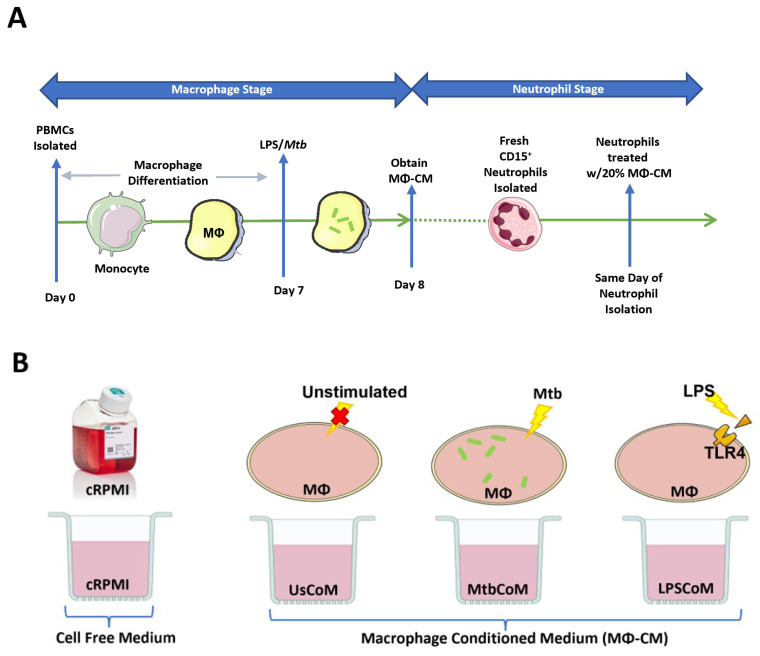
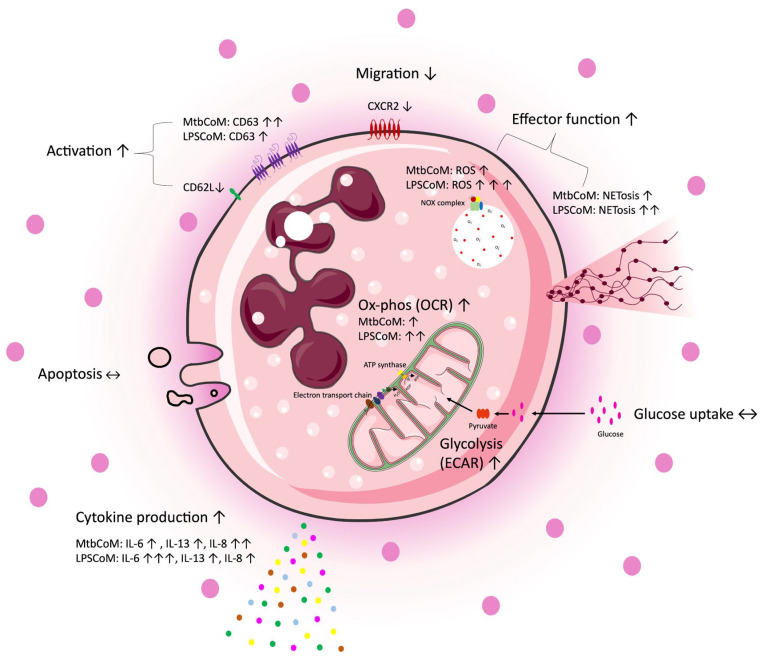
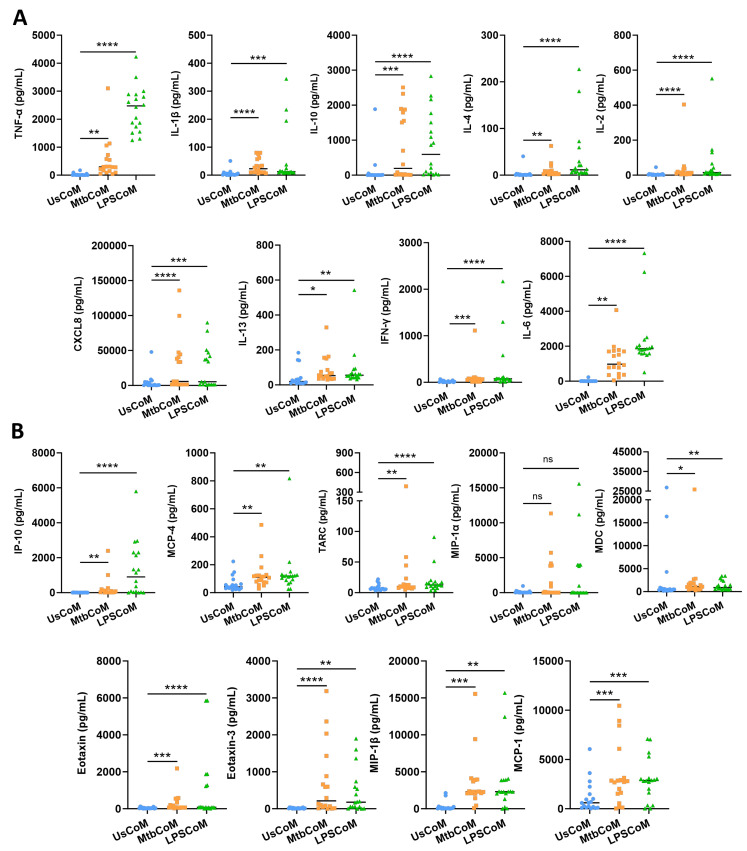
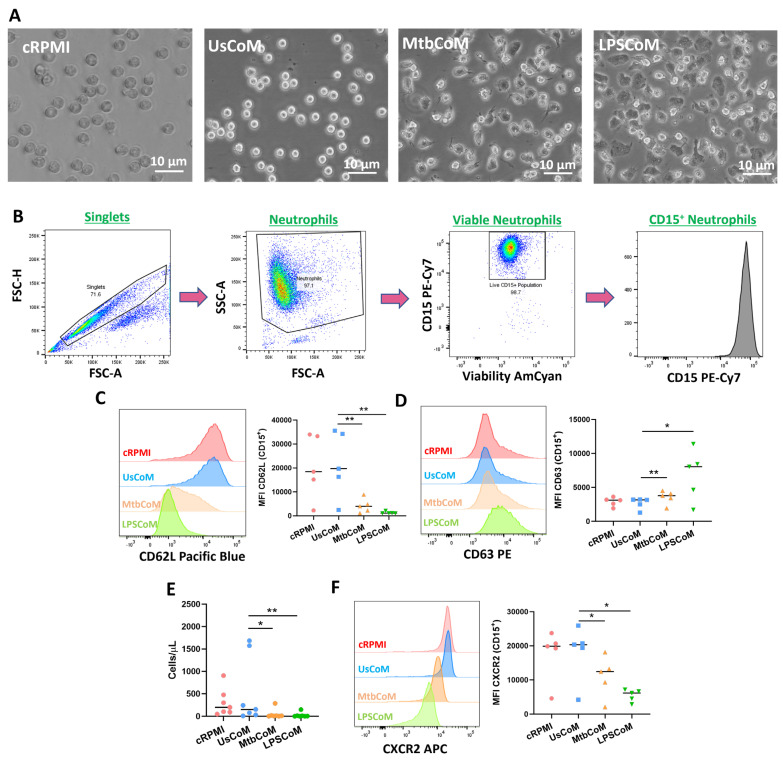
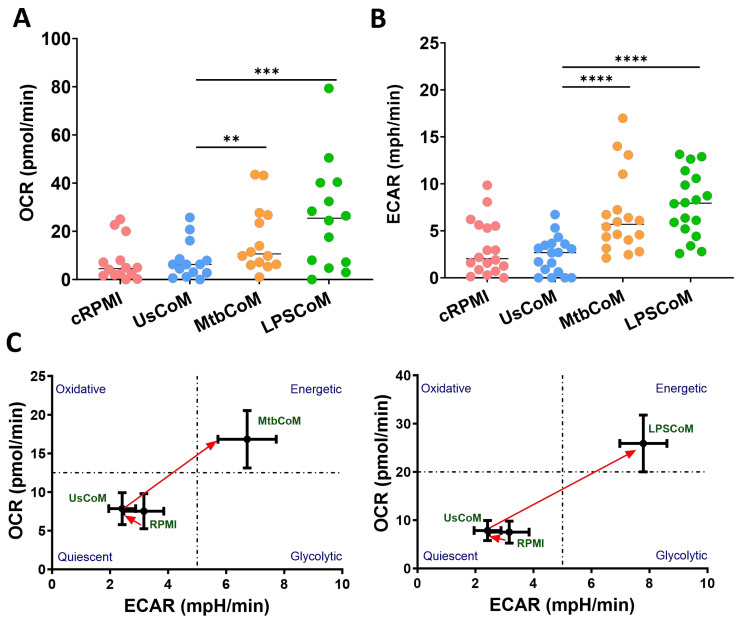
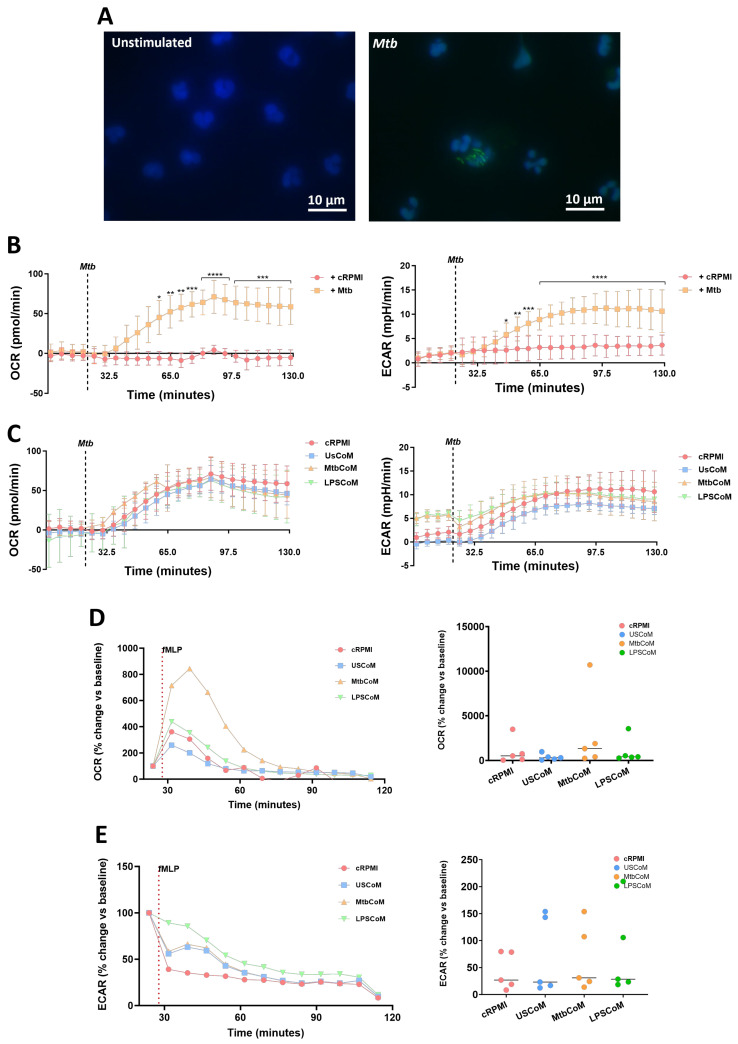
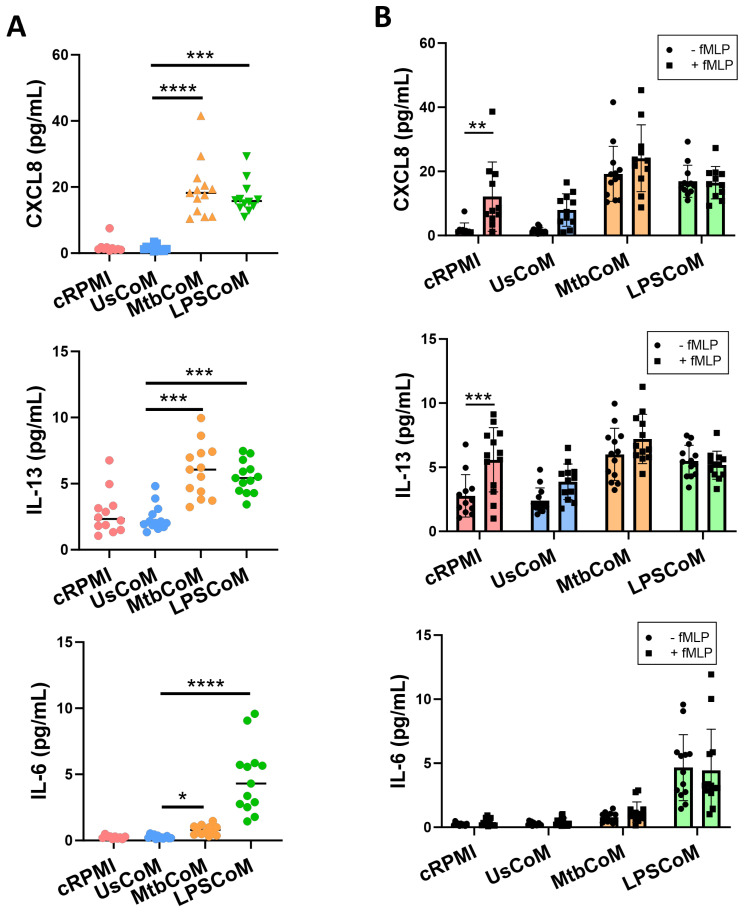
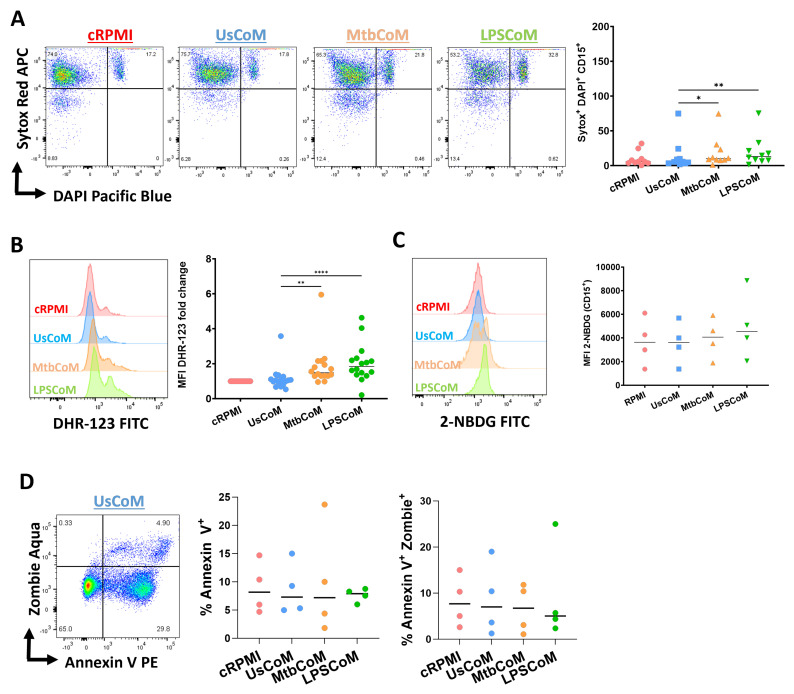
Neutrophils are dynamic cells, playing a critical role in pathogen clearance; however, neutrophil infiltration into the tissue can act as a double-edged sword. They are one of the primary sources of excessive inflammation during infection, which has been observed in many infectious diseases including pneumonia and active tuberculosis (TB). Neutrophil function is influenced by interactions with other immune cells within the inflammatory lung milieu; however, how these interactions affect neutrophil function is unclear. Our study examined the macrophage-neutrophil axis by assessing the effects of conditioned medium (MΦ-CM) from primary human monocyte-derived macrophages (hMDMs) stimulated with LPS or a whole bacterium () on neutrophil function. Stimulated hMDM-derived MΦ-CM boosts neutrophil activation, heightening oxidative and glycolytic metabolism, but diminishes migratory potential. These neutrophils exhibit increased ROS production, elevated NET formation, and heightened CXCL8, IL-13, and IL-6 compared to untreated or unstimulated hMDM-treated neutrophils. Collectively, these data show that MΦ-CM from stimulated hMDMs activates neutrophils, bolsters their energetic profile, increase effector and inflammatory functions, and sequester them at sites of infection by decreasing their migratory capacity. These data may aid in the design of novel immunotherapies for severe pneumonia, active tuberculosis and other diseases driven by pathological inflammation mediated by the macrophage-neutrophil axis.
中性粒细胞是动态细胞,在病原体清除中起关键作用;然而,中性粒细胞浸润到组织中可能会起到双刃剑的作用。它们是感染期间过度炎症的主要来源之一,在包括肺炎和活动性肺结核(TB)在内的许多传染病中都有观察到。中性粒细胞的功能受其与炎症性肺环境中其他免疫细胞相互作用的影响;然而,这些相互作用如何影响中性粒细胞功能尚不清楚。我们的研究通过评估来自用脂多糖(LPS)或全细菌刺激的原代人单核细胞衍生巨噬细胞(hMDM)的条件培养基(MΦ-CM)对中性粒细胞功能的影响,来研究巨噬细胞-中性粒细胞轴。受刺激的hMDM衍生的MΦ-CM可促进中性粒细胞的活化,增强氧化和糖酵解代谢,但会降低其迁移潜力。与未处理或未受刺激的hMDM处理的中性粒细胞相比,这些中性粒细胞表现出活性氧(ROS)产生增加、中性粒细胞胞外陷阱(NET)形成增加以及趋化因子CXCL8、白细胞介素13(IL-13)和白细胞介素6(IL-6)升高。总体而言,这些数据表明,受刺激的hMDM产生的MΦ-CM可激活中性粒细胞,增强其能量代谢特征,增加效应器和炎症功能,并通过降低其迁移能力将它们隔离在感染部位。这些数据可能有助于设计针对重症肺炎、活动性肺结核和其他由巨噬细胞-中性粒细胞轴介导的病理性炎症驱动的疾病的新型免疫疗法。