Han Ying-Chieh, Laketic Katarina, Hornaday Kylie K, Slater Donna M, Mu Chunlong, Tough Suzanne C, Shearer Jane
Department of Biomedical Engineering, Faculty of Engineering, University of Calgary, 2500 University Dr. NW, Calgary, AB T2N 1N4, Canada.
Department of Physiology and Pharmacology, Cumming School of Medicine, University of Calgary, 2500 University Dr. NW, Calgary, AB T2N 1N4, Canada.
Nutrients. 2024 Feb 22;16(5):595. doi: 10.3390/nu16050595.
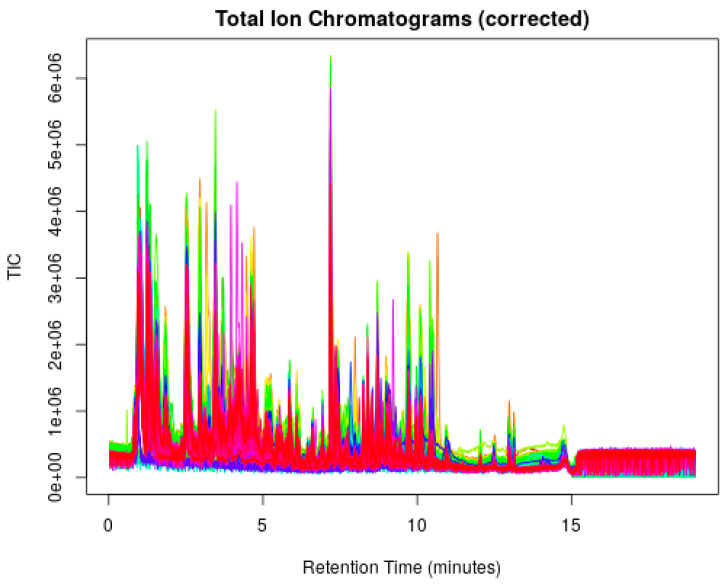
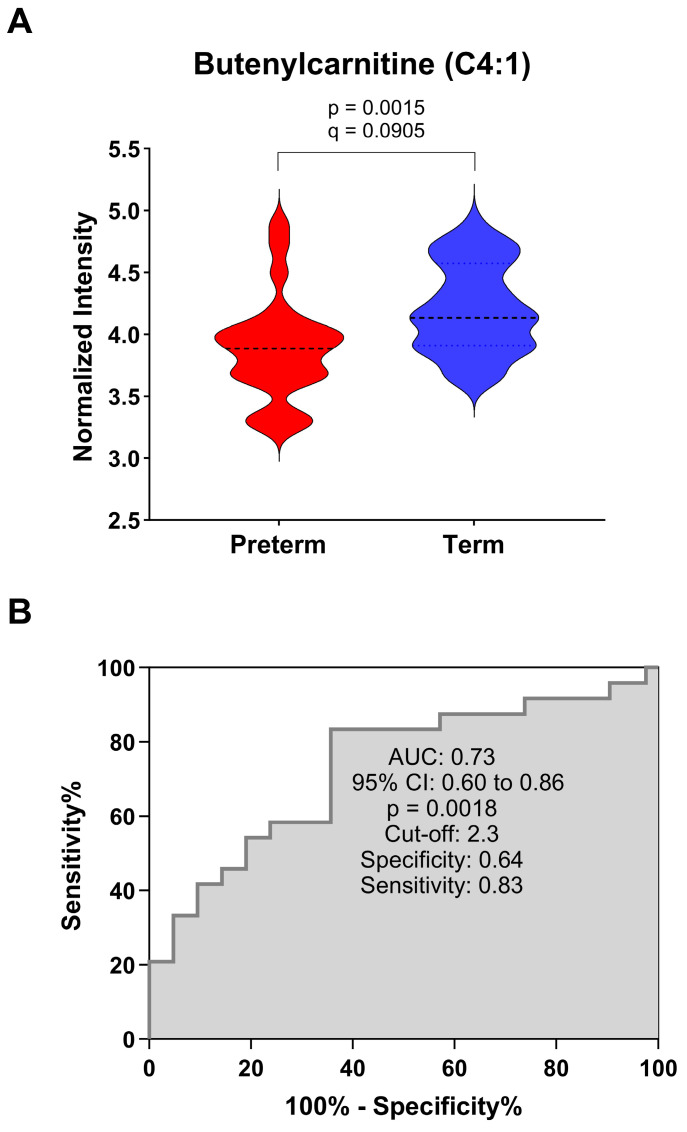
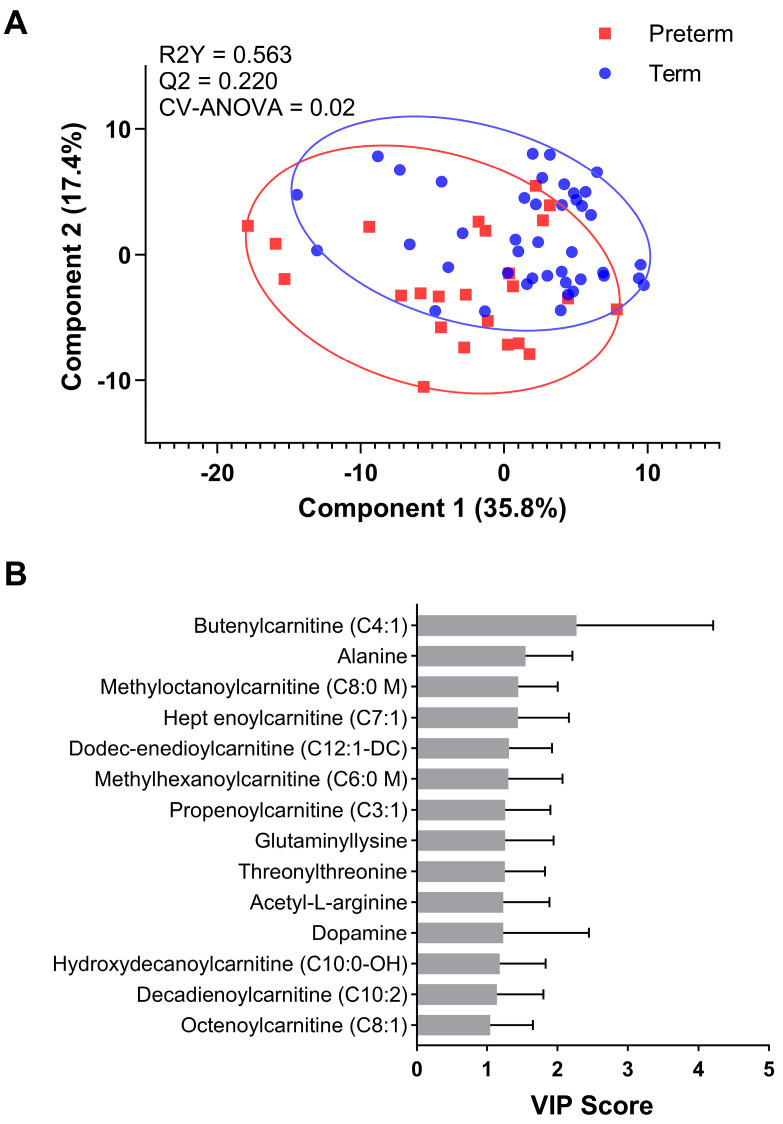
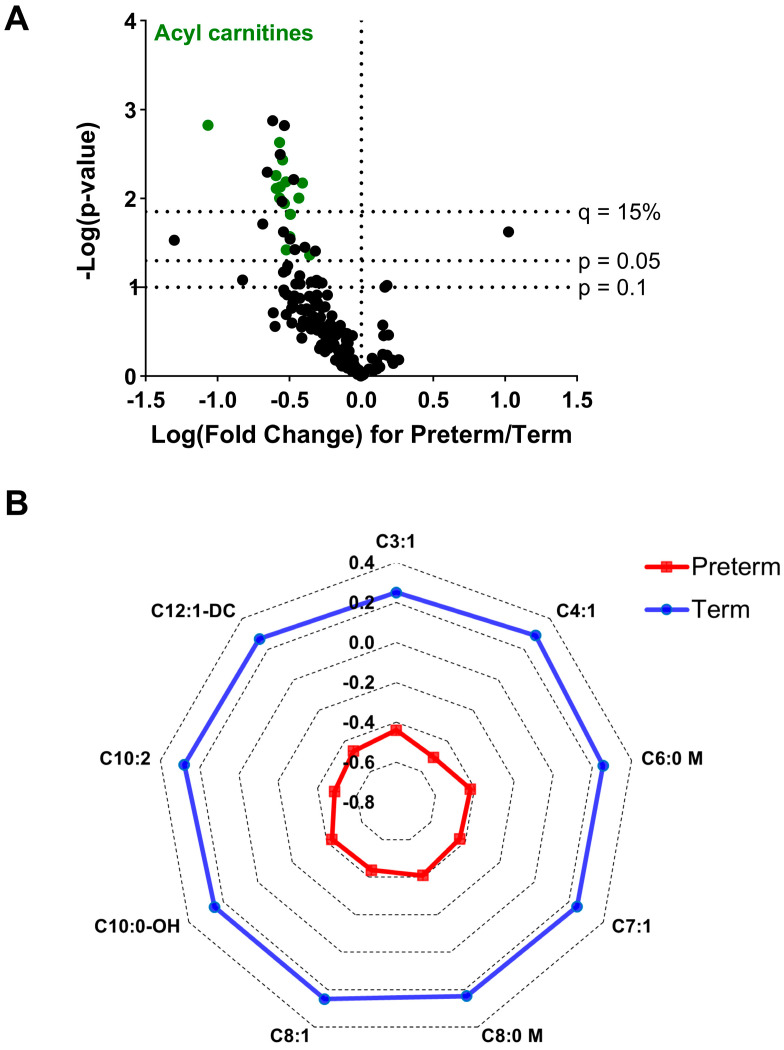
Preterm birth, defined as any birth before 37 weeks of completed gestation, poses adverse health risks to both mothers and infants. Despite preterm birth being associated with several risk factors, its relationship to maternal metabolism remains unclear, especially in first-time mothers. Aims of the present study were to identify maternal metabolic disruptions associated with preterm birth and to evaluate their predictive potentials. Blood was collected, and the serum harvested from the mothers of 24 preterm and 42 term births at 28-32 weeks gestation (onset of the 3rd trimester). Serum samples were assayed by untargeted metabolomic analyses via liquid chromatography/mass spectrometry (QTOF-LC/MS). Metabolites were annotated by inputting the observed mass-to-charge ratio into the Human Metabolome Database (HMDB). Analysis of 181 identified metabolites by PLS-DA modeling using SIMCA (v17) showed reasonable separation between the two groups (CV-ANOVA, = 0.02). Further statistical analysis revealed lower serum levels of various acyl carnitines and amino acid metabolites in preterm mothers. Butenylcarnitine (C4:1), a short-chain acylcarnitine, was found to be the most predictive of preterm birth (AUROC = 0.73, [CI] 0.60-0.86). These observations, in conjuncture with past literature, reveal disruptions in fatty acid oxidation and energy metabolism in preterm primigravida. While these findings require validation, they reflect altered metabolic pathways that may be predictive of preterm delivery in primigravida.
早产定义为妊娠满37周前的任何分娩,对母亲和婴儿均构成不良健康风险。尽管早产与多种风险因素相关,但其与母体代谢的关系仍不明确,尤其是在初产妇中。本研究的目的是确定与早产相关的母体代谢紊乱,并评估其预测潜力。在妊娠28 - 32周(妊娠晚期开始时)收集了24例早产和42例足月产母亲的血液并采集血清。血清样本通过液相色谱/质谱联用(QTOF-LC/MS)进行非靶向代谢组学分析。通过将观察到的质荷比输入人类代谢组数据库(HMDB)对代谢物进行注释。使用SIMCA(v17)通过PLS-DA模型对181种已鉴定的代谢物进行分析,结果显示两组之间有合理的区分(CV-ANOVA,P = 0.02)。进一步的统计分析显示,早产母亲的各种酰基肉碱和氨基酸代谢物的血清水平较低。发现短链酰基肉碱丁烯酰肉碱(C4:1)对早产的预测性最强(AUROC = 0.73,[CI] 0.60 - 0.86)。这些观察结果与以往文献相结合,揭示了初产妇脂肪酸氧化和能量代谢的紊乱。虽然这些发现需要验证,但它们反映了可能预测初产妇早产的代谢途径改变。