Division of Maternal-Fetal Medicine, Department of Obstetrics and Gynecology, University of North Carolina School of Medicine and University of North Carolina Health, Chapel Hill, NC (Drs Manuck and Glover); Institute for Environmental Health Solutions, Gillings School of Global Public Health, University of North Carolina at Chapel Hill, Chapel Hill, NC (Drs Manuck, Rager, Fry, and Lu).
Department of Environmental Sciences and Engineering, Gillings School of Global Public Health, University of North Carolina at Chapel Hill, Chapel Hill, NC (Ms Lai and Drs Ru, Rager, Fry, and Lu).
Am J Obstet Gynecol MFM. 2021 Jul;3(4):100393. doi: 10.1016/j.ajogmf.2021.100393. Epub 2021 May 12.
There is an increased awareness regarding the association between exposure to environmental contaminants and adverse pregnancy outcomes including preterm birth. Whether an individual's metabolic profile can be utilized during pregnancy to differentiate the subset of patients who are ultimately destined to delivered preterm remains uncertain but could have MEANINGFUL clinical implications.
We sought to objectively quantify metabolomic profiles of patients at high risk of preterm birth by evaluating midtrimester maternal plasma and to measure whether endogenous metabolites and exogenous environmental substances differ among those who ultimately deliver preterm compared with those who deliver at term.
This was a case-control analysis from a prospective cohort of patients carrying a singleton, nonanomalous gestation who were at high risk of spontaneous preterm birth. Subjects with a plasma blood sample drawn at <28 weeks' gestation and no evidence of preterm labor at the time of enrollment were included. Metabolites were extracted from frozen samples, and metabolomic analysis was performed using liquid chromatography/mass spectrometry. The primary outcome was preterm birth at 16.0 to 36.9 weeks' gestation.
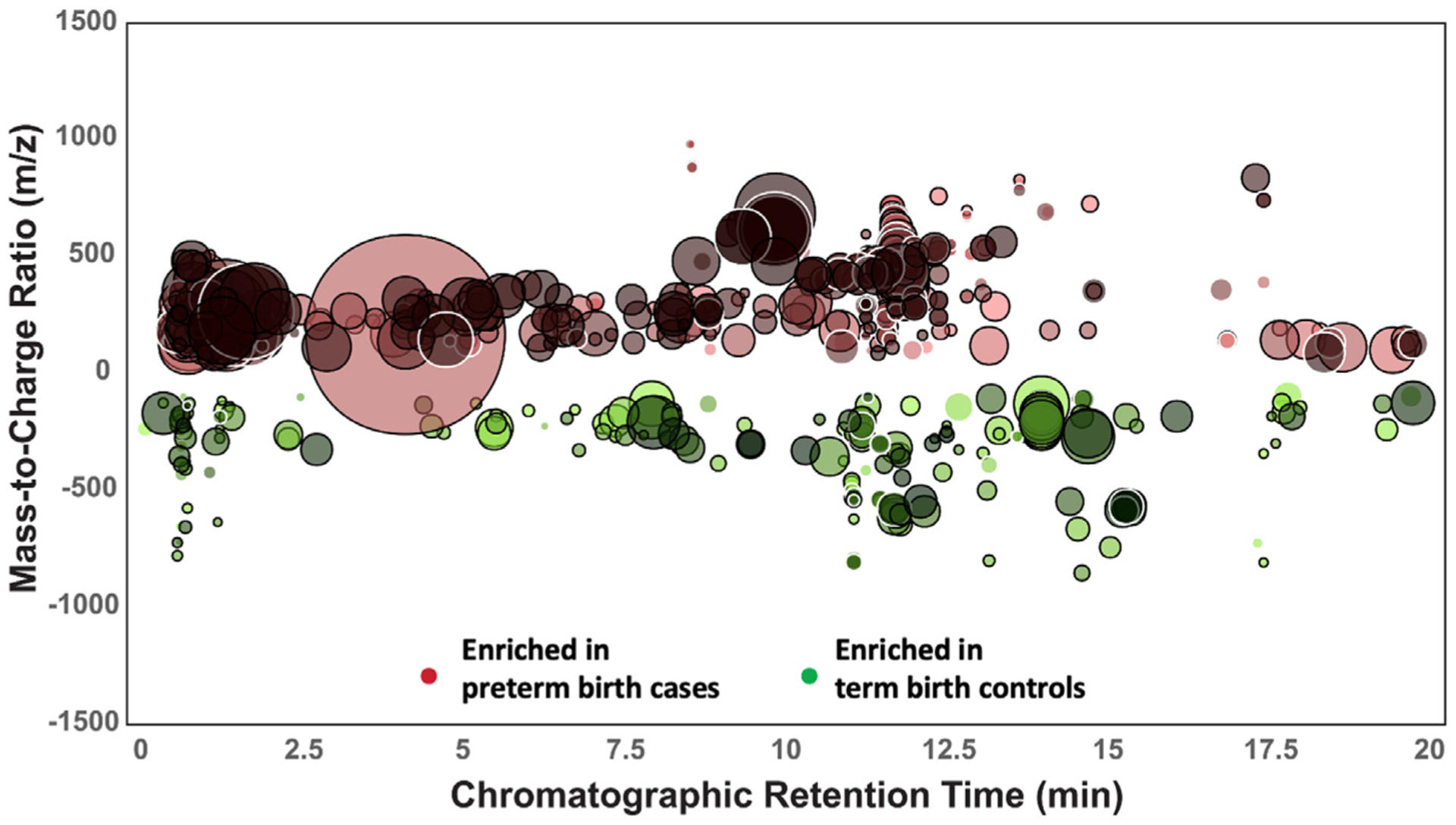
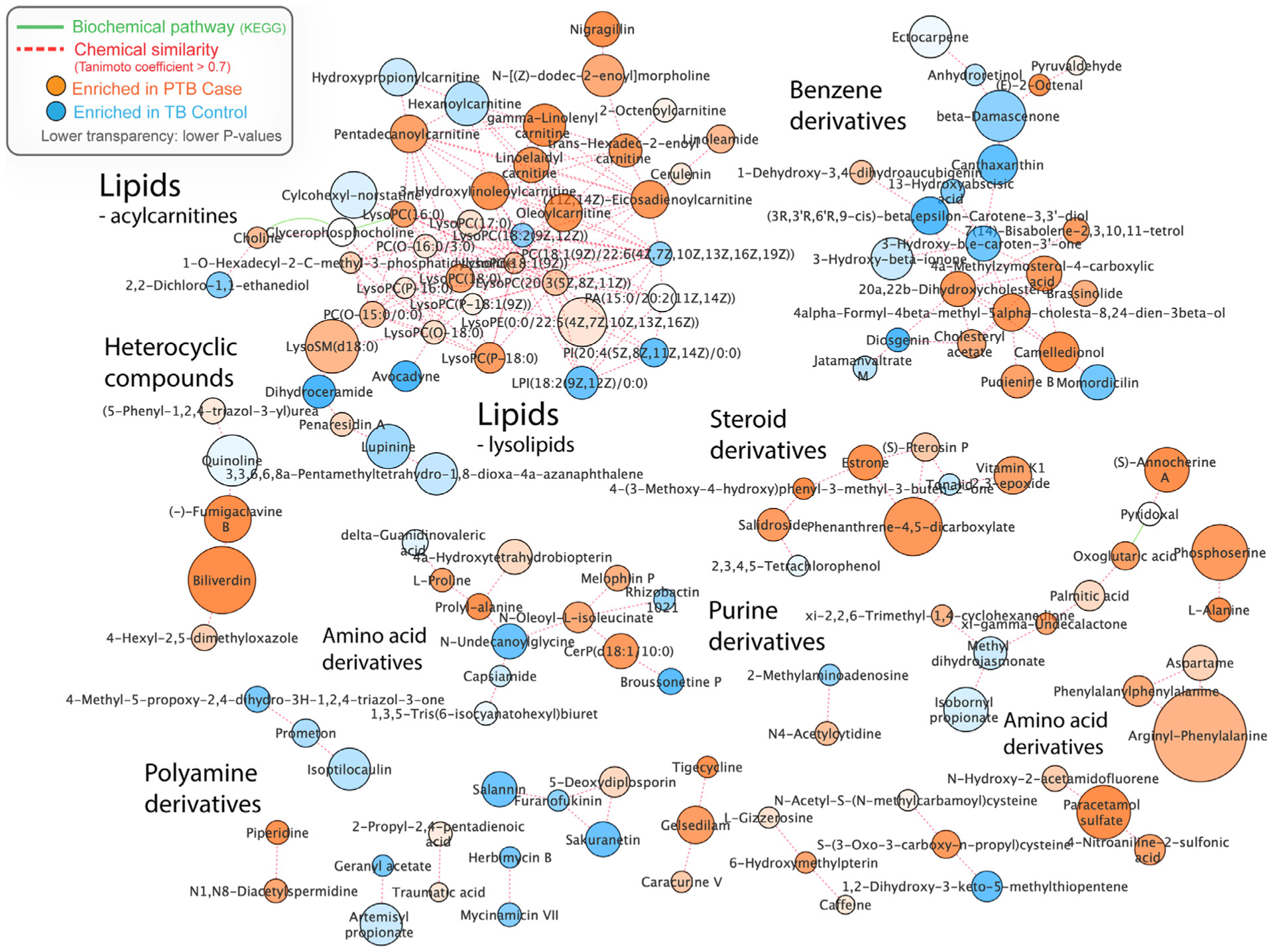
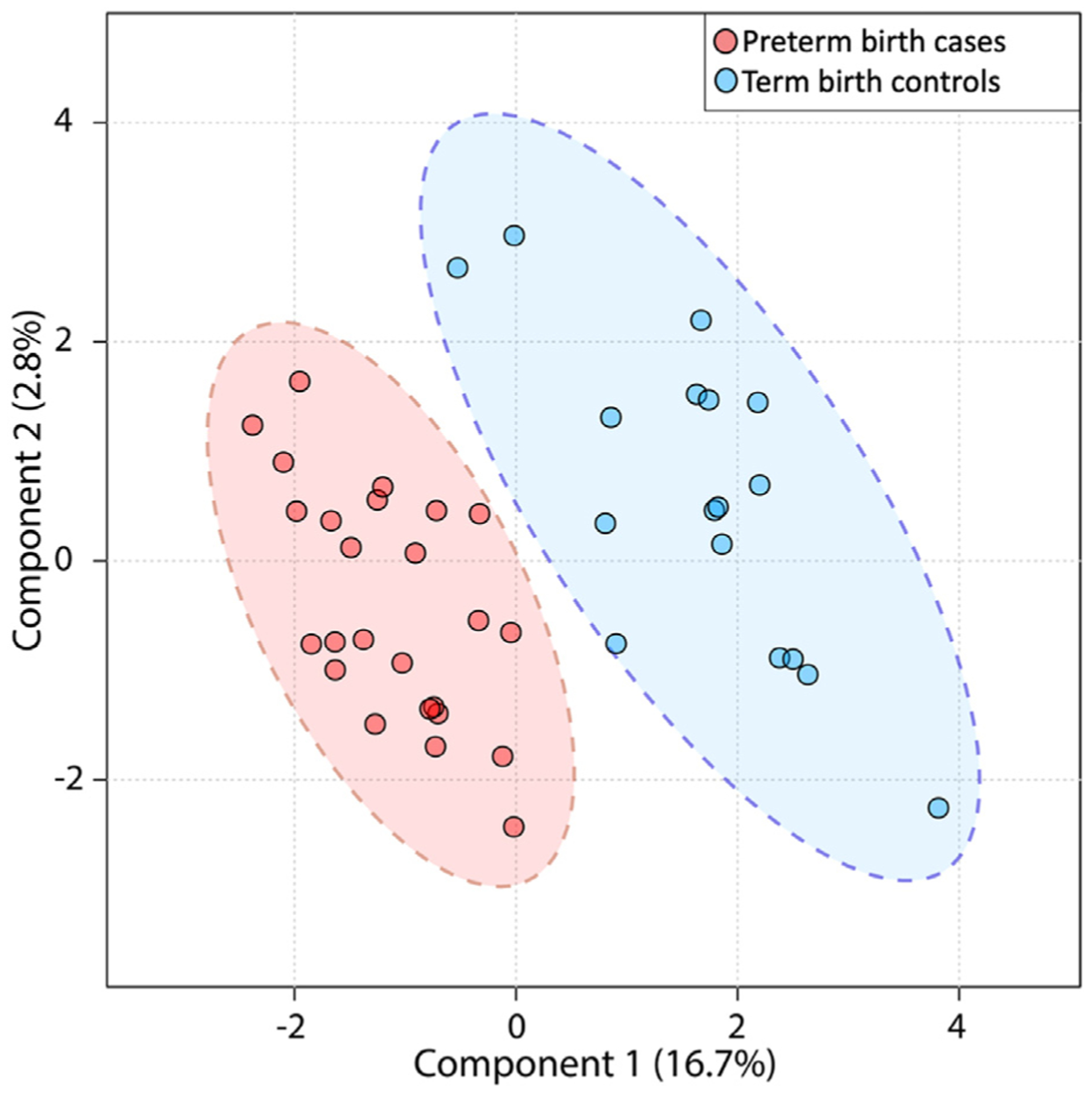
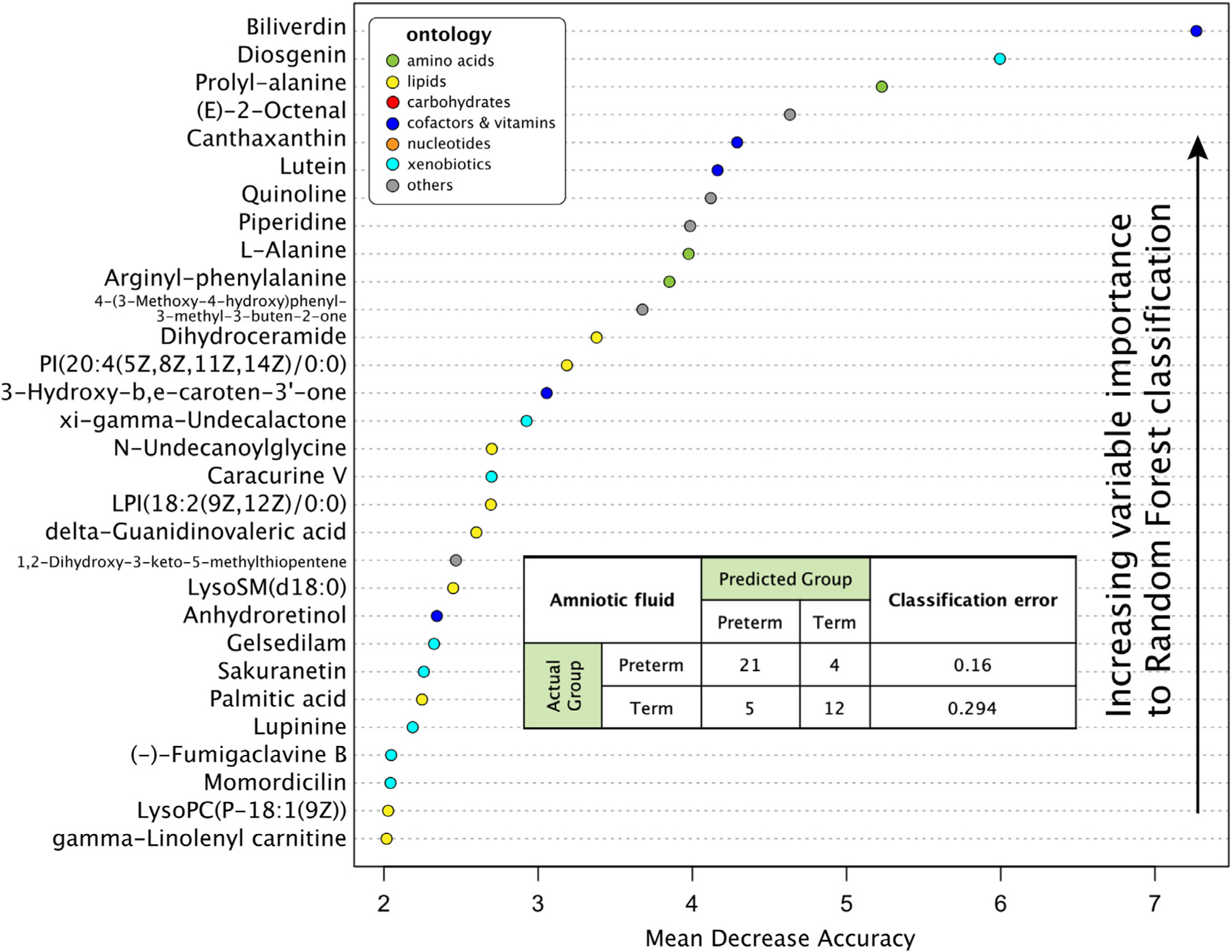
A total of 42 patients met the inclusion criteria. Of these, 25 (59.5%) delivered preterm at <37 weeks' gestation, at a median of 30.14 weeks' gestation (interquartile range, 28.14-34.14). A total of 812 molecular features differed between preterm birth cases and term controls with a minimum fold change of 1.2 and P<.05. Of these, 570 of 812 (70.1%) were found in higher abundances in preterm birth cases; the other 242 of 812 (29.9%) were in higher abundance in term birth controls. The identity of the small molecule/compound represented by the molecular features differing statistically between preterm birth cases and term controls was identified as ranging from those involved with endogenous metabolic pathways (including lipid catabolism, steroids, and steroid-related molecules) to exogenous exposures (including avocadyne, diosgenin, polycyclic aromatic hydrocarbons, acetaminophen metabolites, aspartame, and caffeine). Random forest analyses evaluating the relative contribution of each of the top 30 compounds in differentiating preterm birth and term controls accurately classified 21 of 25 preterm birth cases (84%).
Both endogenous metabolites and exogenous exposures differ in maternal plasma in the midtrimester among patients who ultimately delivered preterm compared with those who deliver at term.
人们越来越意识到,暴露于环境污染物与包括早产在内的不良妊娠结局之间存在关联。个体的代谢特征是否可以在怀孕期间用于区分最终早产的患者亚组尚不确定,但可能具有重要的临床意义。
我们试图通过评估中期孕妇血浆来客观地量化有早产高风险的患者的代谢组学特征,并测量最终早产的患者与足月分娩的患者之间内源性代谢物和外源性环境物质是否存在差异。
这是一项来自高风险自发性早产单胎非畸形妊娠患者前瞻性队列的病例对照分析。研究纳入了在妊娠 28 周前抽取血浆血样且入组时无早产迹象的患者。从冷冻样本中提取代谢物,并使用液相色谱/质谱进行代谢组学分析。主要结局为 16.0 至 36.9 周的早产。
共有 42 名患者符合纳入标准。其中,25 名(59.5%)在妊娠 37 周前早产,中位孕龄为 30.14 周(四分位间距,28.14-34.14)。与足月对照组相比,早产病例和足月对照组之间有 812 种分子特征存在差异,最小倍数变化为 1.2,P<.05。其中,812 种中的 570 种(70.1%)在早产病例中丰度较高;812 种中的 242 种(29.9%)在足月对照组中丰度较高。在早产病例和足月对照组之间存在统计学差异的分子特征所代表的小分子/化合物的身份被确定为从参与内源性代谢途径(包括脂质分解代谢、类固醇和类固醇相关分子)到外源性暴露(包括 avocado dyne、薯蓣皂苷元、多环芳烃、对乙酰氨基酚代谢物、阿斯巴甜和咖啡因)。评估区分早产和足月对照组的前 30 种化合物相对贡献的随机森林分析准确地将 25 例早产病例中的 21 例(84%)分类。
与足月分娩的患者相比,最终早产的患者在中期孕妇血浆中的内源性代谢物和外源性暴露物存在差异。