Cho Won Kyong, Choi Hoseong, Kim Soo-Yun, Kim Euihyun, Paek Seung Hye, Kim Jiyeon, Song Jihyeok, Heo Kyoungyeon, Min Jiae, Jo Yeonhwa, Lee Jeong Hun, Moh Sang Hyun
College of Biotechnology and Bioengineering, Sungkyunkwan University, Suwon 16419, Republic of Korea.
Plant Health Center, Seoul National University, Seoul 08826, Republic of Korea.
Plants (Basel). 2024 Feb 22;13(5):602. doi: 10.3390/plants13050602.
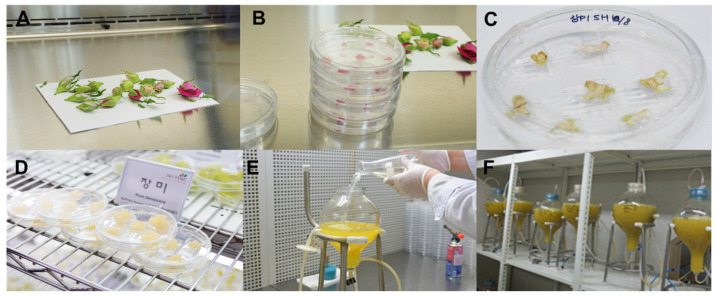
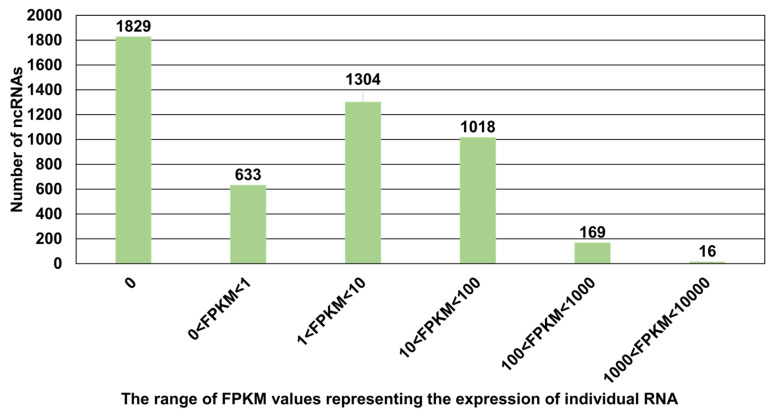
Damask roses () are widely used in cosmetics and pharmaceutics. Here, we established an in vitro suspension cell culture for calli derived from damask rose petals. We analyzed rose suspension cell transcriptomes obtained at two different time points by RNA sequencing to reveal transcriptional changes during rose suspension cell culture. Of the 580 coding RNAs (1.3%) highly expressed in the suspension rose cells, 68 encoded cell wall-associated proteins. However, most RNAs encoded by the chloroplasts and mitochondria are not expressed. Many highly expressed coding RNAs are involved in translation, catalyzing peptide synthesis in ribosomes. Moreover, the amide metabolic process producing naturally occurring alkaloids was the most abundant metabolic process during the propagation of rose suspension cells. During rose cell propagation, coding RNAs involved in the stress response were upregulated at an early stage, while coding RNAs associated with detoxification and transmembrane transport were upregulated at the late stage. We used transcriptome analyses to reveal important biological processes and molecular mechanisms during rose suspension cell culture. Most non-coding (nc) RNAs were not expressed in the rose suspension cells, but a few ncRNAs with unknown functions were highly expressed. The expression of ncRNAs and their target coding RNAs was highly correlated. Taken together, we revealed significant biological processes and molecular mechanisms occurring during rose suspension cell culture using transcriptome analyses.
大马士革玫瑰()广泛应用于化妆品和制药领域。在此,我们为源自大马士革玫瑰花瓣的愈伤组织建立了体外悬浮细胞培养体系。我们通过RNA测序分析了在两个不同时间点获得的玫瑰悬浮细胞转录组,以揭示玫瑰悬浮细胞培养过程中的转录变化。在悬浮玫瑰细胞中高表达的580个编码RNA(占1.3%)中,有68个编码细胞壁相关蛋白。然而,叶绿体和线粒体编码的大多数RNA并不表达。许多高表达的编码RNA参与翻译过程,在核糖体中催化肽的合成。此外,产生天然生物碱的酰胺代谢过程是玫瑰悬浮细胞增殖过程中最丰富的代谢过程。在玫瑰细胞增殖过程中,参与应激反应的编码RNA在早期上调,而与解毒和跨膜运输相关的编码RNA在后期上调。我们利用转录组分析揭示了玫瑰悬浮细胞培养过程中的重要生物学过程和分子机制。大多数非编码(nc)RNA在玫瑰悬浮细胞中不表达,但少数功能未知的ncRNA高表达。ncRNA与其靶标编码RNA的表达高度相关。综上所述,我们利用转录组分析揭示了玫瑰悬浮细胞培养过程中发生的重要生物学过程和分子机制。