Leicester Cancer Research Centre, Department of Genetics and Genome Biology, Robert Kilpatrick Clinical Sciences Building, Leicester Royal Infirmary, Leicester, UK.
Josep Carreras Leukaemia Research Institute (IJC), Badalona, Barcelona, Spain.
Hum Genomics. 2024 Mar 12;18(1):24. doi: 10.1186/s40246-024-00592-x.
Protein Phosphatase Enzymes (PPE) and protein kinases simultaneously control phosphorylation mechanisms that tightly regulate intracellular signalling pathways and stimulate cellular responses. In human malignancies, PPE and protein kinases are frequently mutated resulting in uncontrolled kinase activity and PPE suppression, leading to cell proliferation, migration and resistance to anti-cancer therapies. Cancer associated DNA hypermethylation at PPE promoters gives rise to transcriptional silencing (epimutations) and is a hallmark of cancer. Despite recent advances in sequencing technologies, data availability and computational capabilities, only a fraction of PPE have been reported as transcriptionally inactive as a consequence of epimutations.
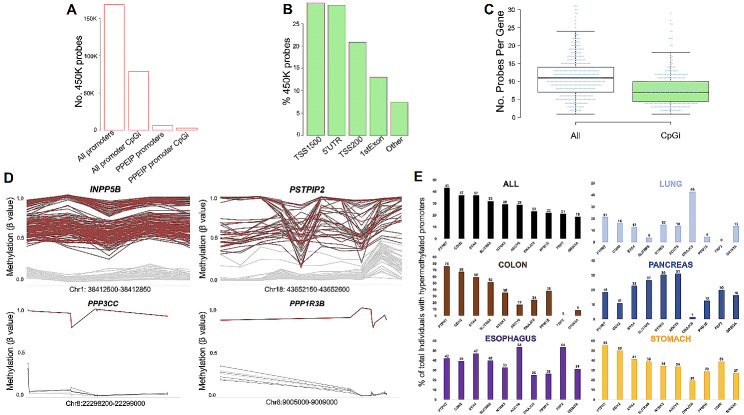
In this study, we examined promoter-associated DNA methylation profiles in Protein Phosphatase Enzymes and their Interacting Proteins (PPEIP) in a cohort of 705 cancer patients in five tissues (Large intestine, Oesophagus, Lung, Pancreas and Stomach) in three cell models (primary tumours, cancer cell lines and 3D embedded cancer cell cultures). As a subset of PPEIP are known tumour suppressor genes, we analysed the impact of PPEIP promoter hypermethylation marks on gene expression, cellular networks and in a clinical setting.
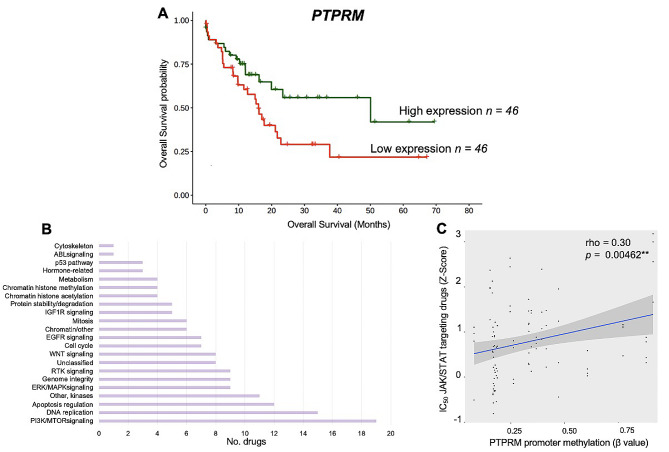
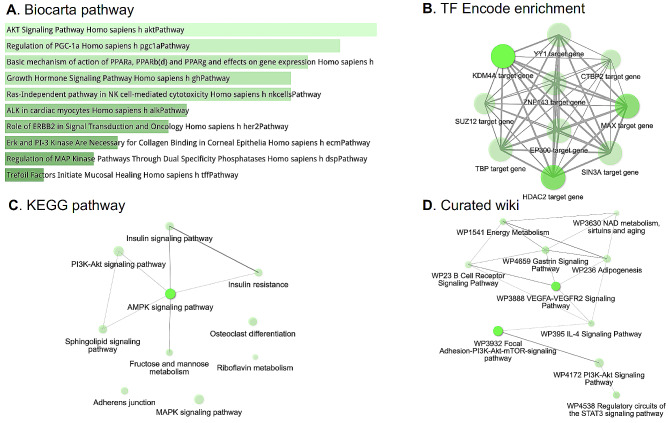
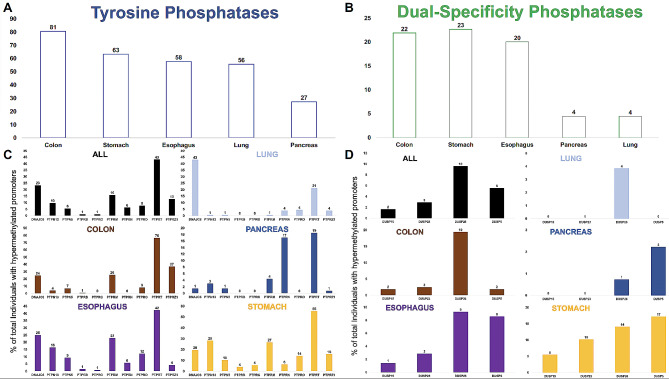
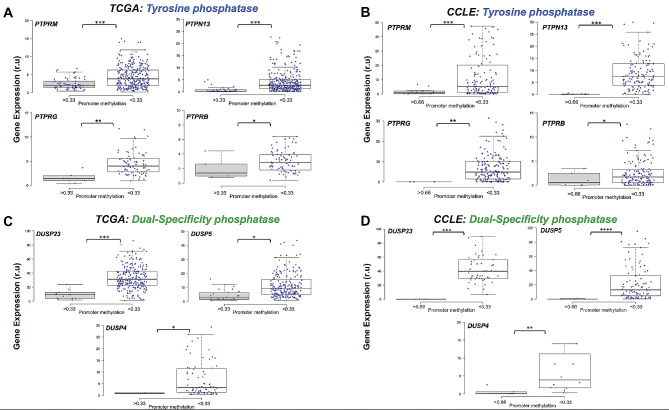
Here, we report epimutations in PPEIP are a frequent occurrence in the cancer genome and manifest independent of transcriptional activity. We observed that different tumours have varying susceptibility to epimutations and identify specific cellular signalling networks that are primarily affected by epimutations. Additionally, RNA-seq analysis showed the negative impact of epimutations on most (not all) Protein Tyrosine Phosphatase transcription. Finally, we detected novel clinical biomarkers that inform on patient mortality and anti-cancer treatment sensitivity.
We propose that DNA hypermethylation marks at PPEIP frequently contribute to the pathogenesis of malignancies and within the precision medicine space, hold promise as biomarkers to inform on clinical features such as patient survival and therapeutic response.
蛋白磷酸酶酶(PPE)和蛋白激酶同时控制磷酸化机制,这些机制紧密调节细胞内信号通路并刺激细胞反应。在人类恶性肿瘤中,PPE 和蛋白激酶经常发生突变,导致不受控制的激酶活性和 PPE 抑制,从而导致细胞增殖、迁移和对癌症治疗的耐药性。PPE 启动子上的癌症相关 DNA 高甲基化导致转录沉默(表观突变),是癌症的一个标志。尽管最近测序技术、数据可用性和计算能力取得了进展,但由于表观突变,只有一部分 PPE 被报道为转录失活。
在这项研究中,我们在五个组织(大肠、食道、肺、胰腺和胃)的 705 名癌症患者的队列中检查了蛋白磷酸酶酶及其相互作用蛋白(PPEIP)的启动子相关 DNA 甲基化谱。由于 PPEIP 的一部分是已知的肿瘤抑制基因,我们分析了 PPEIP 启动子高甲基化标记对基因表达、细胞网络的影响,并在临床环境中进行了分析。
在这里,我们报告 PPEIP 中的表观突变是癌症基因组中的一种常见事件,并且独立于转录活性发生。我们观察到不同的肿瘤对表观突变的敏感性不同,并确定了受表观突变主要影响的特定细胞信号网络。此外,RNA-seq 分析表明,表观突变对大多数(而非全部)蛋白酪氨酸磷酸酶转录有负面影响。最后,我们检测到了新的临床生物标志物,这些标志物可以提供有关患者死亡率和抗癌治疗敏感性的信息。
我们提出 PPEIP 上的 DNA 高甲基化标记经常导致恶性肿瘤的发病机制,并且在精准医学领域,作为生物标志物具有很大的潜力,可以提供有关患者生存和治疗反应等临床特征的信息。