Department of Neurobiology, Stanford University, Stanford, CA 94305, USA.
Department of Chemistry, Aarhus University, 8000 Aarhus C, Denmark.
Sci Transl Med. 2024 Mar 13;16(738):eadi0979. doi: 10.1126/scitranslmed.adi0979.
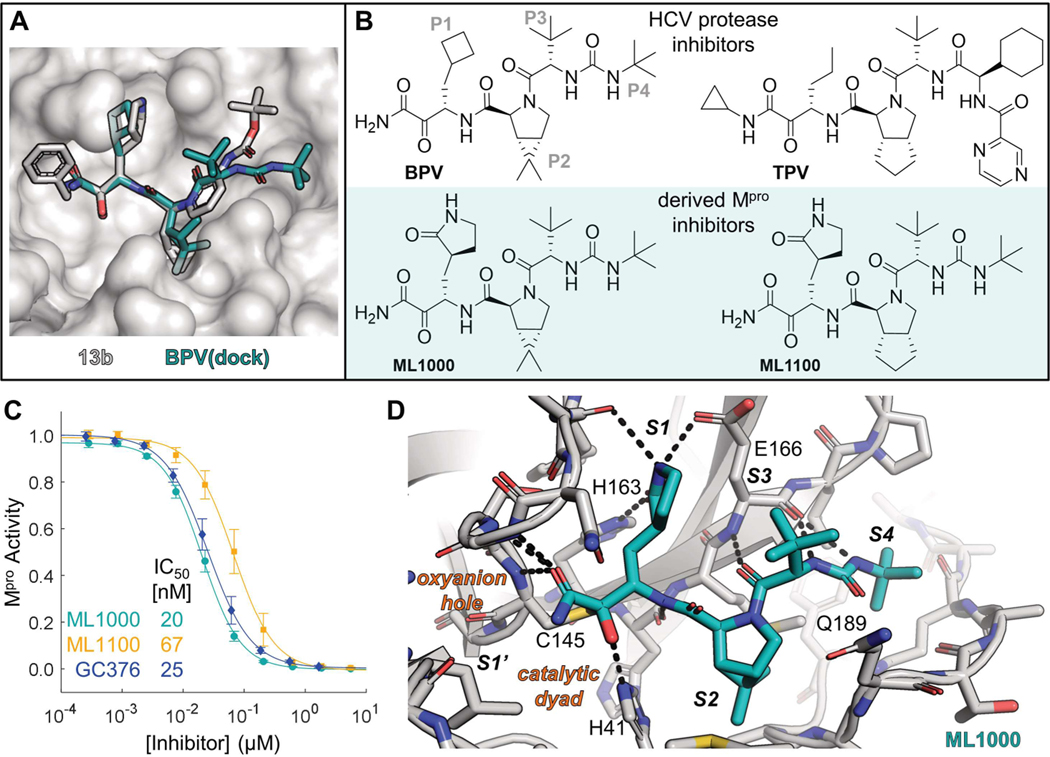
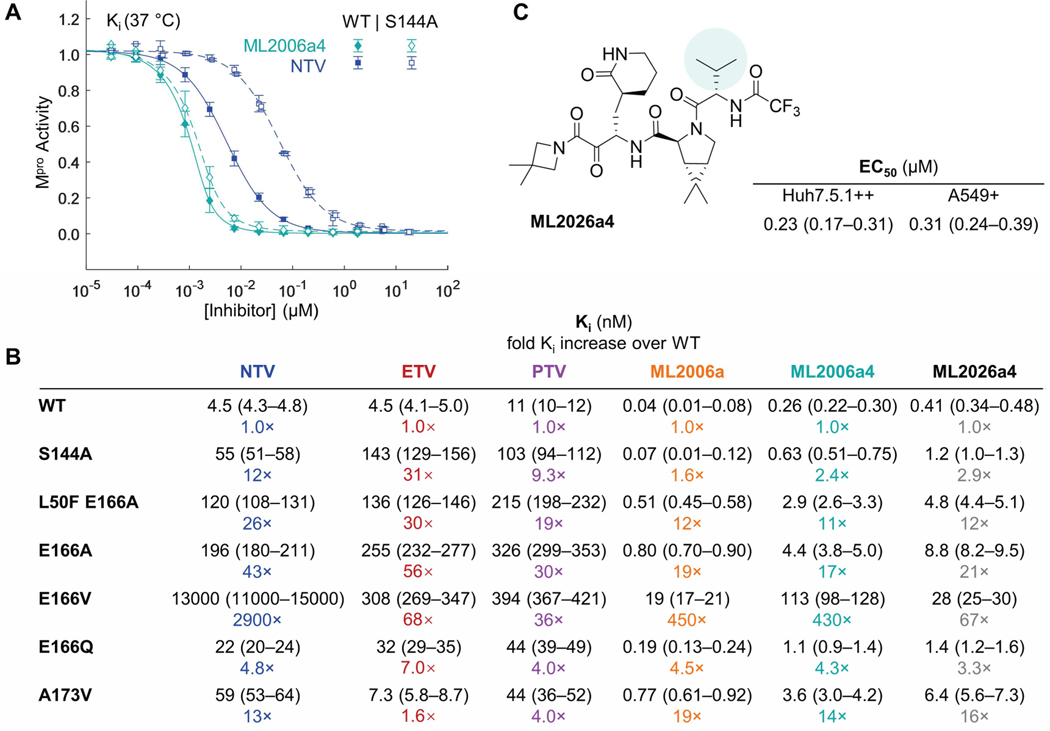
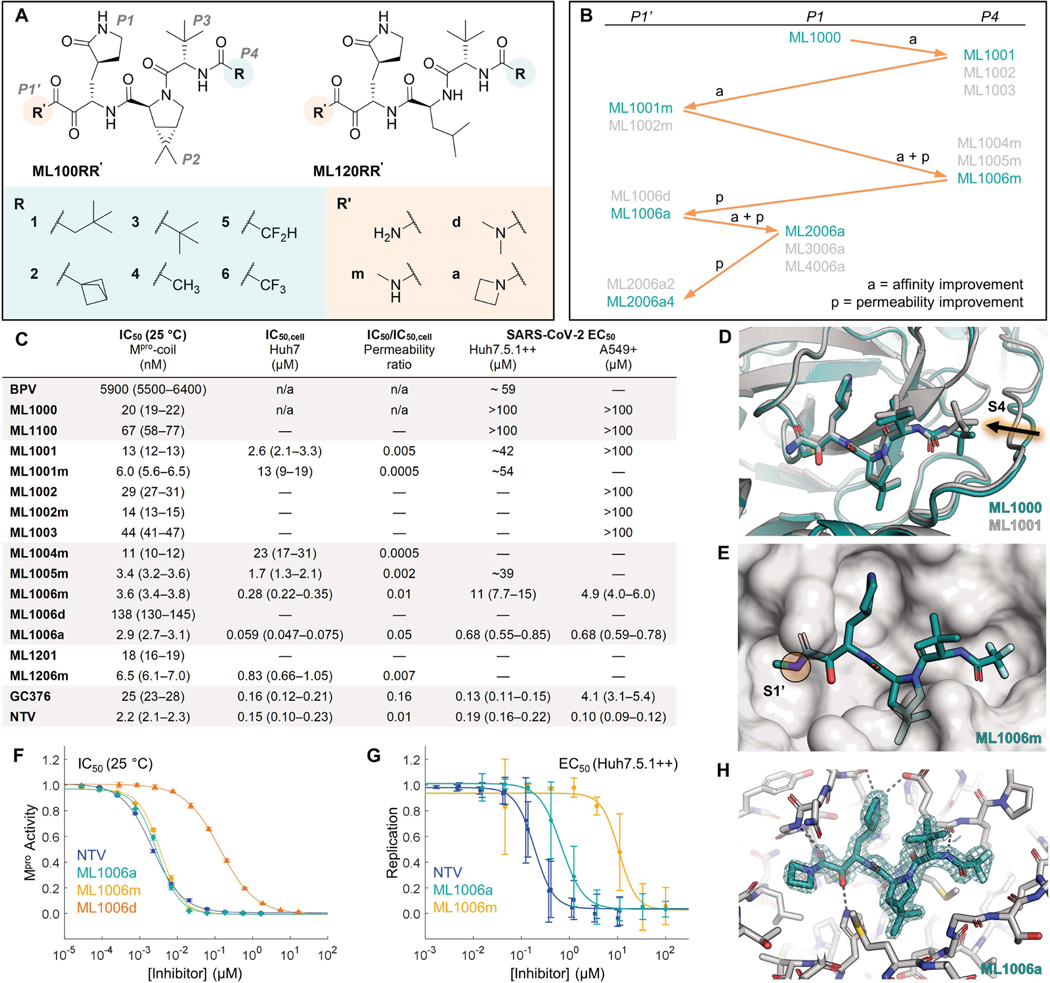
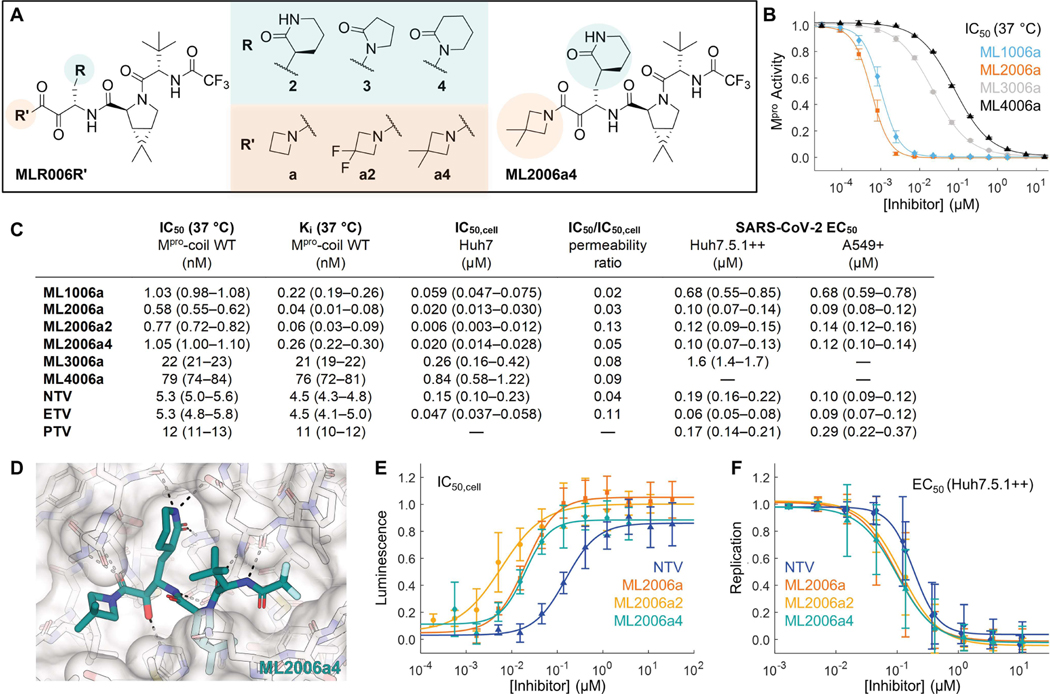
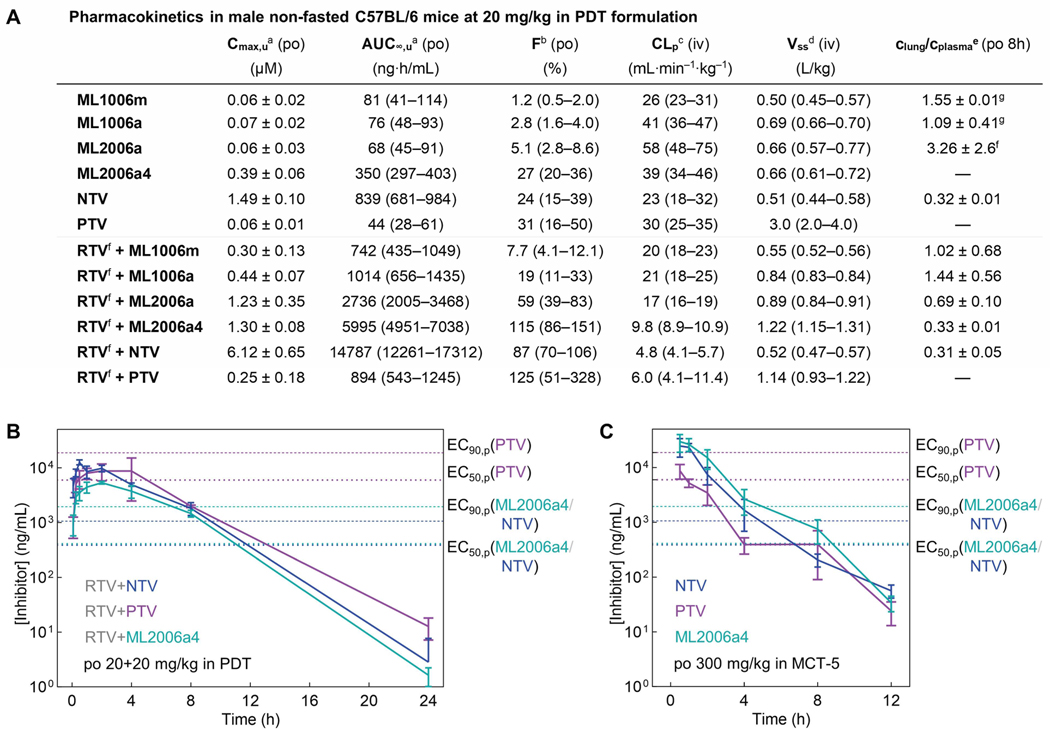
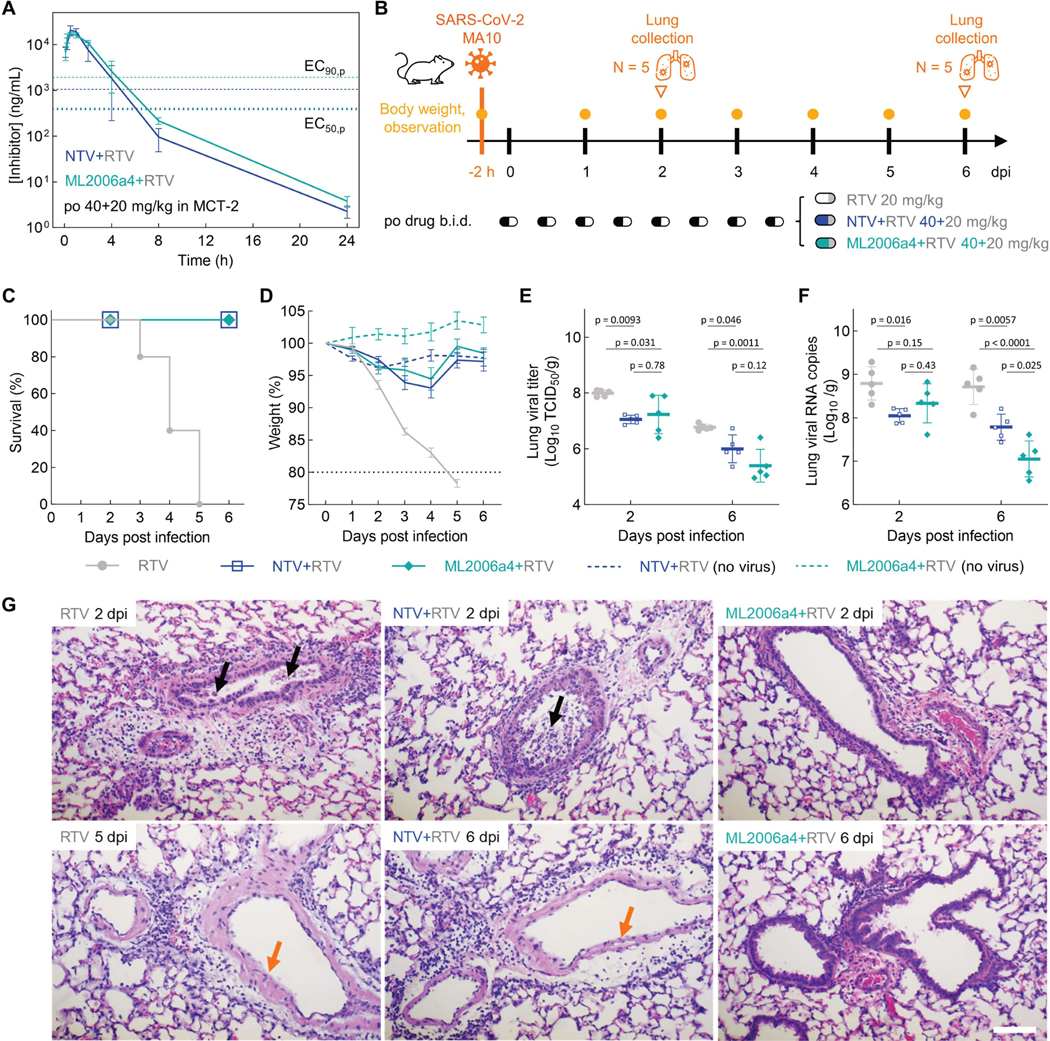
Inhibitors of the severe acute respiratory syndrome coronavirus 2 (SARS-CoV-2) main protease (M) such as nirmatrelvir (NTV) and ensitrelvir (ETV) have proven effective in reducing the severity of COVID-19, but the presence of resistance-conferring mutations in sequenced viral genomes raises concerns about future drug resistance. Second-generation oral drugs that retain function against these mutants are thus urgently needed. We hypothesized that the covalent hepatitis C virus protease inhibitor boceprevir (BPV) could serve as the basis for orally bioavailable drugs that inhibit SARS-CoV-2 M more efficiently than existing drugs. Performing structure-guided modifications of BPV, we developed a picomolar-affinity inhibitor, ML2006a4, with antiviral activity, oral pharmacokinetics, and therapeutic efficacy similar or superior to those of NTV. A crucial feature of ML2006a4 is a derivatization of the ketoamide reactive group that improves cell permeability and oral bioavailability. Last, ML2006a4 was found to be less sensitive to several mutations that cause resistance to NTV or ETV and occur in the natural SARS-CoV-2 population. Thus, anticipatory design can preemptively address potential resistance mechanisms to expand future treatment options against coronavirus variants.
针对严重急性呼吸综合征冠状病毒 2(SARS-CoV-2)主要蛋白酶(M)的抑制剂,如奈玛特韦(nirmatrelvir,NTV)和利托那韦(ritonavir,ritonavir,ETV),已被证明可有效降低 COVID-19 的严重程度,但测序病毒基因组中出现的耐药性相关突变引起了对未来药物耐药性的担忧。因此,迫切需要保留对这些突变体功能的第二代口服药物。我们假设共价丙型肝炎病毒蛋白酶抑制剂博赛匹韦(boceprevir,BPV)可用作基础,开发出比现有药物更能有效抑制 SARS-CoV-2 M 的口服生物利用度药物。通过对 BPV 进行基于结构的修饰,我们开发了一种具有抗病毒活性、口服药代动力学和治疗疗效与 NTV 相似或优于 NTV 的皮摩尔亲和力抑制剂 ML2006a4。ML2006a4 的一个关键特征是对酮酰胺反应性基团进行了衍生化,从而提高了细胞通透性和口服生物利用度。最后,发现 ML2006a4 对几种导致对 NTV 或 ETV 耐药的突变的敏感性降低,而这些突变在自然 SARS-CoV-2 人群中发生。因此,预期设计可以预先解决潜在的耐药机制,以扩大针对冠状病毒变体的未来治疗选择。