School of Medicine, University of Galway, Galway, Ireland.
The Ryan Institute, University of Galway, Galway, Ireland.
Sci Rep. 2024 Mar 13;14(1):6095. doi: 10.1038/s41598-024-55960-3.
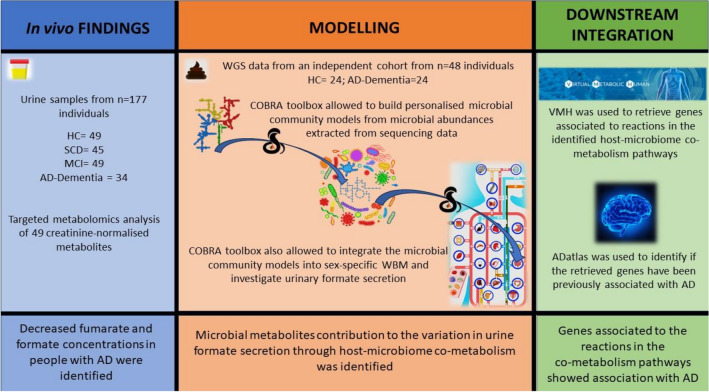
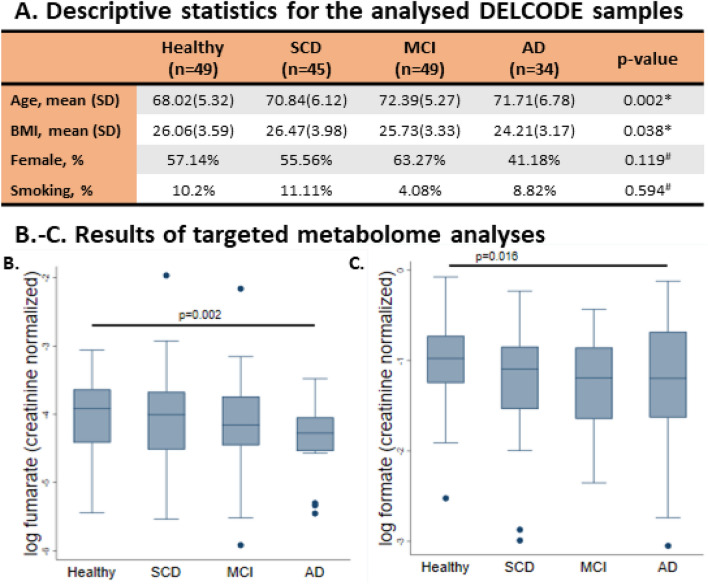
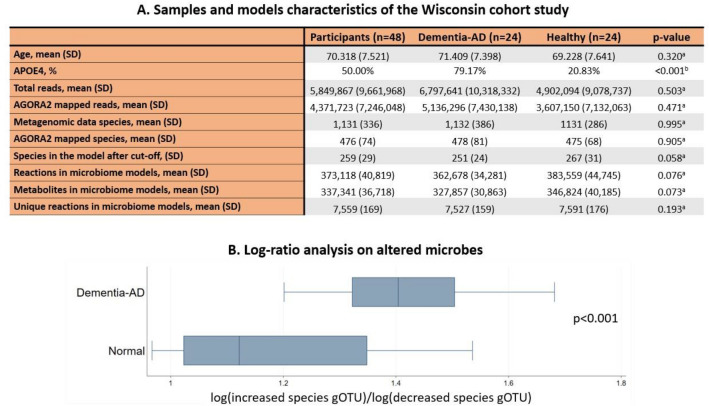
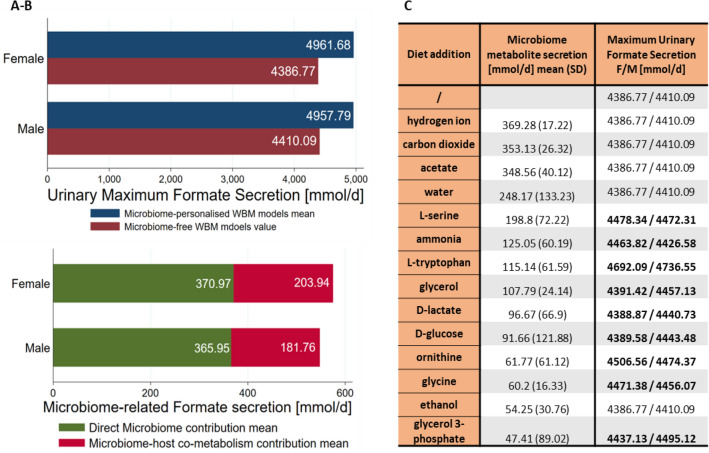
In this study, we aimed to understand the potential role of the gut microbiome in the development of Alzheimer's disease (AD). We took a multi-faceted approach to investigate this relationship. Urine metabolomics were examined in individuals with AD and controls, revealing decreased formate and fumarate concentrations in AD. Additionally, we utilised whole-genome sequencing (WGS) data obtained from a separate group of individuals with AD and controls. This information allowed us to create and investigate host-microbiome personalised whole-body metabolic models. Notably, AD individuals displayed diminished formate microbial secretion in these models. Additionally, we identified specific reactions responsible for the production of formate in the host, and interestingly, these reactions were linked to genes that have correlations with AD. This study suggests formate as a possible early AD marker and highlights genetic and microbiome contributions to its production. The reduced formate secretion and its genetic associations point to a complex connection between gut microbiota and AD. This holistic understanding might pave the way for novel diagnostic and therapeutic avenues in AD management.
在这项研究中,我们旨在了解肠道微生物组在阿尔茨海默病 (AD) 发展中的潜在作用。我们采取了多方面的方法来研究这种关系。我们检查了 AD 患者和对照组个体的尿液代谢组学,结果显示 AD 患者的甲酸盐和富马酸盐浓度降低。此外,我们利用来自另一组 AD 患者和对照组个体的全基因组测序 (WGS) 数据。这些信息使我们能够创建和研究宿主-微生物组个性化全身代谢模型。值得注意的是,AD 患者在这些模型中显示出甲酸盐微生物分泌减少。此外,我们确定了宿主中产生甲酸盐的特定反应,有趣的是,这些反应与与 AD 相关的基因有关。本研究提出甲酸盐作为 AD 的一个可能早期标志物,并强调了遗传和微生物组对其产生的贡献。减少的甲酸盐分泌及其遗传关联表明肠道微生物群与 AD 之间存在复杂的联系。这种整体理解可能为 AD 管理中的新型诊断和治疗方法铺平道路。