Tsutsumi Takahiro, Nakagomi Daiki, Kobayashi Kei, Hanai Shunichiro, Kobayashi Yoshiaki, Ito Ryosuke, Ishii Toshihisa, Okuma Hideyuki, Uchinuma Hiroyuki, Ichijo Masashi, Tsuchiya Kyoichiro
Department of Diabetes and Endocrinology, Graduate School of Interdisciplinary Research, Faculty of Medicine, University of Yamanashi, Chuo, Yamanashi 409-3898, Japan.
Department of Rheumatology, Graduate School of Interdisciplinary Research, Faculty of Medicine, University of Yamanashi, Chuo, Yamanashi 409-3898, Japan.
J Endocr Soc. 2024 Feb 29;8(5):bvae036. doi: 10.1210/jendso/bvae036. eCollection 2024 Mar 12.
Moon-like facies (MLF) are a typical side effect of glucocorticoid (GC) therapy; however, its predisposing factors, relationship with GC-induced complications, and effects on body image are not well understood.
This study aimed to determine the predisposing factors for MLF during GC therapy; its association with GC-induced diabetes, hypertension, and dyslipidemia; and its effects on body image.
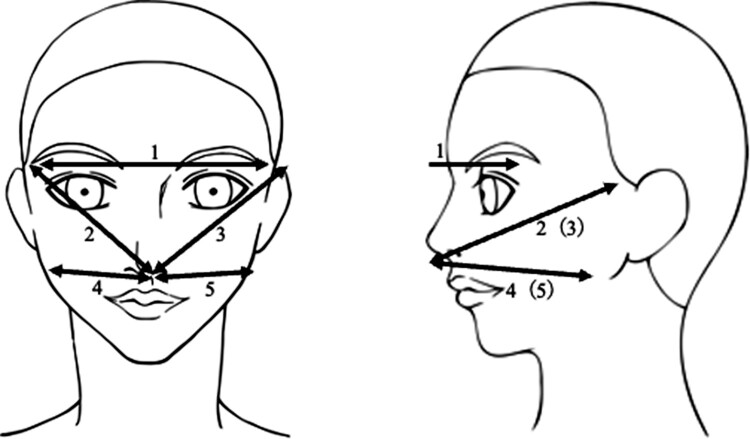
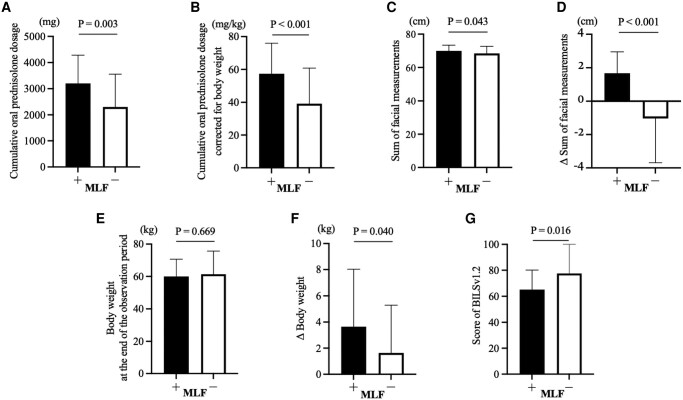
This prospective observational study spanned 24 weeks and targeted patients who received GC therapy at the University of Yamanashi Hospital from June 2020 to August 2022. The MLF was defined based on the following 3 factors: (1) an increase in facial measurement lengths, (2) subjective facial changes by patients' self-assessment using a visual analog scale; (3) objective and qualitative facial changes assessed by physicians. We examined the predisposing factors for MLF and the association of MLF with GC-induced diabetes, hypertension, dyslipidemia, and body image.
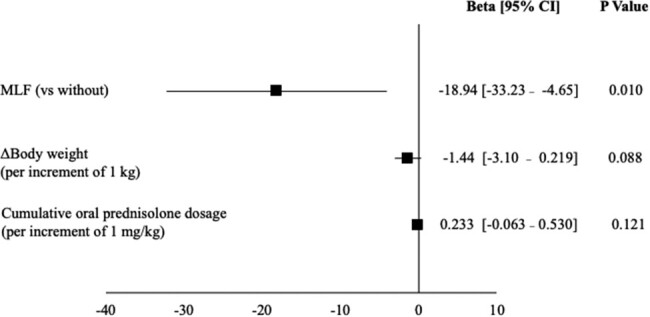
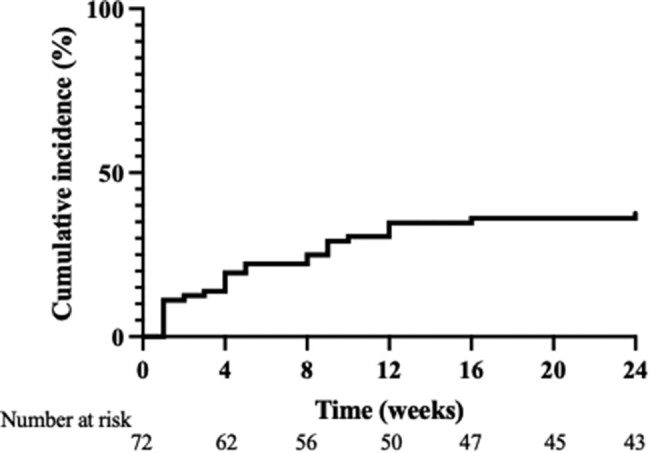
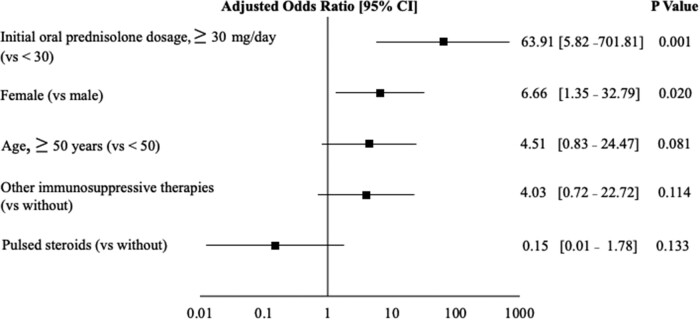
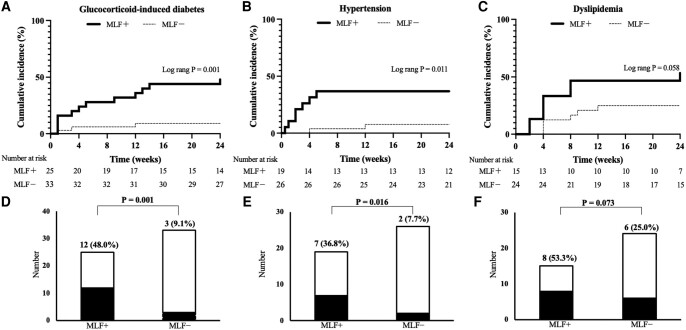
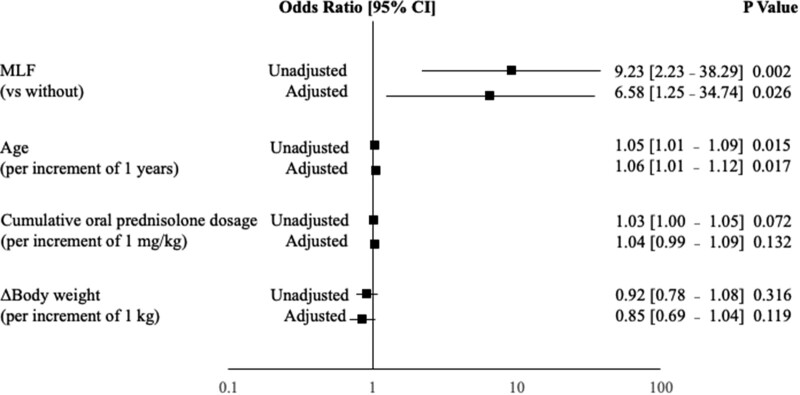
The cumulative incidence rate of MLF at 24 weeks was 37.6%. Predisposing factors for MLF were an initial oral prednisolone dosage of ≥ 30 mg/day [odds ratio (OR) 63.91, 95% confidence interval (CI) 5.82-701.81] and female (OR 6.66, 95% CI 1.35-32.79). MLF showed a significant association with the onset of GC-induced diabetes (OR 6.58, 95% CI 1.25-34.74). MLF was also an independent factor contributing to body image disturbance (β = -18.94, = .01).
MLF contributes to body image disturbance and is associated with the development of GC-induced diabetes; therefore, it is clinically important as a physical manifestation of GC therapy.
满月脸是糖皮质激素(GC)治疗的典型副作用;然而,其诱发因素、与GC诱发并发症的关系以及对身体形象的影响尚不清楚。
本研究旨在确定GC治疗期间满月脸的诱发因素;其与GC诱发的糖尿病、高血压和血脂异常的关联;以及其对身体形象的影响。
这项前瞻性观察性研究为期24周,研究对象为2020年6月至2022年8月在山梨大学医院接受GC治疗的患者。满月脸基于以下3个因素定义:(1)面部测量长度增加;(2)患者使用视觉模拟量表进行自我评估的主观面部变化;(3)医生评估的客观和定性面部变化。我们研究了满月脸的诱发因素以及满月脸与GC诱发的糖尿病、高血压、血脂异常和身体形象的关联。
24周时满月脸的累积发病率为37.6%。满月脸的诱发因素为初始口服泼尼松龙剂量≥30mg/天[比值比(OR)63.91,95%置信区间(CI)5.82 - 701.81]和女性(OR 6.66,95%CI 1.35 - 32.79)。满月脸与GC诱发的糖尿病发病显著相关(OR 6.58,95%CI 1.25 - 34.74)。满月脸也是导致身体形象障碍的独立因素(β = -18.94,P = 0.01)。
满月脸会导致身体形象障碍,并与GC诱发的糖尿病发展相关;因此,作为GC治疗的一种体征表现,它在临床上具有重要意义。