School of Medicine and Health Management, Huazhong University of Science and Technology Tongji Medical College, Wuhan, China.
Department of Health Economics and Healthcare Security, China National Health Development Research Center, Beijing, China
BMJ Open. 2024 Mar 13;14(3):e080634. doi: 10.1136/bmjopen-2023-080634.
Stroke imposes a heavy economic burden and loss of productivity on individuals and society. This study assessed a range of crucial factors, including direct costs and indirect costs, to gauge the economic implications of stroke in China. These outcomes were evaluated with specific reference to the year 2018, using the Chinese yuan (¥) as the unit of measurement and providing the corresponding purchasing power parity dollar ($PPP) currency value.
A cost-of-illness methodology was used to ascertain the economic implications of stroke in 2018. Within the constraints of this approach, economic costs were defined as 'direct costs' or 'indirect costs'. We estimated direct costs from sample data, the National Health Service Survey and the . A human capital method was used to conservatively estimate indirect costs.
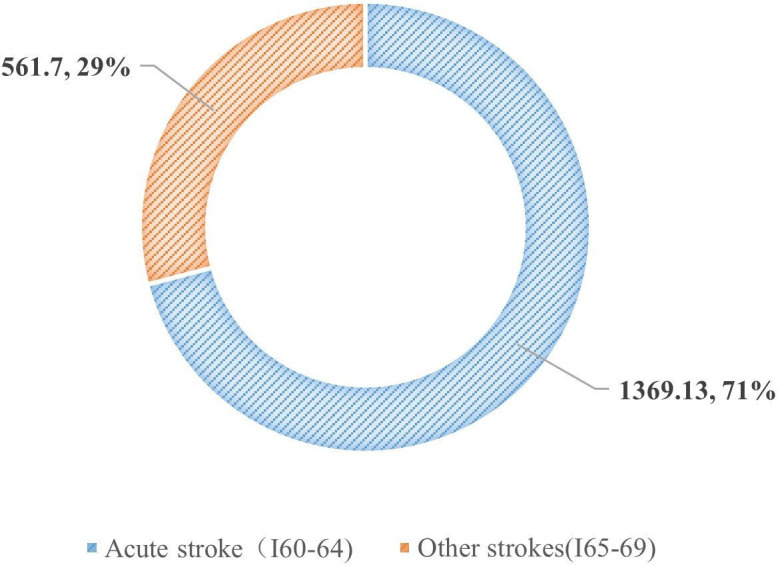
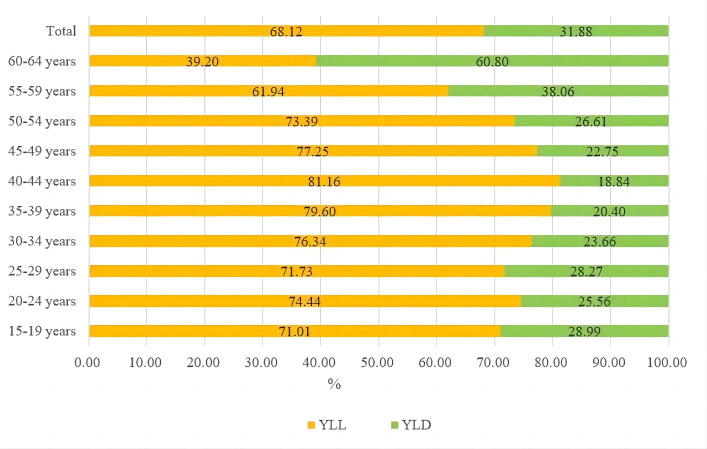
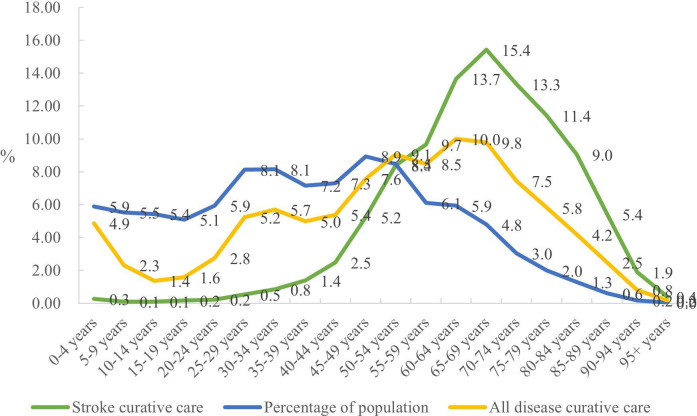
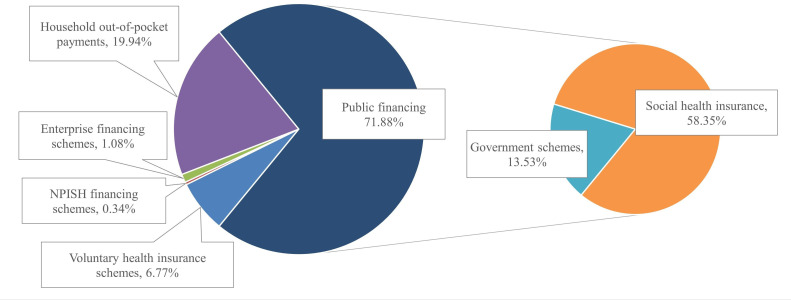
In 2018, of the economic burden of stroke in China, the direct costs were ¥247.8 billion ($PPP 58.6 billion) and indirect costs were ¥704.4 billion ($PPP 166.5 billion). The curative care expenditure for stroke was ¥193.1 billion ($PPP 45.7 billion), consuming nearly 5.5% of curative expenditure. The cost of stroke treatment relied heavily on public financing, with 58% from social health insurance and 14% from government sources.
A significant economic burden is imposed by stroke on China's economy, and there is a risk of underestimating this burden if indirect costs are not comprehensively considered. The importance of implementing effective preventive measures and screening strategies for stroke, with a particular focus on high-risk populations, is underscored by this study's findings. Such investments in public health have the potential to yield substantial benefits.
中风给个人和社会带来了沉重的经济负担和生产力损失。本研究评估了一系列关键因素,包括直接成本和间接成本,以衡量中风在中国的经济影响。这些结果是参照 2018 年的情况评估的,使用人民币(¥)作为衡量单位,并提供了相应的购买力平价美元($PPP)货币价值。
采用疾病成本法来确定 2018 年中风的经济影响。在这种方法的限制内,经济成本被定义为“直接成本”或“间接成本”。我们根据样本数据、国家卫生服务调查和. 来估计直接成本。采用人力资本法保守估计间接成本。
2018 年,中国中风的经济负担中,直接成本为¥2478 亿元($PPP 586 亿元),间接成本为¥7044 亿元($PPP 1665 亿元)。中风的治疗费用为¥1931 亿元($PPP 457 亿元),占治疗总支出的近 5.5%。中风治疗费用主要依赖于公共资金,其中社会医疗保险占 58%,政府资金占 14%。
中风给中国经济带来了巨大的经济负担,如果不全面考虑间接成本,可能会低估这一负担。本研究结果强调了实施有效的预防措施和中风筛查策略的重要性,特别是针对高危人群。对公共卫生的投资有可能带来巨大的收益。