Department of Epidemiology ASL Roma 1, Lazio Regional Health Service, Via Cristoforo Colombo 112, 00147, Rome, Italy.
UOC Nephrology and Dialysis, ASL Viterbo, Viterbo, Italy.
BMC Nephrol. 2024 Mar 16;25(1):98. doi: 10.1186/s12882-024-03539-5.
Entering dialysis is a critical moment in patients' healthcare journey, and little is known about drug therapy around it. A study funded by the Italian Medicines Agency offered the opportunity to leverage data from the Lazio Regional Dialysis and Transplant Registry (RRDTL) and perform an observational study on drug use patterns before and after initiating chronic dialysis.
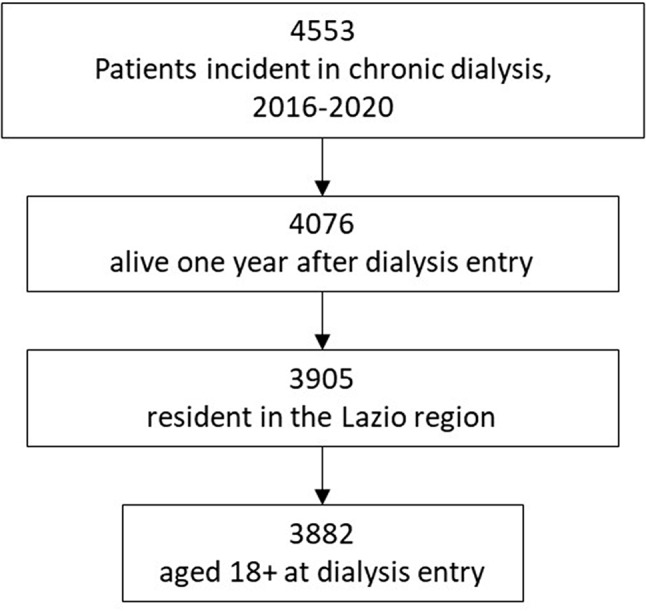
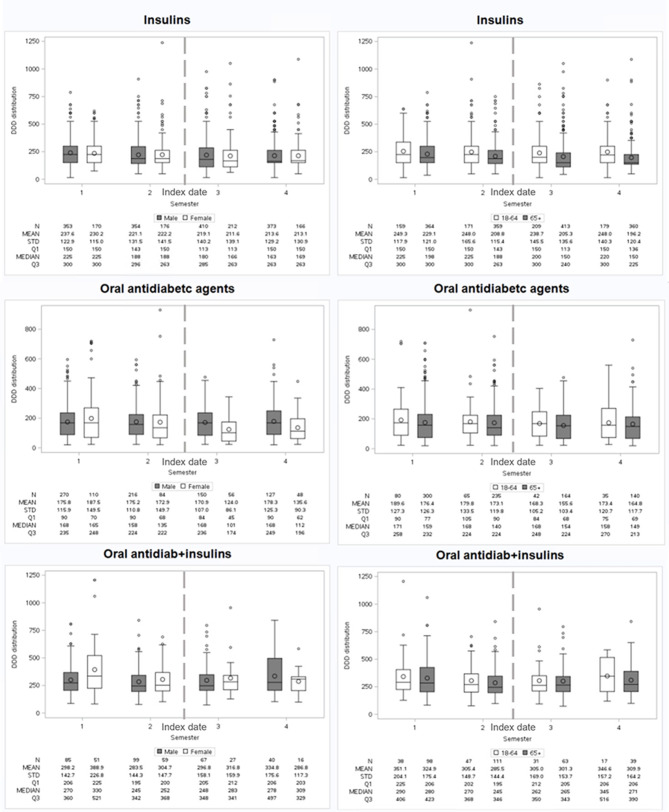
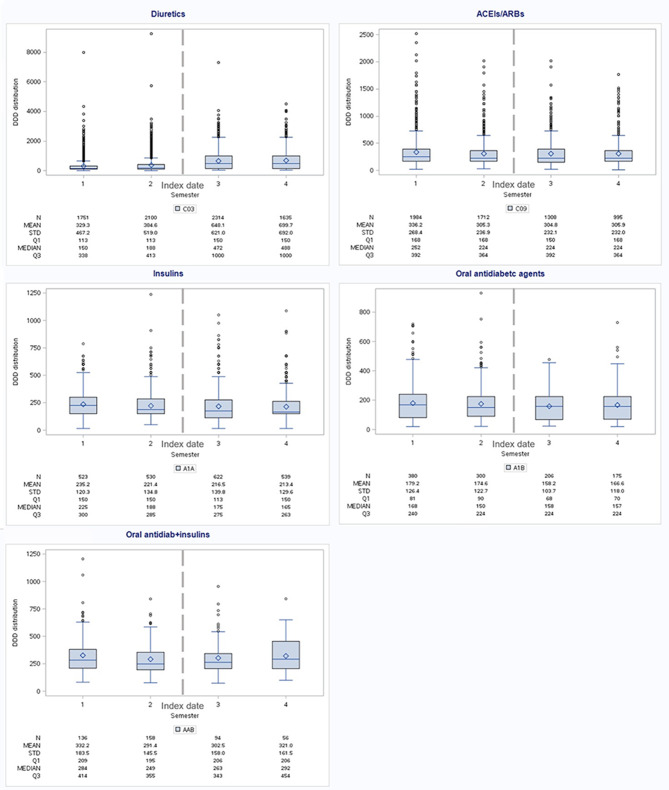
Individuals initiating dialysis in 2016-2020 were identified from RRDTL, excluding patients with prior renal transplantation, stopping dialysis early, or dying within 12 months. Use of study drugs, predefined by clinicians, in the two years around the index date was retrieved from the drug claims register and described by semester. For each drug group, proportions of users (min 2 claims in 6 months) by semester, and intensity of treatment in terms of Defined Daily Doses (DDDs) for cardiovascular and antidiabetic agents were compared across semesters, stratifying by sex and age.
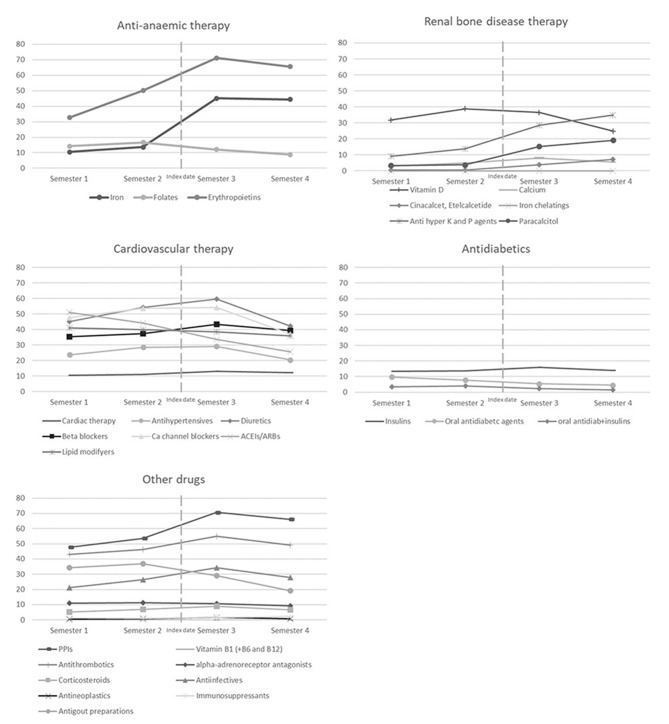
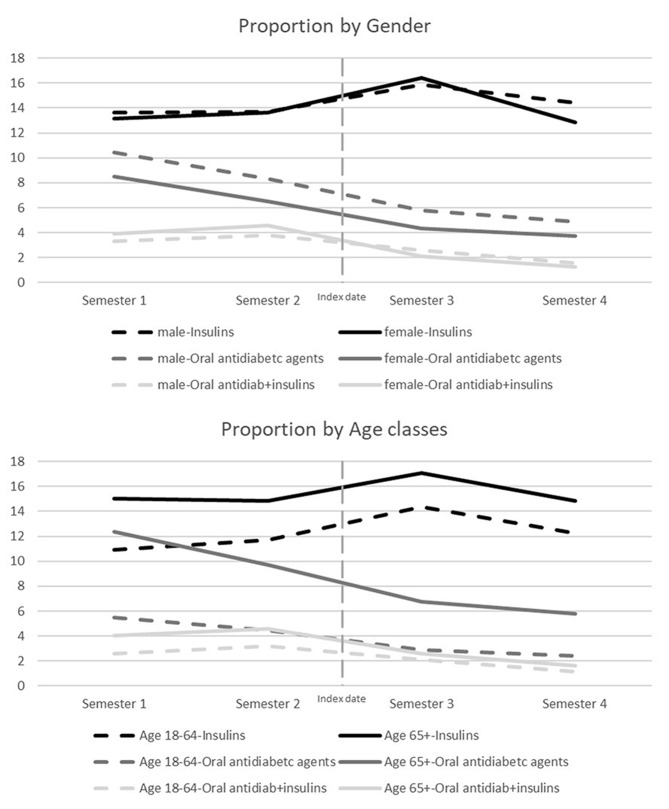
In our cohort of 3,882 patients we observed a general increase in drug use after initiating dialysis, with the mean number rising from 5.5 to 6.2. Cardiovascular agents accounted for the highest proportions, along with proton pump inhibitors and antithrombotics over all semesters. Dialysis-specific therapies showed the most evident increase, in particular anti-anaemics (iron 4-fold, erythropoietins almost 2-fold), anti-parathyroids (6-fold), and chelating agents (4-fold). Use of cardiovascular and antidiabetic drugs was characterised by significant variations in terms of patterns and intensity, with some differences between sexes and age groups.
Entering dialysis is associated with increased use of specific drugs and goes along with adaptations of chronic therapies.
进入透析是患者医疗保健旅程中的一个关键时刻,但人们对其周围的药物治疗知之甚少。一项由意大利药品管理局资助的研究提供了机会,可以利用拉齐奥地区透析和移植登记处(RRDTL)的数据,并对开始慢性透析前后的药物使用模式进行观察性研究。
从 RRDTL 中确定 2016-2020 年开始透析的个体,排除有先前肾移植、提前停止透析或在 12 个月内死亡的患者。从药物索赔登记处检索索引日期前后两年内研究药物的使用情况(由临床医生预先定义),并按学期描述。对于每个药物组,按性别和年龄分层,比较学期内用户比例(6 个月内至少有 2 次用药)和心血管及抗糖尿病药物的治疗强度(以定义日剂量 DDD 表示)。
在我们的 3882 名患者队列中,我们观察到开始透析后药物使用总体增加,平均数量从 5.5 增加到 6.2。心血管药物占比最高,质子泵抑制剂和抗血栓药物在所有学期均如此。透析特异性治疗显示出最明显的增加,特别是抗贫血药物(铁增加 4 倍,红细胞生成素几乎增加 2 倍)、抗甲状旁腺药物(增加 6 倍)和螯合剂(增加 4 倍)。心血管和抗糖尿病药物的使用在模式和强度方面存在显著差异,性别和年龄组之间存在一些差异。
进入透析与特定药物使用的增加有关,并伴随着慢性治疗的调整。