Zondervan Robert L, Capobianco Christina A, Jenkins Daniel C, Reicha John D, Fredrick Livia M, Lam Charles, Isenberg Jeffery S, Ahn Jaimo, Marcucio Ralph S, Hankenson Kurt D
Department of Orthopaedic Surgery, University of Michigan, Ann Arbor, Michigan, United States, 48109.
College of Osteopathic Medicine, Michigan State University, East Lansing, Michigan, United States, 48824.
bioRxiv. 2024 Mar 6:2024.03.06.583756. doi: 10.1101/2024.03.06.583756.
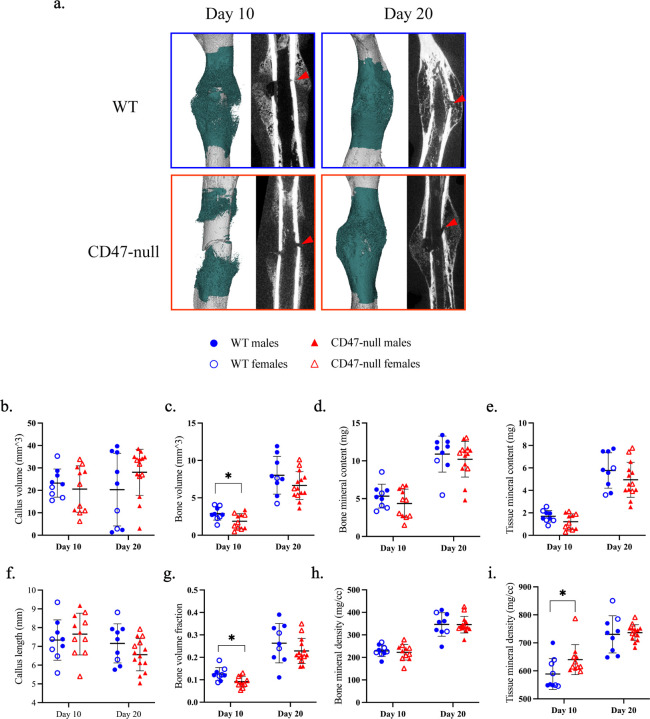
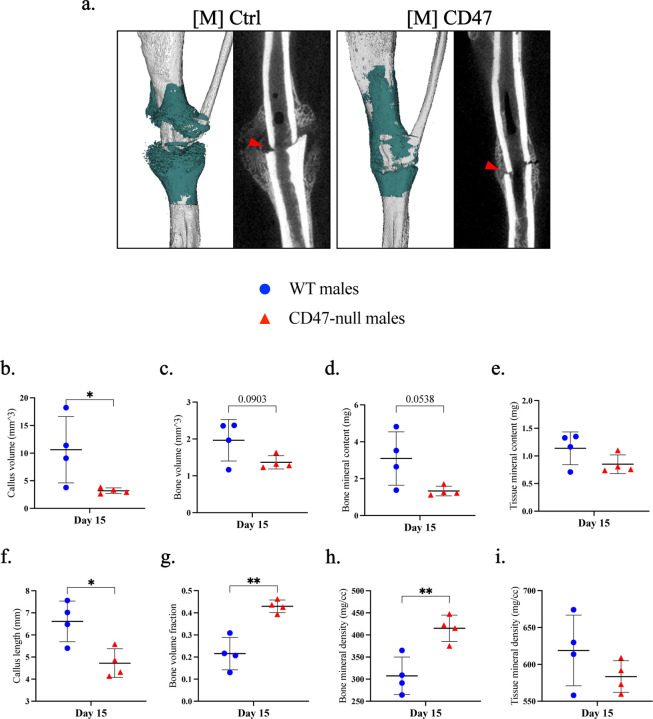
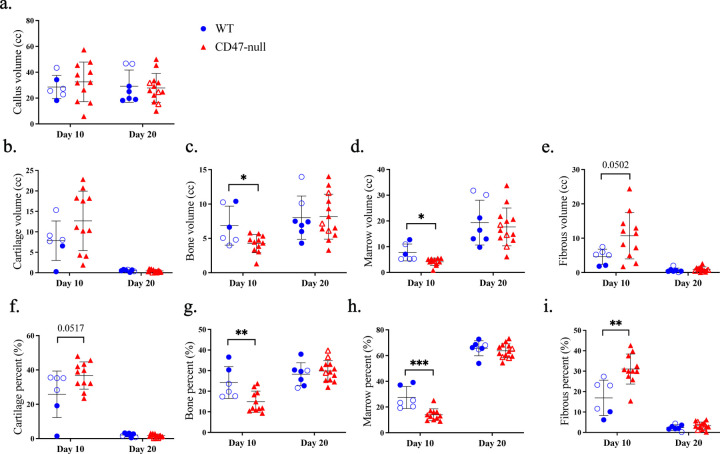
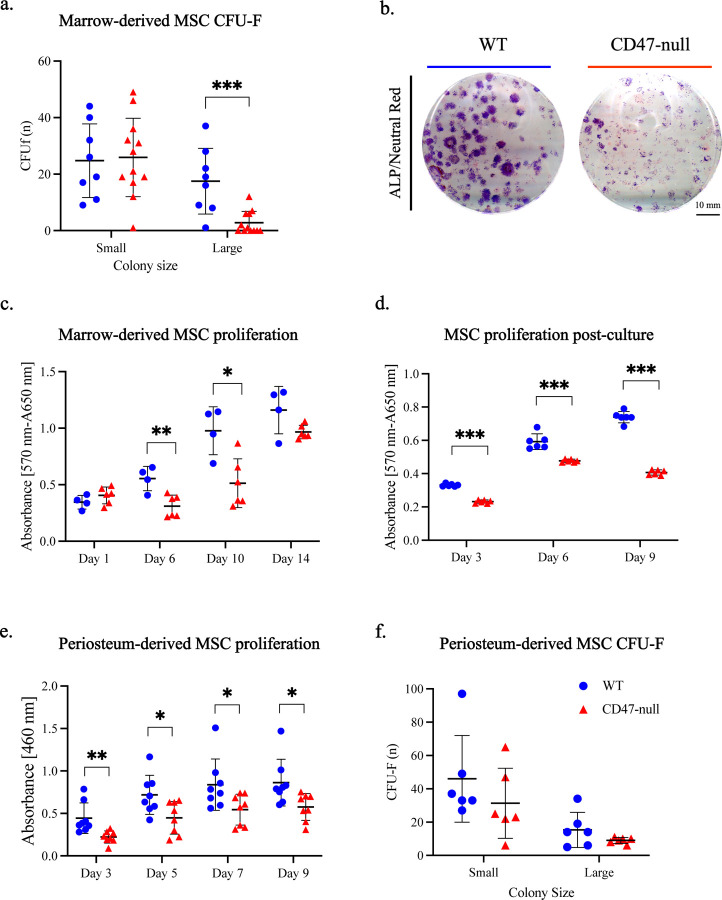
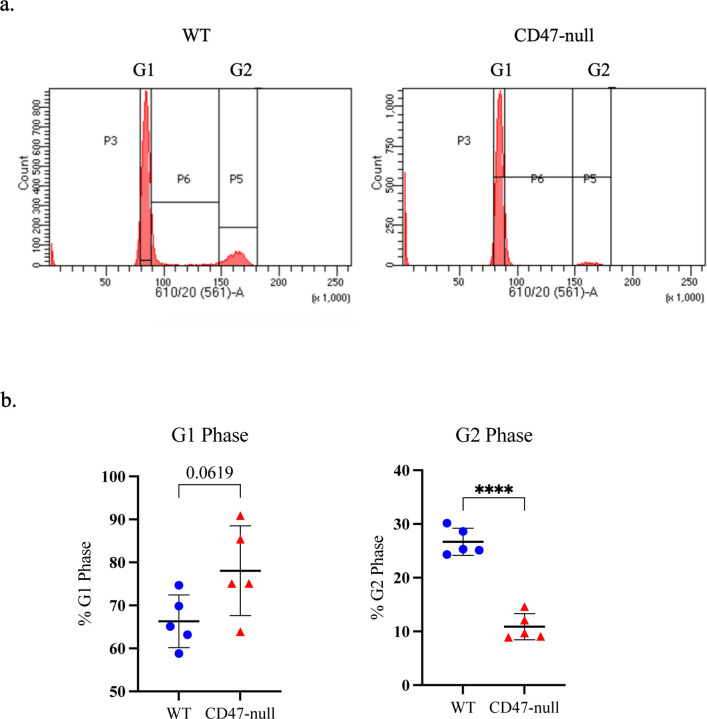
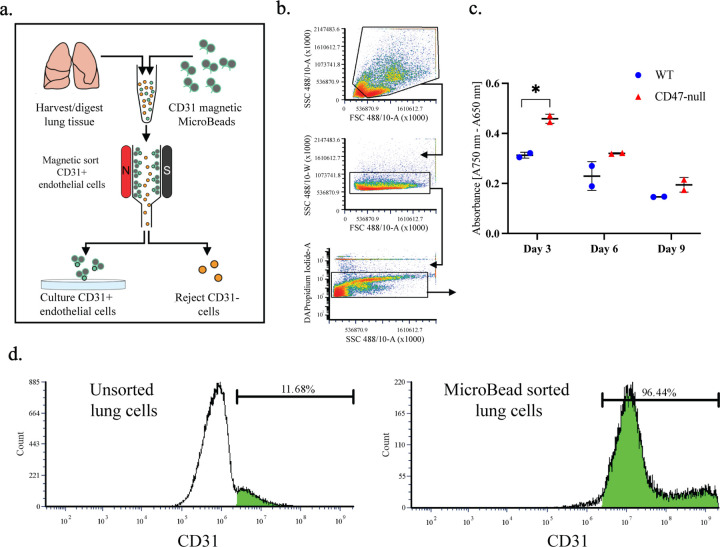
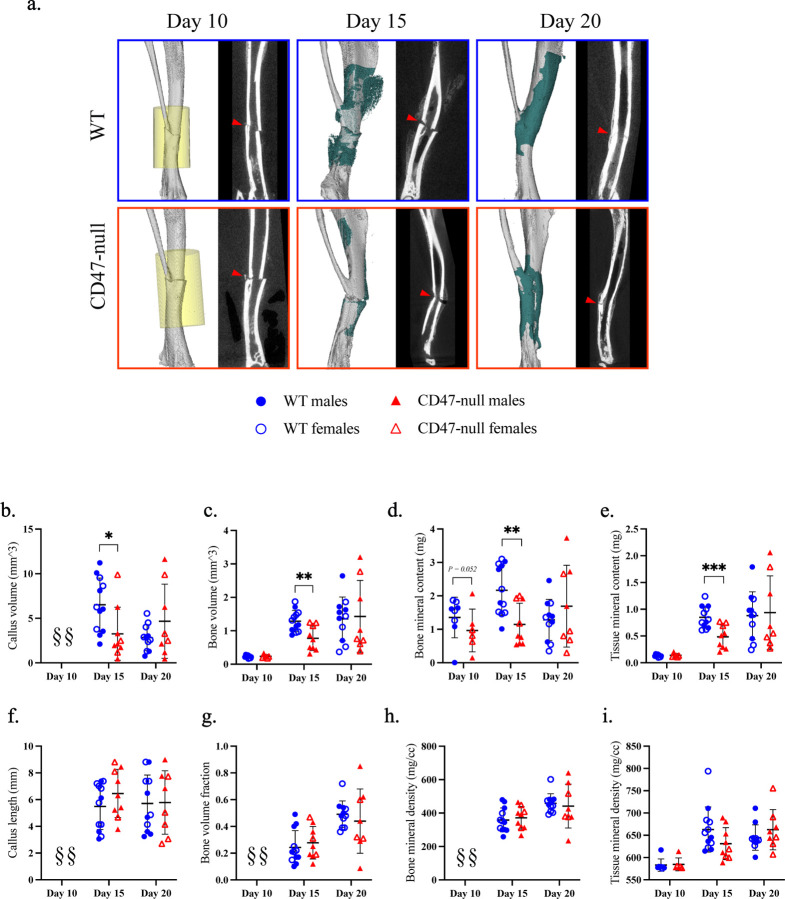
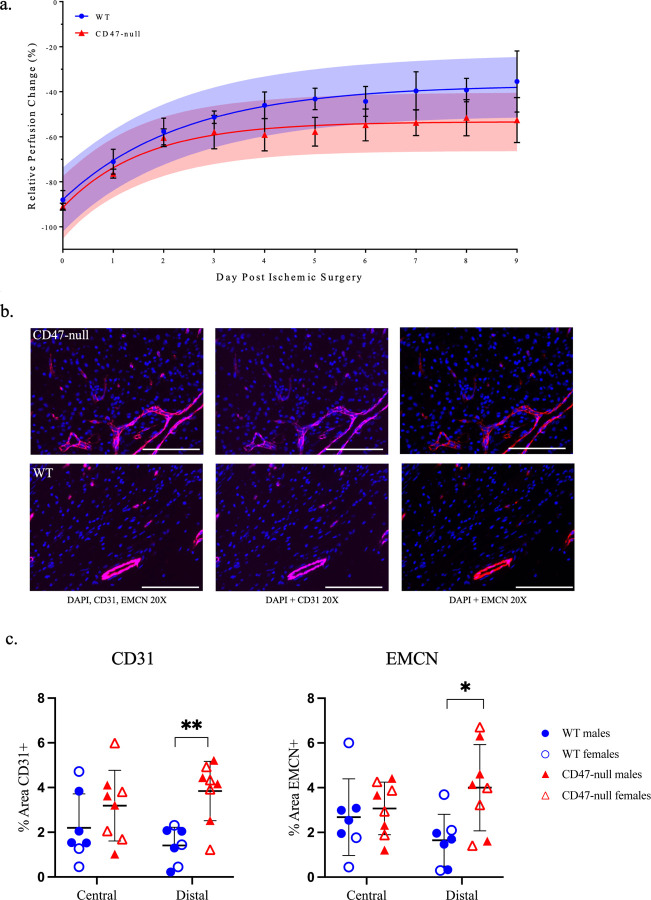
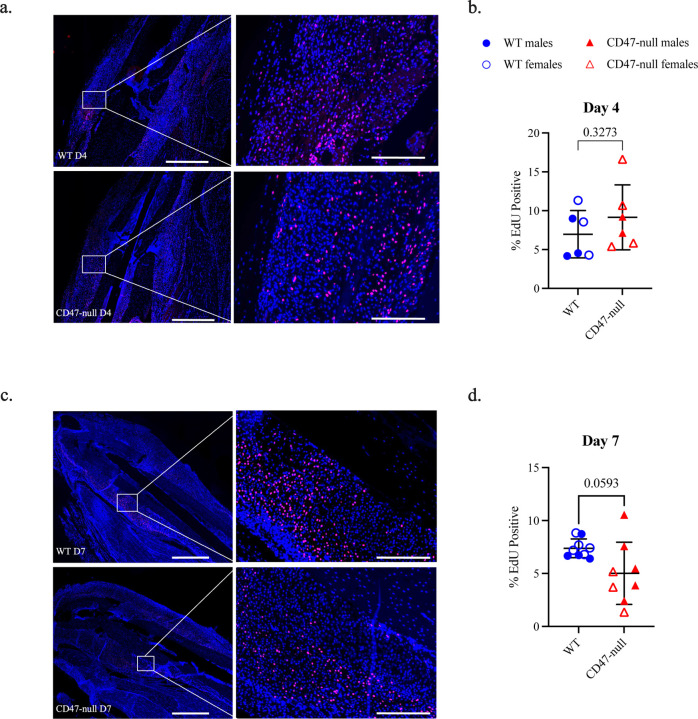
CD47 is a ubiquitous and pleiotropic cell-surface receptor. Disrupting CD47 enhances injury repair in various tissues but the role of CD47 has not been studied in bone injuries. In a murine closed-fracture model, CD47-null mice showed decreased callus bone volume, bone mineral content, and tissue mineral content as assessed by microcomputed tomography 10 days post-fracture, and increased fibrous volume as determined by histology. To understand the cellular basis for this phenotype, mesenchymal progenitors (MSC) were harvested from bone marrow. CD47-null MSC showed decreased large fibroblast colony formation (CFU-F), significantly less proliferation, and fewer cells in S-phase, although osteoblast differentiation was unaffected. However, consistent with prior research, CD47-null endothelial cells showed increased proliferation relative to WT cells. Similarly, in a murine ischemic fracture model, CD47-null mice showed reduced fracture callus bone volume and bone mineral content relative to WT. Consistent with our results, EdU labeling showed decreased cell proliferation in the callus of CD47-null mice, while staining for CD31 and endomucin demonstrated increased endothelial cell mass. Finally, WT mice administered a CD47 morpholino, which blocks CD47 protein production, showed a callus phenotype similar to that of non-ischemic and ischemic fractures in CD47-null mice, suggesting the phenotype was not due to developmental changes in the knockout mice. Thus, inhibition of CD47 during bone healing reduces both non-ischemic and ischemic fracture healing, in part, by decreasing MSC proliferation. Furthermore, the increase in endothelial cell proliferation and early blood vessel density caused by CD47 disruption is not sufficient to overcome MSC dysfunction.
CD47是一种广泛存在且具有多效性的细胞表面受体。破坏CD47可增强各种组织中的损伤修复,但CD47在骨损伤中的作用尚未得到研究。在小鼠闭合性骨折模型中,通过微计算机断层扫描评估,骨折后10天,CD47基因敲除小鼠的骨痂骨体积、骨矿物质含量和组织矿物质含量降低,组织学检测显示纤维体积增加。为了解这种表型的细胞基础,从骨髓中分离出间充质祖细胞(MSC)。CD47基因敲除的MSC显示出大的成纤维细胞集落形成(CFU-F)减少、增殖明显减少且S期细胞数量减少,尽管成骨细胞分化未受影响。然而,与先前的研究一致,CD47基因敲除的内皮细胞相对于野生型细胞显示出增殖增加。同样,在小鼠缺血性骨折模型中,与野生型相比,CD47基因敲除小鼠的骨折骨痂骨体积和骨矿物质含量降低。与我们的结果一致,EdU标记显示CD47基因敲除小鼠骨痂中的细胞增殖减少,而CD31和内粘蛋白染色显示内皮细胞数量增加。最后,给予CD47吗啉代寡核苷酸(可阻断CD47蛋白产生)的野生型小鼠表现出与CD47基因敲除小鼠非缺血性和缺血性骨折相似的骨痂表型,这表明该表型并非由于基因敲除小鼠的发育变化所致。因此,在骨愈合过程中抑制CD47会部分通过减少MSC增殖而降低非缺血性和缺血性骨折的愈合。此外,CD47破坏引起的内皮细胞增殖增加和早期血管密度增加不足以克服MSC功能障碍。