Martinez Santiago Gil, Mbabazi Pamela S, Sebitloane Motshedisi H, Vwalika Bellington, Mocumbi Sibone, Galaphaththi-Arachchige Hashini N, Holmen Sigve D, Randrianasolo Bodo, Roald Borghild, Olowookorun Femi, Hyera Francis, Mabote Sheila, Nemungadi Takalani G, Ngcobo Thembinkosi V, Furumele Tsakani, Ndhlovu Patricia D, Gerdes Martin W, Gundersen Svein G, Mkhize-Kwitshana Zilungile L, Taylor Myra, Mhlanga Roland E E, Kjetland Eyrun F
Department of Health and Nursing Science, University of Agder, Kristiansand, Norway.
National Planning Authority of the Government of the Republic of Uganda, Kampala, Uganda.
PLOS Glob Public Health. 2024 Mar 18;4(3):e0002249. doi: 10.1371/journal.pgph.0002249. eCollection 2024.
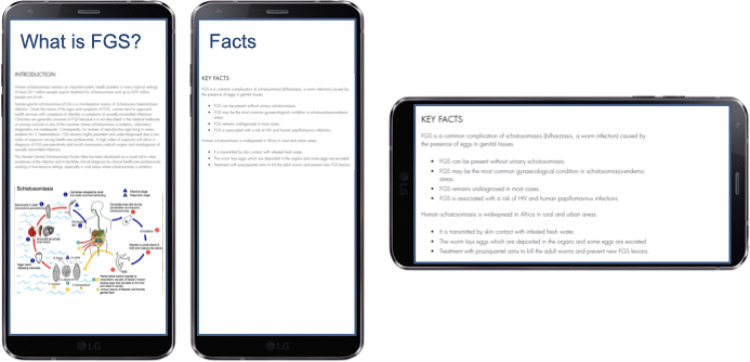
Up to 56 million young and adult women of African origin suffer from Female Genital Schistosomiasis (FGS). The transmission of schistosomiasis happens through contact with schistosomiasis infested fresh water in rivers and lakes. The transmission vector is the snail that releases immature worms capable of penetrating the human skin. The worm then matures and mates in the blood vessels and deposits its eggs in tissues, causing urogenital disease. There is currently no gold standard for FGS diagnosis. Reliable diagnostics are challenging due to the lack of appropriate instruments and clinical skills. The World Health Organisation (WHO) recommends "screen-and-treat" cervical cancer management, by means of visual inspection of characteristic lesions on the cervix and point-of-care treatment as per the findings. FGS may be mistaken for cervical cancer or sexually transmitted diseases. Misdiagnosis may lead to the wrong treatment, increased risk of exposure to other infectious diseases (human immunodeficiency virus and human papilloma virus), infertility and stigmatisation. The necessary clinical knowledge is only available to a few experts in the world. For an appropriate diagnosis, this knowledge needs to be transferred to health professionals who have minimal or non-existing laboratory support. Co-design workshops were held with stakeholders (WHO representative, national health authority, FGS experts and researchers, gynaecologists, nurses, medical doctors, public health experts, technical experts, and members of the public) to make prototypes for the WHO Pocket Atlas for FGS, a mobile diagnostic support tool and an e-learning tool for health professionals. The dissemination targeted health facilities, including remote areas across the 51 anglophone, francophone and lusophone African countries. Outcomes were endorsed by the WHO and comprise a practical diagnostic guide for FGS in low-resource environments.
多达5600万非洲裔年轻及成年女性患有女性生殖器血吸虫病(FGS)。血吸虫病通过接触河流和湖泊中受血吸虫感染的淡水传播。传播媒介是蜗牛,它会释放出能够穿透人体皮肤的未成熟蠕虫。然后,蠕虫在血管中成熟并交配,并在组织中产卵,从而导致泌尿生殖系统疾病。目前,FGS诊断尚无金标准。由于缺乏合适的仪器和临床技能,可靠的诊断具有挑战性。世界卫生组织(WHO)建议采用“筛查与治疗”的宫颈癌管理方法,即通过肉眼检查宫颈上的特征性病变,并根据检查结果进行即时治疗。FGS可能会被误诊为宫颈癌或性传播疾病。误诊可能导致错误的治疗,增加感染其他传染病(人类免疫缺陷病毒和人乳头瘤病毒)、不孕和遭受污名化的风险。世界上只有少数专家掌握必要的临床知识。为了进行准确诊断,需要将这些知识传授给几乎没有实验室支持或根本没有实验室支持的卫生专业人员。与利益相关者(WHO代表、国家卫生当局、FGS专家和研究人员、妇科医生、护士、医生、公共卫生专家、技术专家和公众成员)举办了联合设计研讨会,以制作WHO FGS袖珍图谱的原型,这是一种移动诊断支持工具和面向卫生专业人员的电子学习工具。传播对象是卫生设施,包括非洲51个讲英语、法语和葡萄牙语国家的偏远地区。成果得到了WHO的认可,包括一份针对资源匮乏环境中FGS的实用诊断指南。