College of Food and Agricultural Sciences, Plant Production Department, King Saud University, P.O. Box 2460, 11451, Riyadh, Saudi Arabia.
Sci Rep. 2024 Mar 18;14(1):6472. doi: 10.1038/s41598-024-57141-8.
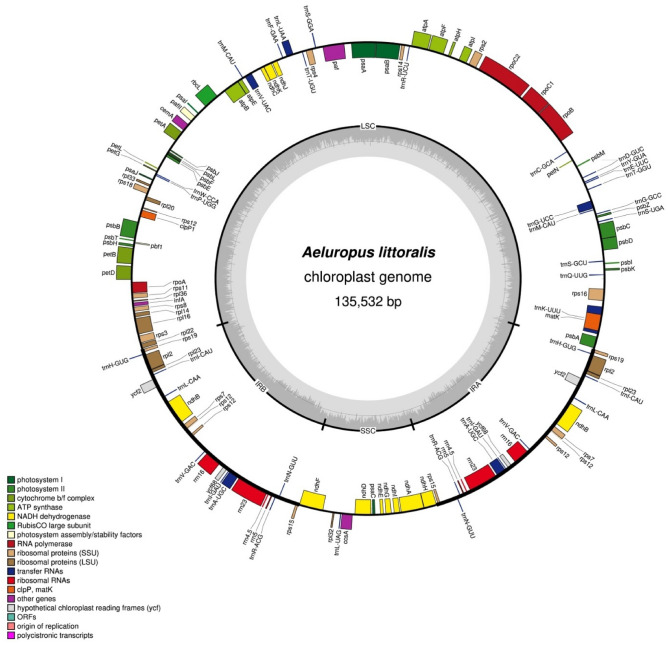
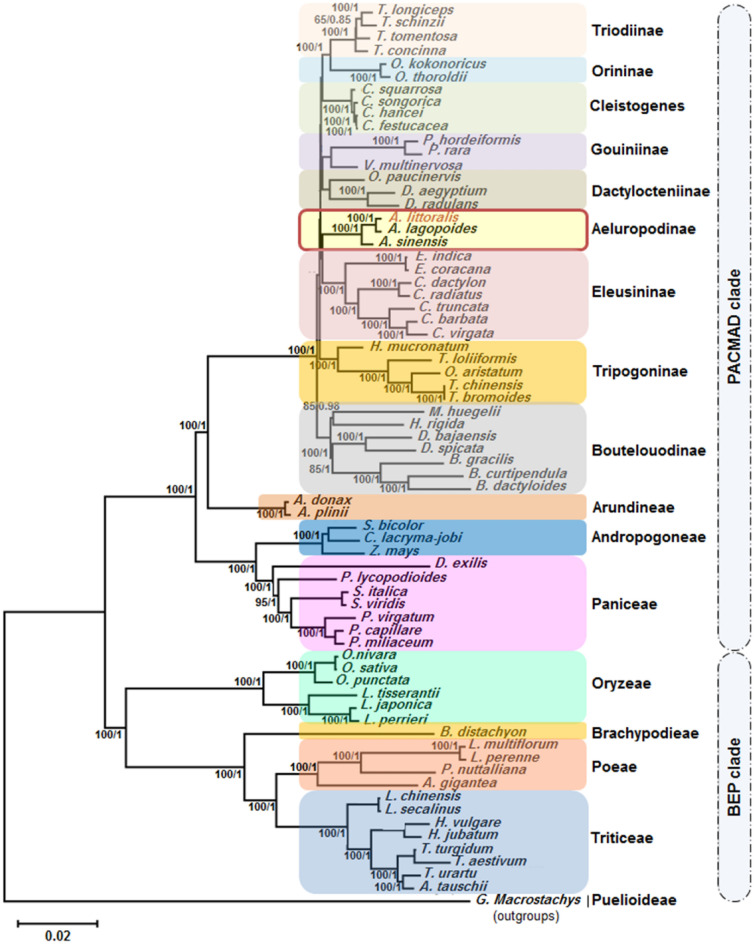
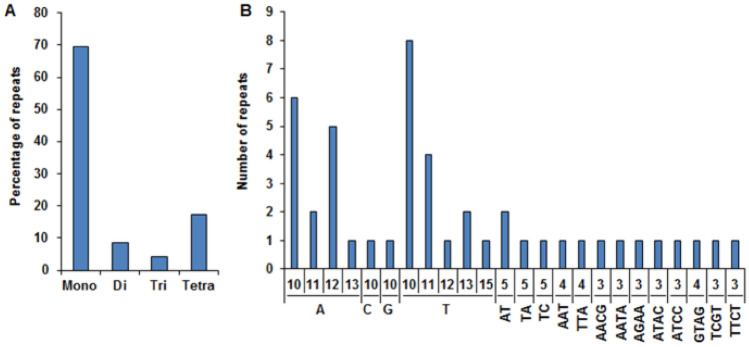
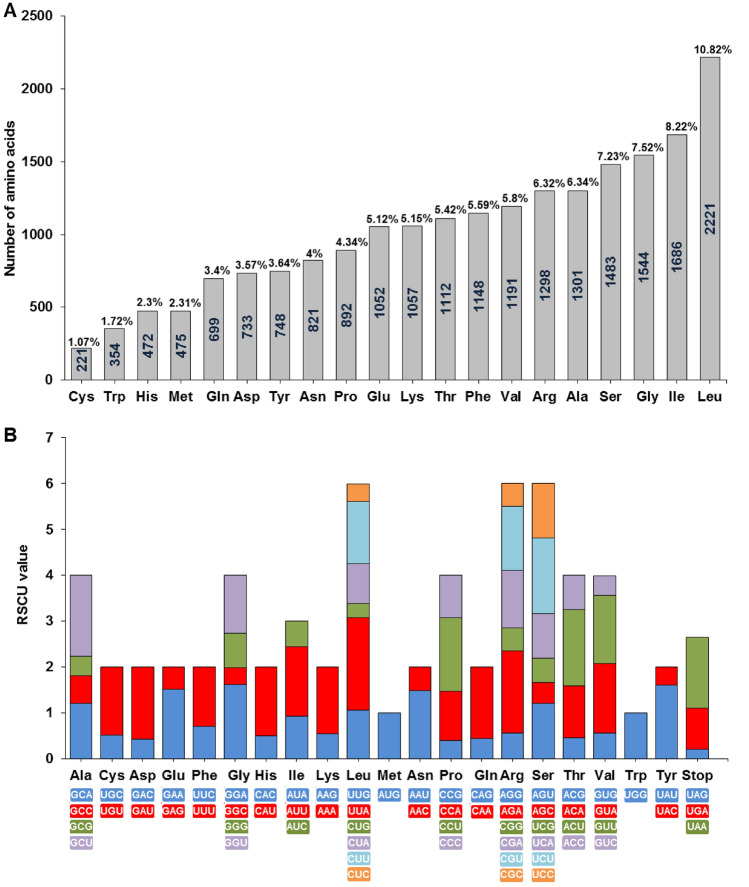
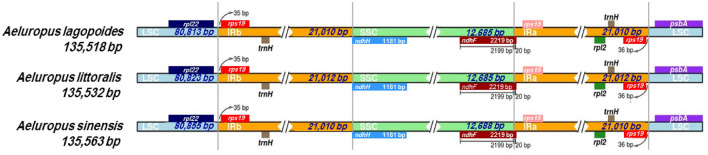
Aeluropus littoralis, a halophyte grass, is widely distributed from the Mediterranean to the Indian subcontinent through the Mongolian Gobi. This model halophyte has garnered increasing attention owing to its use as forage and its high tolerance to environmental stressors. The chloroplast genomes of many plants have been extensively examined for molecular, phylogenetic and transplastomic applications. However, no published research on the A. littoralis chloroplast (cp) genome was discovered. Here, the entire chloroplast genome of A. littoralis was assembled implementing accurate long-read sequences. The entire chloroplast genome, with an estimated length of 135,532 bp (GC content: 38.2%), has a quadripartite architecture and includes a pair of inverted repeat (IR) regions, IRa and IRb (21,012 bp each), separated by a large and a small single-copy regions (80,823 and 12,685 bp, respectively). The features of A. littoralis consist of 133 genes that synthesize 87 peptides, 38 transfer RNAs, and 8 ribosomal RNAs. Of these genes, 86 were unique, whereas 19 were duplicated in IR regions. Additionally, a total of forty-six simple sequence repeats, categorized into 32-mono, four-di, two-tri, and eight-tetranucleotides, were discovered. Furthermore, ten sets of repeats greater than 20 bp were located primarily in the LSC region. Evolutionary analysis based on chloroplast sequence data revealed that A. littoralis with A. lagopoides and A. sinensis belong to the Aeluropodinae subtribe, which is a sister to the Eleusininae in the tribe Cynodonteae and the subfamily Chloridoideae. This subfamily belongs to the PACMAD clade, which contains the majority of the C4 photosynthetic plants in the Poaceae. The newly constructed A. littoralis cp genome offers valuable knowledge for DNA barcoding, phylogenetic, transplastomic research, and other biological studies.
滨藜(Aeluropus littoralis)是一种广泛分布于从地中海到印度次大陆,再通过蒙古戈壁的盐生草本植物。由于其作为饲料的用途以及对环境胁迫的高耐受性,这种模式盐生植物受到了越来越多的关注。许多植物的叶绿体基因组已被广泛用于分子、系统发育和叶绿体转化等研究。然而,目前尚未发现有关滨藜叶绿体(cp)基因组的已发表研究。在这里,我们通过准确的长读序列组装了滨藜的完整叶绿体基因组。该基因组全长 135532bp(GC 含量为 38.2%),具有典型的四部分结构,包括一对反向重复(IR)区 IRa 和 IRb(各长 21012bp),被一个大的和一个小的单拷贝区(80823 和 12685bp)隔开。滨藜的特征包括编码 87 个肽的 133 个基因、38 个转移 RNA 和 8 个核糖体 RNA。其中,86 个基因为特有基因,19 个基因为 IR 区的重复基因。此外,共发现 46 个简单序列重复,分为 32 个单核苷酸、4 个二核苷酸、2 个三核苷酸和 8 个四核苷酸。此外,10 组大于 20bp 的重复序列主要位于 LSC 区。基于叶绿体序列数据的进化分析表明,滨藜与 A. lagopoides 和 A. sinensis 一起属于滨藜亚科,与雀稗族 Cynodonteae 中的 Eleusininae 以及 Chloridoideae 亚科并列。该亚科属于包含禾本科大多数 C4 光合作用植物的 PACMAD 分支。新构建的滨藜 cp 基因组为 DNA 条形码、系统发育、叶绿体转化等研究以及其他生物学研究提供了有价值的信息。