Department of Chemistry, Science and Research Branch, Islamic Azad University, Tehran, Iran.
Dipartimento di Fisica, Universita' di Padova, Via Marzolo 8, 35131, Padua, Italy.
Sci Rep. 2024 Mar 18;14(1):6473. doi: 10.1038/s41598-024-57247-z.
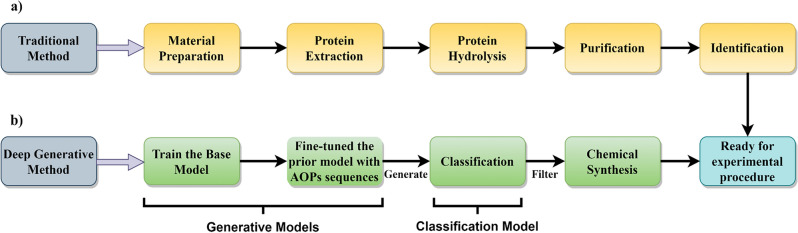
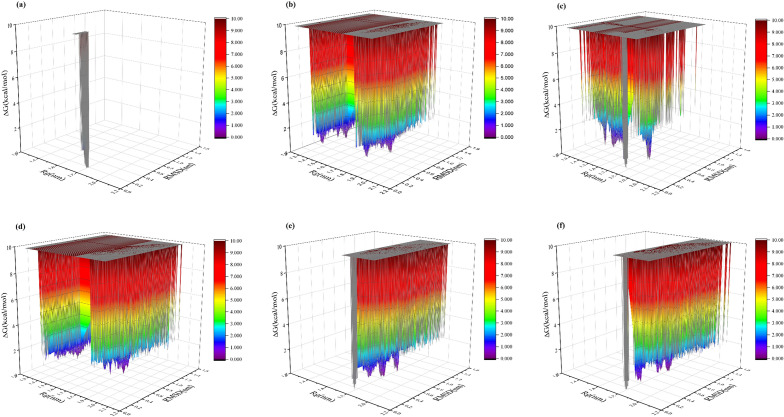
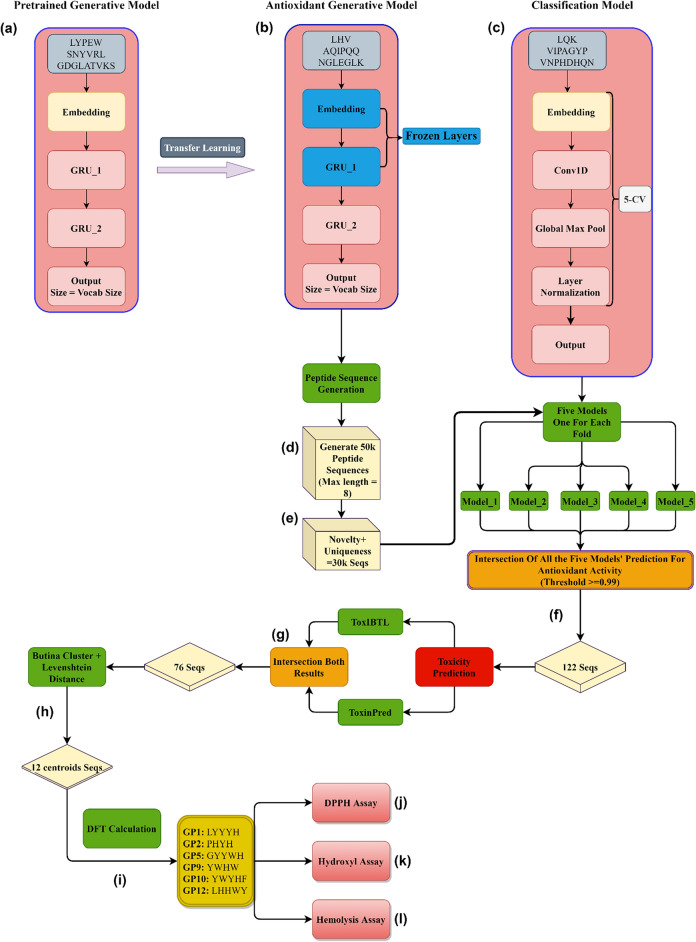
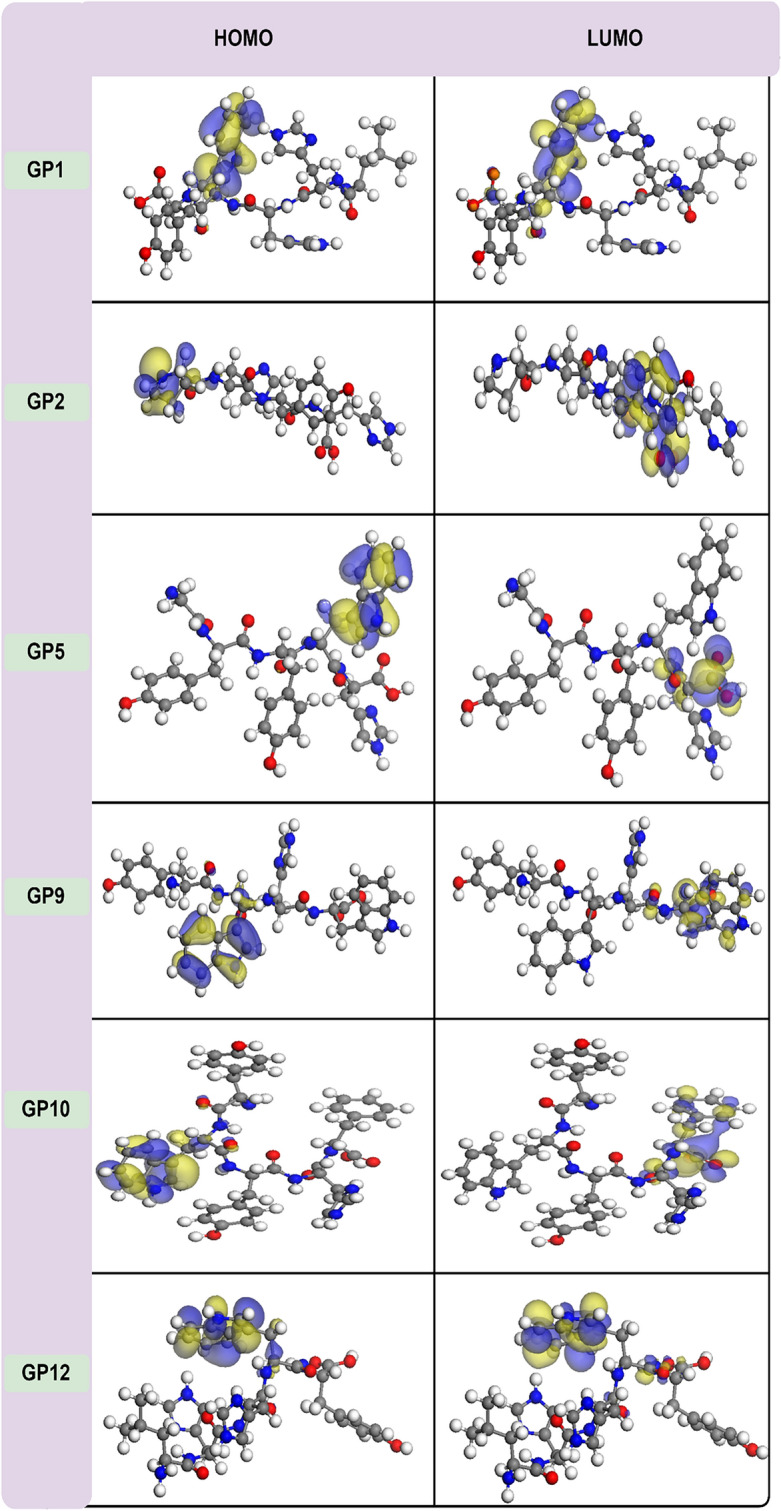
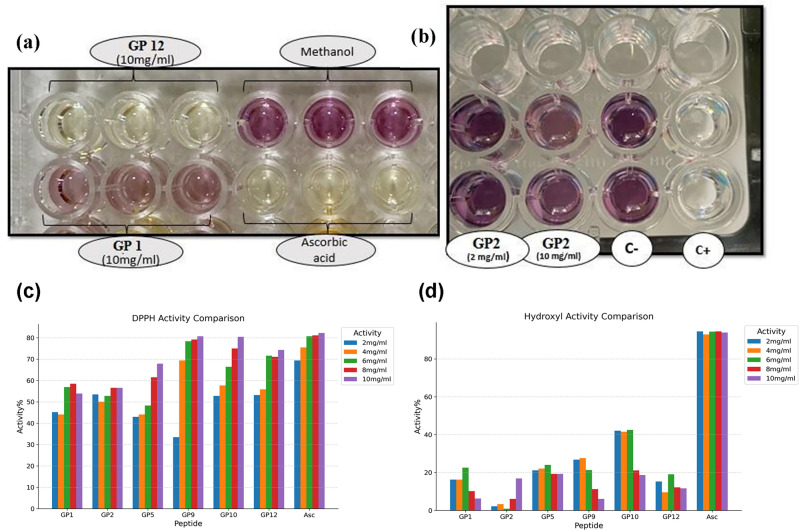
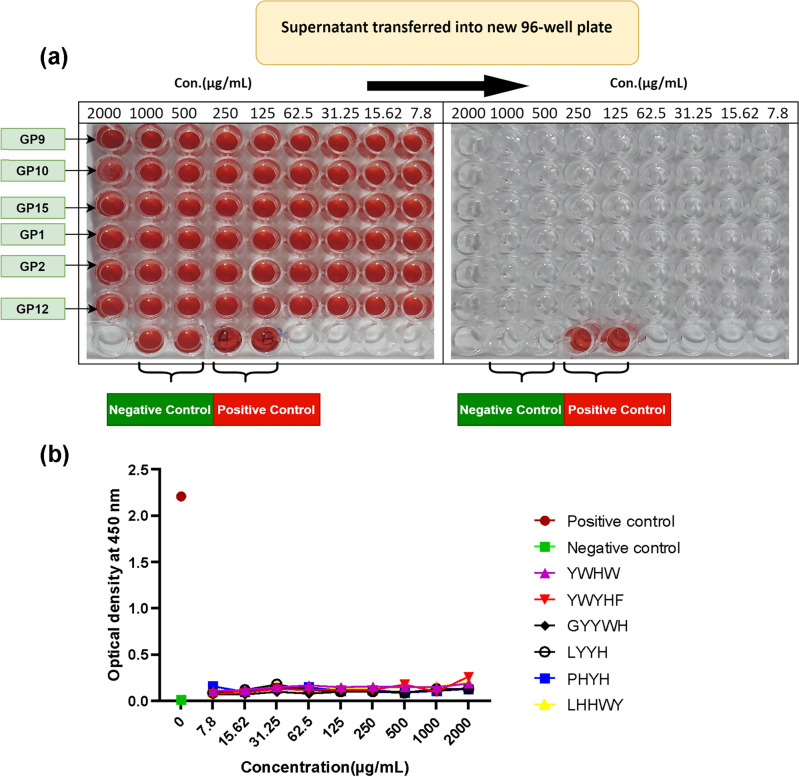
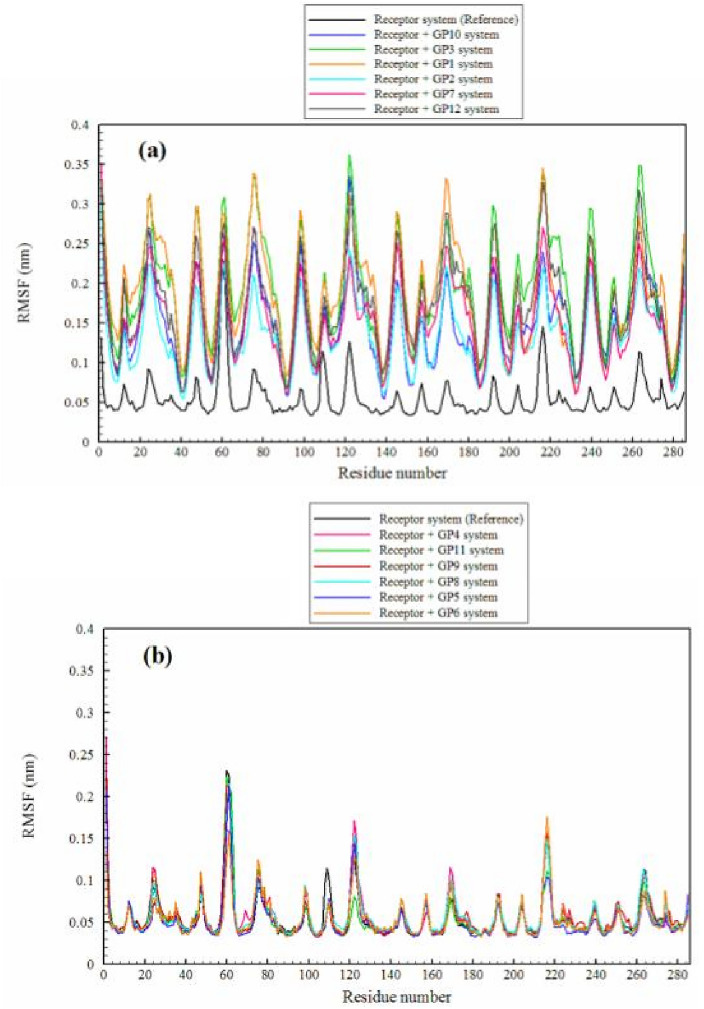
Antioxidant peptides (AOPs) are highly valued in food and pharmaceutical industries due to their significant role in human function. This study introduces a novel approach to identifying robust AOPs using a deep generative model based on sequence representation. Through filtration with a deep-learning classification model and subsequent clustering via the Butina cluster algorithm, twelve peptides (GP1-GP12) with potential antioxidant capacity were predicted. Density functional theory (DFT) calculations guided the selection of six peptides for synthesis and biological experiments. Molecular orbital representations revealed that the HOMO for these peptides is primarily localized on the indole segment, underscoring its pivotal role in antioxidant activity. All six synthesized peptides exhibited antioxidant activity in the DPPH assay, while the hydroxyl radical test showed suboptimal results. A hemolysis assay confirmed the non-hemolytic nature of the generated peptides. Additionally, an in silico investigation explored the potential inhibitory interaction between the peptides and the Keap1 protein. Analysis revealed that ligands GP3, GP4, and GP12 induced significant structural changes in proteins, affecting their stability and flexibility. These findings highlight the capability of machine learning approaches in generating novel antioxidant peptides.
抗氧化肽(AOPs)在食品和制药行业中具有很高的价值,因为它们在人体功能中具有重要作用。本研究提出了一种使用基于序列表示的深度生成模型来识别稳健的 AOPs 的新方法。通过使用深度学习分类模型进行过滤,然后通过 Butina 聚类算法进行聚类,预测了具有潜在抗氧化能力的 12 种肽(GP1-GP12)。密度泛函理论(DFT)计算指导选择了六种肽进行合成和生物学实验。分子轨道表示揭示了这些肽的 HOMO 主要定域在吲哚片段上,突出了其在抗氧化活性中的关键作用。所有六种合成肽在 DPPH 测定中均表现出抗氧化活性,而羟基自由基测试结果不佳。溶血试验证实了生成肽的非溶血性质。此外,还进行了计算机模拟研究,以探索这些肽与 Keap1 蛋白之间潜在的抑制相互作用。分析表明,配体 GP3、GP4 和 GP12 诱导了蛋白质的显著结构变化,影响了它们的稳定性和灵活性。这些发现突出了机器学习方法在生成新型抗氧化肽方面的能力。