European Translational Oncology Prevention and Screening (EUTOPS) Institute, Universität Innsbruck, Innsbruck, Austria.
Research Institute for Biomedical Aging, Universität Innsbruck, Innsbruck, Austria.
Cancer Res. 2024 Jun 4;84(11):1898-1914. doi: 10.1158/0008-5472.CAN-23-2957.
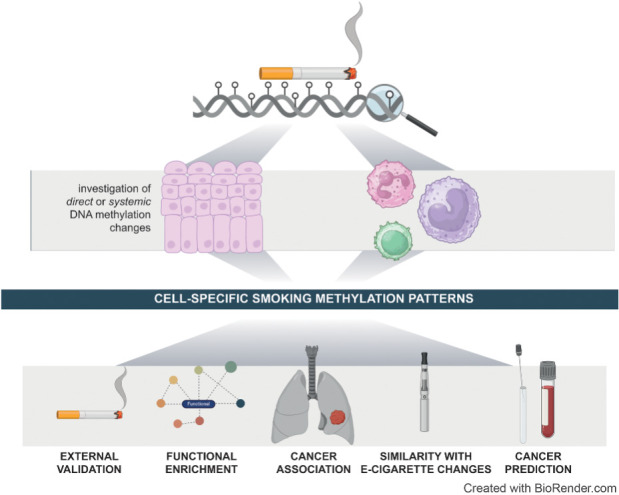
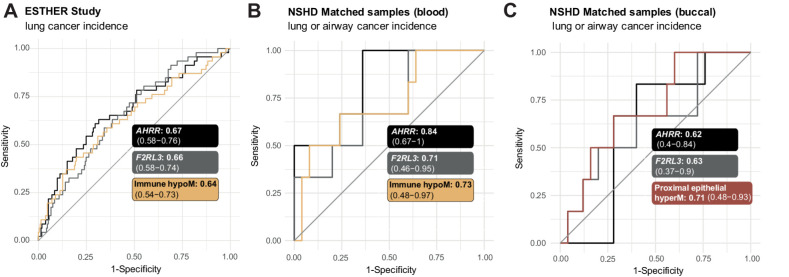
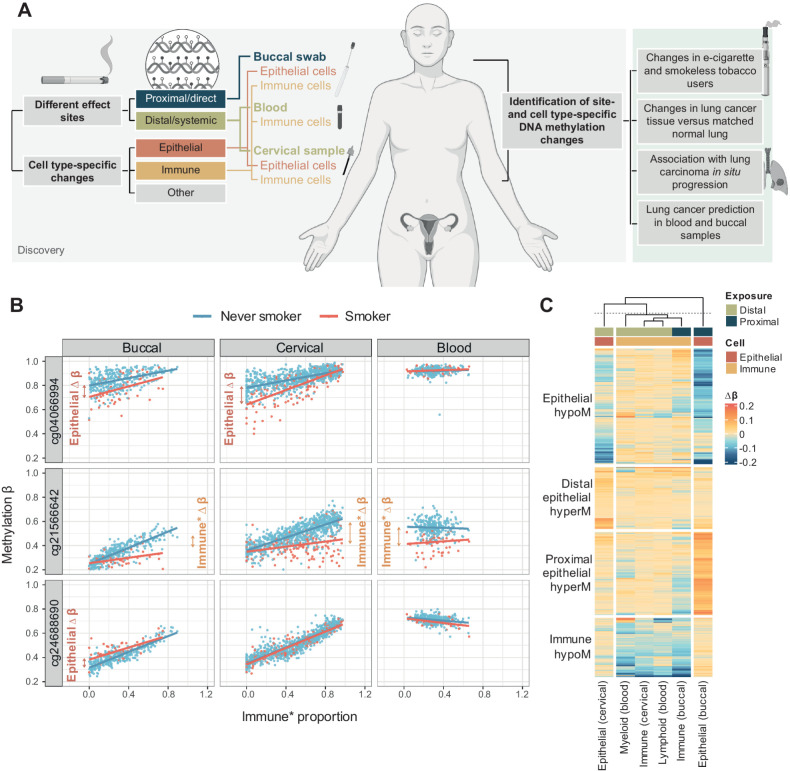
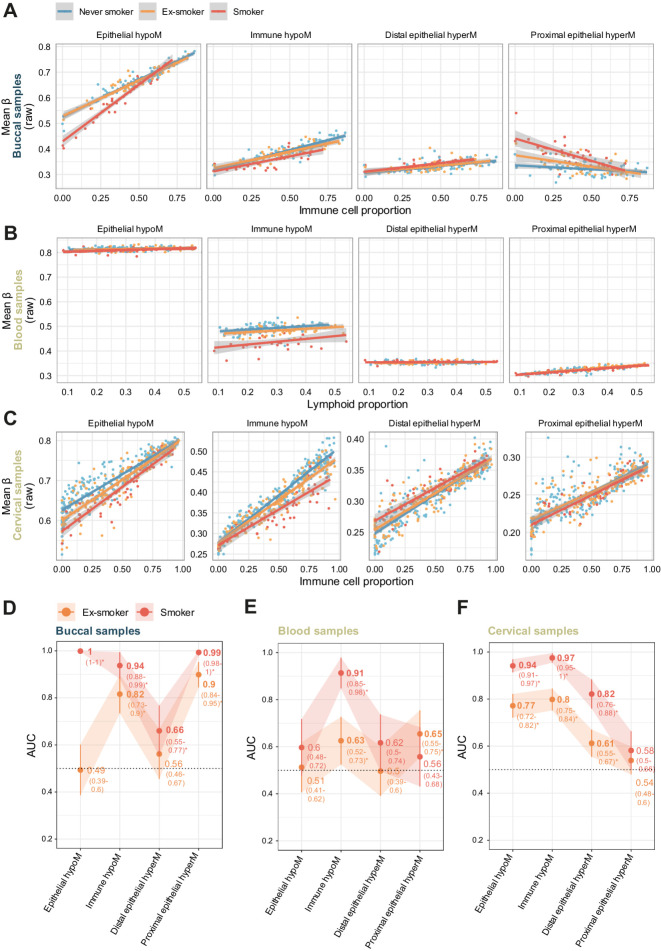
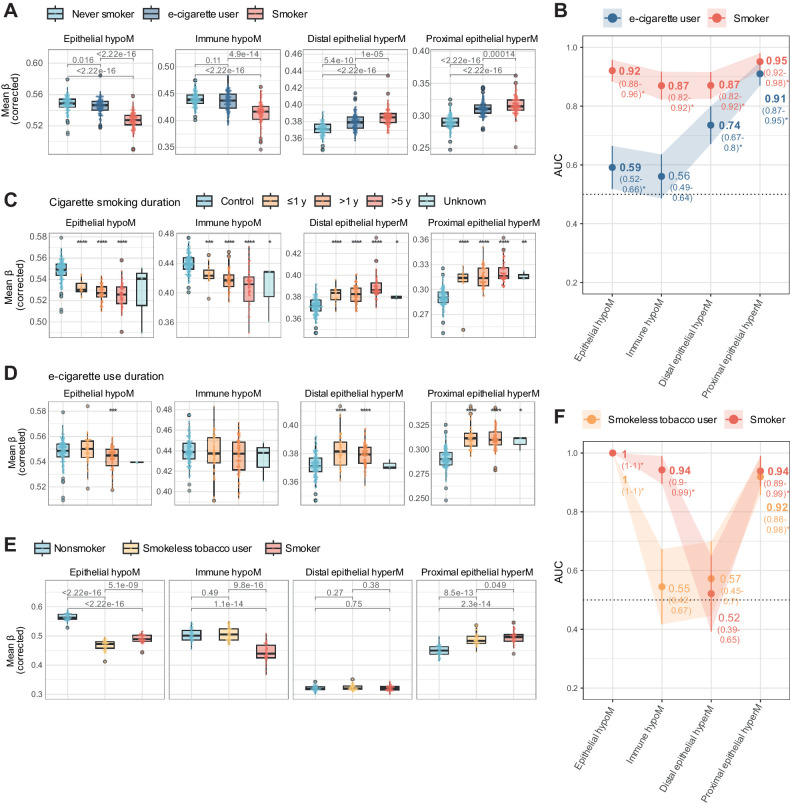
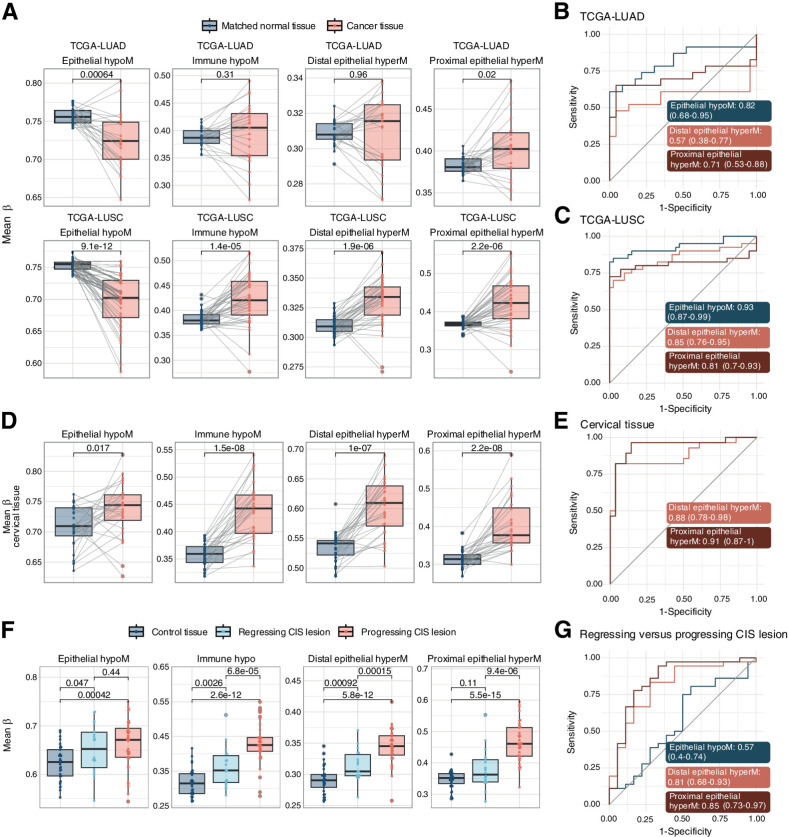
Tobacco use is a major modifiable risk factor for adverse health outcomes, including cancer, and elicits profound epigenetic changes thought to be associated with long-term cancer risk. While electronic cigarettes (e-cigarettes) have been advocated as harm reduction alternatives to tobacco products, recent studies have revealed potential detrimental effects, highlighting the urgent need for further research into the molecular and health impacts of e-cigarettes. Here, we applied computational deconvolution methods to dissect the cell- and tissue-specific epigenetic effects of tobacco or e-cigarette use on DNA methylation (DNAme) in over 3,500 buccal/saliva, cervical, or blood samples, spanning epithelial and immune cells at directly and indirectly exposed sites. The 535 identified smoking-related DNAme loci [cytosine-phosphate-guanine sites (CpG)] clustered into four functional groups, including detoxification or growth signaling, based on cell type and anatomic site. Loci hypermethylated in buccal epithelial cells of smokers associated with NOTCH1/RUNX3/growth factor receptor signaling also exhibited elevated methylation in cancer tissue and progressing lung carcinoma in situ lesions, and hypermethylation of these sites predicted lung cancer development in buccal samples collected from smokers up to 22 years prior to diagnosis, suggesting a potential role in driving carcinogenesis. Alarmingly, these CpGs were also hypermethylated in e-cigarette users with a limited smoking history. This study sheds light on the cell type-specific changes to the epigenetic landscape induced by smoking-related products.
The use of both cigarettes and e-cigarettes elicits cell- and exposure-specific epigenetic effects that are predictive of carcinogenesis, suggesting caution when broadly recommending e-cigarettes as aids for smoking cessation.
吸烟是包括癌症在内的不良健康后果的一个主要可改变风险因素,并引发了深刻的表观遗传变化,这些变化被认为与长期的癌症风险有关。虽然电子烟(e-cigarettes)被提倡作为烟草产品的减少危害替代品,但最近的研究揭示了潜在的有害影响,强调了进一步研究电子烟对分子和健康的影响的迫切需要。在这里,我们应用计算反卷积方法来剖析吸烟或使用电子烟对超过 3500 个口腔/唾液、宫颈或血液样本中的 DNA 甲基化(DNAme)的细胞和组织特异性表观遗传影响,这些样本涵盖了直接和间接暴露部位的上皮细胞和免疫细胞。535 个确定的与吸烟相关的 DNAme 位点[胞嘧啶-磷酸-鸟嘌呤位点(CpG)]根据细胞类型和解剖部位聚类成四个功能组,包括解毒或生长信号。在吸烟者的口腔上皮细胞中,与 NOTCH1/RUNX3/生长因子受体信号相关的超甲基化位点也在癌症组织和进展中的肺癌原位病变中表现出较高的甲基化,这些位点的高甲基化预测了吸烟者口腔样本中的肺癌发展,早在诊断前 22 年就收集到了这些样本,这表明它们在驱动癌变方面可能具有潜在作用。令人震惊的是,这些 CpG 在有吸烟史有限的电子烟使用者中也被高度甲基化。这项研究揭示了与吸烟相关的产品引起的表观遗传景观的细胞类型特异性变化。
香烟和电子烟的使用都会引起细胞和暴露特异性的表观遗传效应,这些效应可以预测致癌作用,这表明在广泛推荐电子烟作为戒烟辅助工具时应谨慎行事。