Department of Orthopedics, Renmin Hospital of Wuhan University, 238, Jiefang Road, Wuchang District, 430060, Wuhan, Hubei, China.
School of Basic Medical Sciences, Wuhan University, 430071, Wuhan, Hubei, China.
BMC Genomics. 2024 Mar 19;25(1):293. doi: 10.1186/s12864-024-10181-w.
Alternative splicing (AS) is a principal mode of genetic regulation and one of the most widely used mechanisms to generate structurally and functionally distinct mRNA and protein variants. Dysregulation of AS may result in aberrant transcription and protein products, leading to the emergence of human diseases. Although considered important for regulating gene expression, genome-wide AS dysregulation, underlying mechanisms, and clinical relevance in knee osteoarthritis (OA) remain unelucidated. Therefore, in this study, we elucidated and validated AS events and their regulatory mechanisms during OA progression.
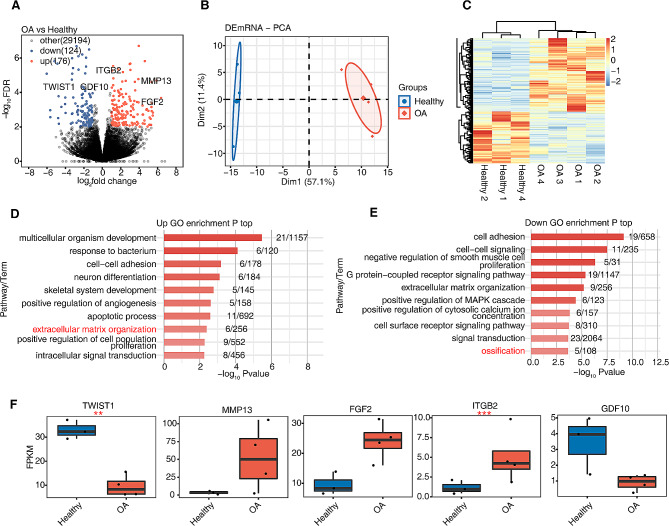
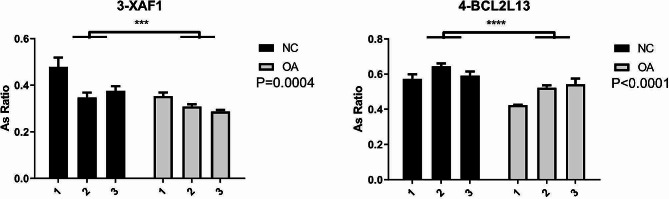
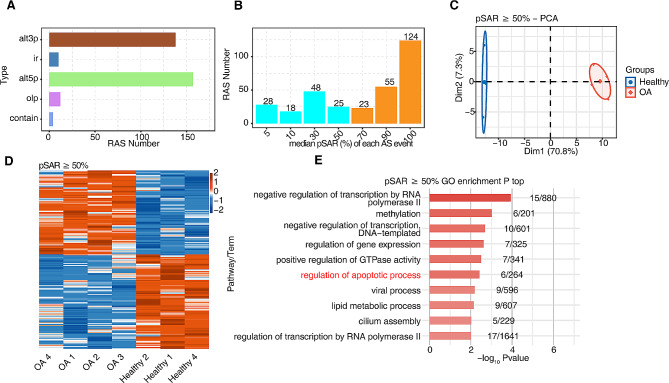
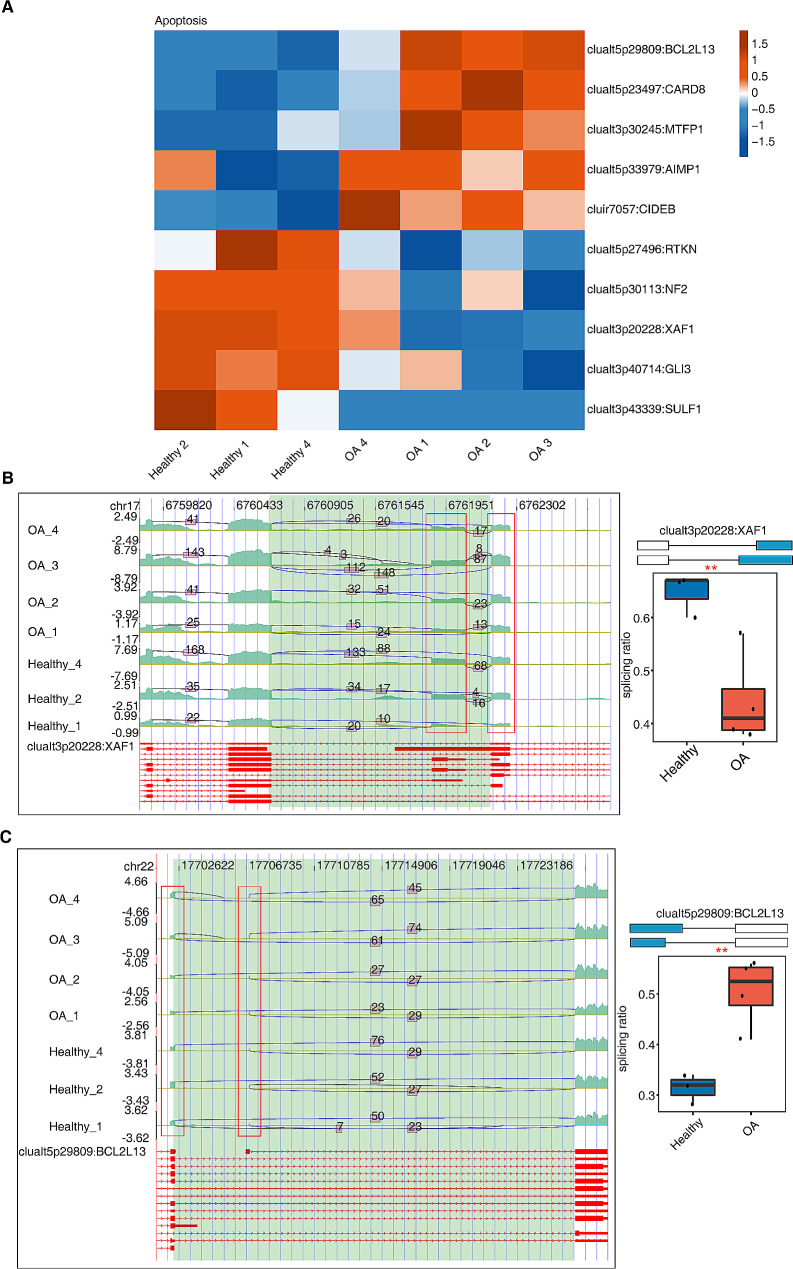
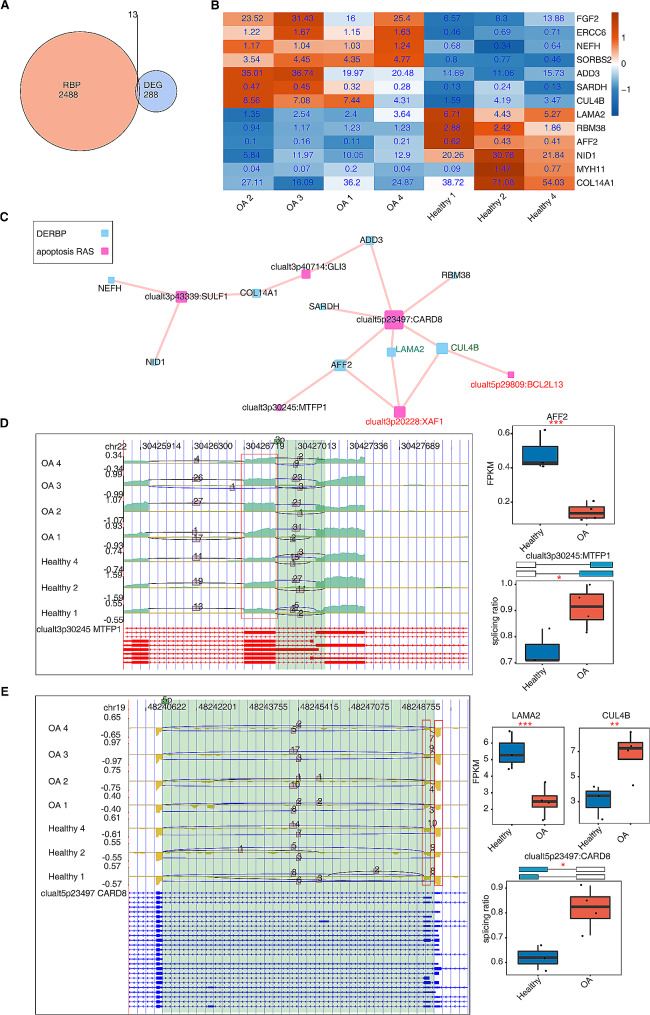
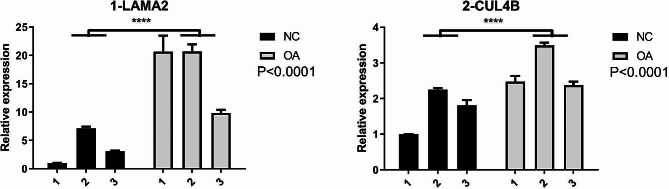
In this study, we identified differentially expressed genes between human OA and healthy meniscus samples. Among them, the OA-associated genes were primarily enriched in biological pathways such as extracellular matrix organization and ossification. The predominant OA-associated regulated AS (RAS) events were found to be involved in apoptosis during OA development. The expression of the apoptosis-related gene BCL2L13, XAF1, and NF2 were significantly different between OA and healthy meniscus samples. The construction of a covariation network of RNA-binding proteins (RBPs) and RAS genes revealed that differentially expressed RBP genes LAMA2 and CUL4B may regulate the apoptotic genes XAF1 and BCL2L13 to undergo AS events during OA progression. Finally, RT-qPCR revealed that CUL4B expression was significantly higher in OA meniscus samples than in normal controls and that the AS ratio of XAF1 was significantly different between control and OA samples; these findings were consistent with their expected expression and regulatory relationships.
Differentially expressed RBPs may regulate the AS of apoptotic genes during knee OA progression. XAF1 and its regulator, CUL4B, may serve as novel biomarkers and potential therapeutic targets for this disease.
可变剪接(AS)是遗传调控的主要方式之一,也是产生结构和功能不同的 mRNA 和蛋白质变体的最广泛使用的机制之一。AS 的失调可能导致转录和蛋白质产物异常,从而导致人类疾病的出现。尽管被认为对调节基因表达很重要,但全基因组 AS 失调的潜在机制及其在膝骨关节炎(OA)中的临床相关性仍未阐明。因此,在这项研究中,我们阐明并验证了 OA 进展过程中的 AS 事件及其调控机制。
在这项研究中,我们鉴定了 OA 患者和健康半月板样本之间差异表达的基因。其中,OA 相关基因主要富集在细胞外基质组织和骨化等生物学途径中。发现与 OA 相关的调节性 AS(RAS)事件主要涉及 OA 发展过程中的细胞凋亡。凋亡相关基因 BCL2L13、XAF1 和 NF2 的表达在 OA 和健康半月板样本之间存在显著差异。RNA 结合蛋白(RBPs)和 RAS 基因的共变网络构建表明,差异表达的 RBPs 基因 LAMA2 和 CUL4B 可能通过调控凋亡基因 XAF1 和 BCL2L13 的 AS 事件来调节 OA 进展过程中的基因表达。最后,RT-qPCR 显示,OA 半月板样本中的 CUL4B 表达明显高于正常对照组,XAF1 的 AS 比率在对照组和 OA 组之间存在显著差异;这些发现与它们的预期表达和调控关系一致。
差异表达的 RBPs 可能在膝 OA 进展过程中调节凋亡基因的 AS。XAF1 及其调节剂 CUL4B 可能作为该疾病的新型生物标志物和潜在治疗靶点。