Ivy College of Business, Iowa State University, Ames, IA, United States of America.
PLoS One. 2024 Mar 21;19(3):e0300497. doi: 10.1371/journal.pone.0300497. eCollection 2024.
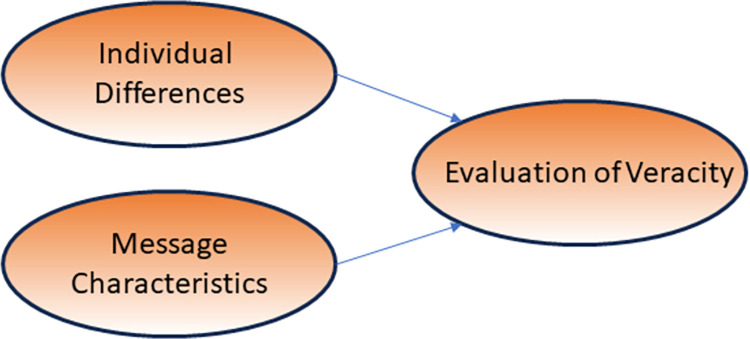
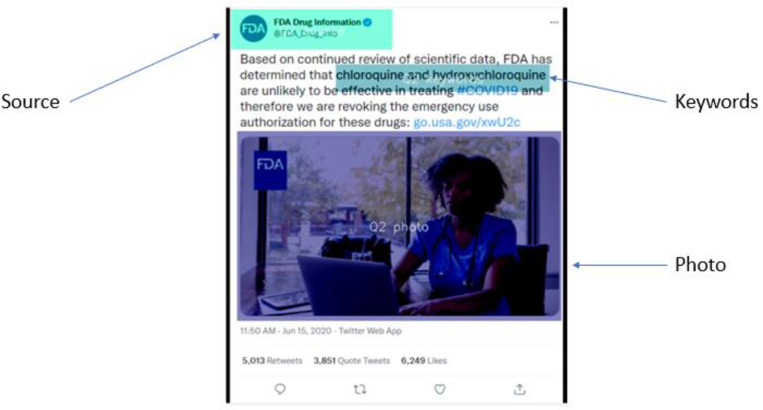
Disinformation-false information intended to cause harm or for profit-is pervasive. While disinformation exists in several domains, one area with great potential for personal harm from disinformation is healthcare. The amount of disinformation about health issues on social media has grown dramatically over the past several years, particularly in response to the COVID-19 pandemic. The study described in this paper sought to determine the characteristics of multimedia social network posts that lead them to believe and potentially act on healthcare disinformation. The study was conducted in a neuroscience laboratory in early 2022. Twenty-six study participants each viewed a series of 20 either honest or dishonest social media posts, dealing with various aspects of healthcare. They were asked to determine if the posts were true or false and then to provide the reasoning behind their choices. Participant gaze was captured through eye tracking technology and investigated through "area of interest" analysis. This approach has the potential to discover the elements of disinformation that help convince the viewer a given post is true. Participants detected the true nature of the posts they were exposed to 69% of the time. Overall, the source of the post, whether its claims seemed reasonable, and the look and feel of the post were the most important reasons they cited for determining whether it was true or false. Based on the eye tracking data collected, the factors most associated with successfully detecting disinformation were the total number of fixations on key words and the total number of revisits to source information. The findings suggest the outlines of generalizations about why people believe online disinformation, suggesting a basis for the development of mid-range theory.
虚假信息(旨在造成伤害或谋取利益的虚假信息)无处不在。虽然虚假信息存在于多个领域,但在医疗保健领域,虚假信息可能会对个人造成极大的伤害。过去几年,社交媒体上有关健康问题的虚假信息数量急剧增加,尤其是在 COVID-19 大流行期间。本文描述的研究旨在确定导致人们相信并可能采取行动的多媒体社交网络帖子的特征。这项研究是在 2022 年初在一个神经科学实验室进行的。26 名研究参与者每人观看了一系列 20 个真实或不真实的社交媒体帖子,这些帖子涉及医疗保健的各个方面。他们被要求确定帖子是真是假,然后提供他们选择的理由。参与者的注视通过眼动追踪技术进行捕获,并通过“感兴趣区域”分析进行调查。这种方法有可能发现帮助说服观看者某个帖子是真实的虚假信息元素。参与者在 69%的时间里发现了他们所接触到的帖子的真实性质。总的来说,帖子的来源、其说法是否合理以及帖子的外观和感觉是他们引用的确定帖子真假的最重要原因。基于收集到的眼动追踪数据,与成功检测虚假信息最相关的因素是对关键字的总注视次数和对来源信息的总回访次数。研究结果表明,人们相信在线虚假信息的原因可以概括为一般规律,为中程理论的发展提供了基础。